Discussions about AI in Australian agribusiness tend to focus on the big strategic question: open-source models running on-farm versus a managed service like Claude, data sovereignty, and where processing happens. Useful as that debate is, it skips past the more immediate opportunity sitting in the back office of most agribusiness operations right now, the levy reconciliations, livestock movement records, and supplier correspondence that pile up regardless of which model strategy a business eventually settles on.
What actually runs through a back office
A mid-sized agribusiness, whether a livestock trading operation, a grain aggregator, or an integrated farming enterprise, runs a back office handling three distinct paperwork streams: levy reconciliation against industry body requirements, livestock movement and NLIS record-keeping, and supplier and buyer correspondence that has to move at the pace of a commodity market rather than a typical office's.
Levy reconciliation: matching sale records against the levies owed to relevant industry bodies, a task that multiplies in complexity across multiple commodity streams.
Livestock movement records: converting movement documentation into the format required for NLIS compliance and internal stock reconciliation.
Supplier and buyer correspondence: drafting price and availability updates that need to move as fast as a commodity market does.
Grant and industry program applications: turning operational detail into the specific answers a funding body's application actually asks for.
A worked example: levy reconciliation
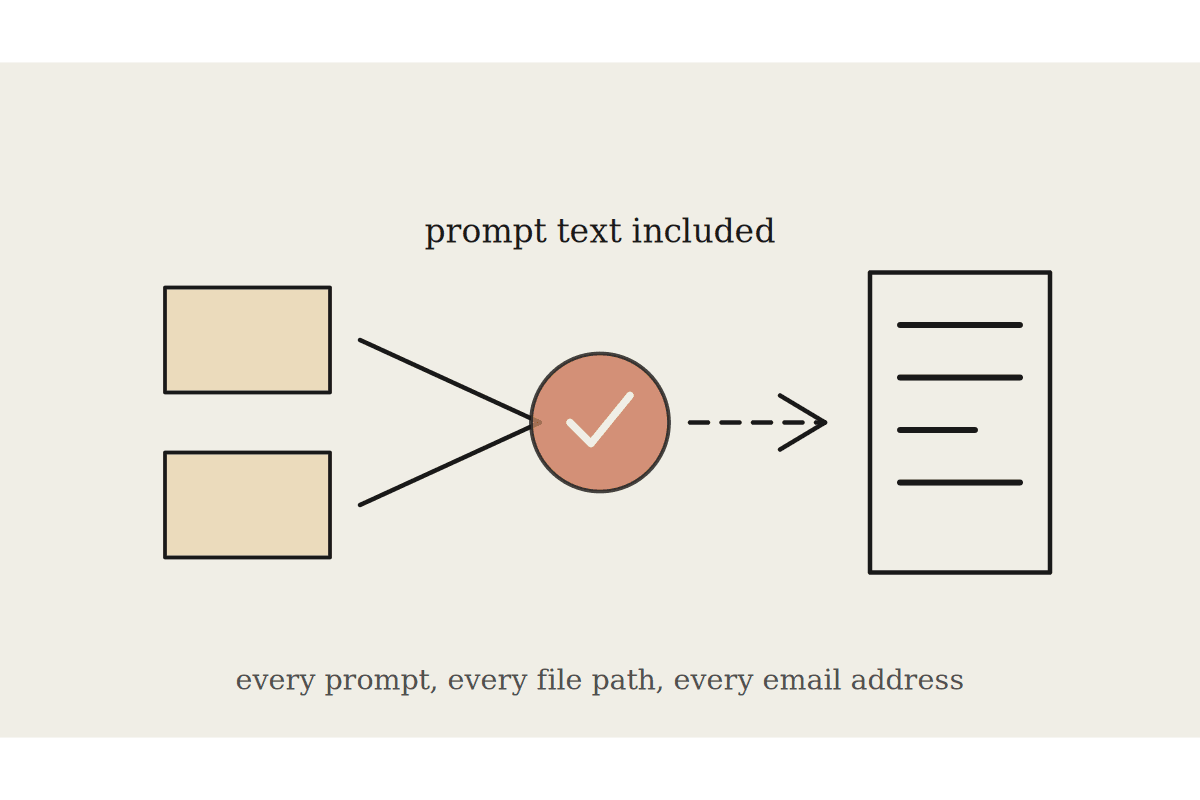
A New South Wales livestock trading operation handling both cattle and sheep found levy reconciliation across two separate commodity streams, matching sale docket data against the levies owed each quarter, took the office manager close to two full days every quarter, mostly manual cross-referencing between sale records and levy schedules. Feeding sale docket exports into a Claude Cowork workflow built around the operation's own reconciliation format, that task now takes under three hours, with the office manager checking the reconciliation against source records before lodging. Across a year, that recovers roughly 26 hours, worth an estimated $1,700 at the office manager's rate, freed up during exactly the weeks when the rest of the operation is also busiest.
Where this is distinct from the open-source-versus-Claude question
Existing coverage of AI in Australian agribusiness has focused heavily on the strategic model-choice question, whether an operation should run open-source models on its own infrastructure or use a managed service, largely in the context of data sovereignty for sensitive operational or genetic data. That is a real and worthwhile debate for the parts of an agribusiness dealing with genuinely sensitive proprietary information. It is a different question entirely from whether the back office should be drafting levy reconciliations and correspondence with AI assistance at all, which is a lower-stakes, faster-payback decision that does not need to wait on the bigger strategic call being settled first.
Livestock records and the compliance boundary
NLIS and movement record compliance is a legal requirement with real consequences for getting it wrong, and nothing about a drafting workflow changes who is accountable for an accurate record. Claude's role here is converting movement documentation, already recorded by the person who physically moved the stock, into the correctly formatted record required, not making any determination about the movement itself. The person who moved the stock and recorded it remains the source of truth; the tool only removes the formatting labour between that record and the compliance system it needs to reach.
This distinction is worth being explicit about with staff during rollout. A drafting assistant that formats a record faster is a genuine time saving. A tool that is trusted to infer a movement detail nobody actually recorded is a compliance liability, and the difference between the two comes down entirely to whether the underlying data being formatted was captured by a person at the time, which is the discipline worth protecting as the workflow scales.
Supplier and buyer correspondence in a moving market
Commodity prices move daily, sometimes hourly, and correspondence that reflects yesterday's price is worse than no correspondence at all. A drafted price and availability update, generated the moment current figures are entered and ready for the office manager to check before sending, closes the gap between a market movement and the operation's outward-facing correspondence. A Riverina grain aggregator handling daily buyer updates across several grades found this cut the average time from price confirmation to buyer notification from around 25 minutes to under five, meaningful in a market where being first to confirm a price to a regular buyer genuinely affects who gets the tonnage.
Getting started at a working agribusiness
The realistic starting point for most agribusiness back offices is the single paperwork stream causing the most quarterly pain, levy reconciliation is often it, tested against one quarter's real records before deciding whether to extend the pattern to movement records or correspondence. For an office team that is often two or three people supporting an operation many times their size in throughput, recovering even a day a quarter is worth the afternoon it takes to set the first workflow up properly.