Agtech adoption across Australia is uneven. Some broadacre operations run NLIS lifetime traceability with a few hours of paperwork each week. Their neighbours spend two days a month reconciling moisture readings, dispatch dockets, and compliance forms in spreadsheets that nobody fully trusts. The question I get from AU agribusiness operators is direct: where does Claude actually fit on a working property, and where does it add more friction than it removes?
This guide walks through the three places Claude is doing real work for Australian farms, processors, and exporters today. It also covers what tends to fail. The aim is to give operations leaders something concrete enough to brief a manager or a consultant, not a vendor pitch.
Three places Claude is already useful on AU farms
Across livestock, broadacre, and horticulture clients we have worked with through 2025 and into 2026, three patterns keep recurring. The teams getting value from Claude are not chasing a single grand AI program. They are picking one document-heavy task and giving Claude enough context to do it well.
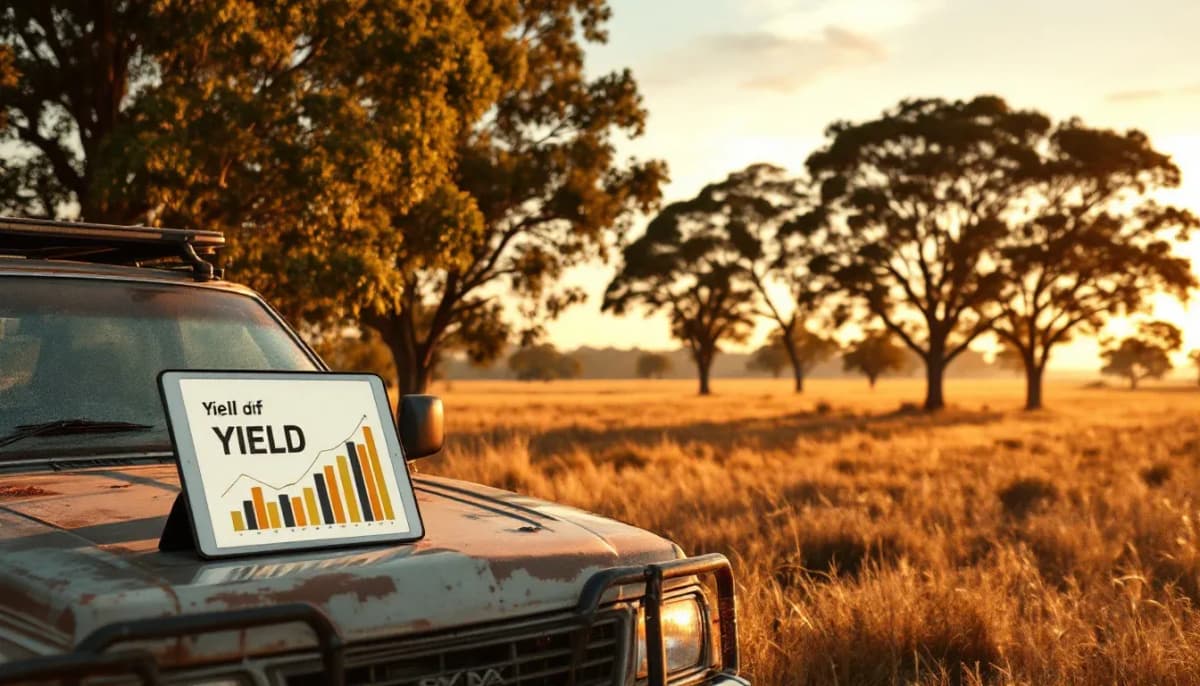
Yield forecasting from on-farm sensor data, weather stations, and historical yield maps, drafted as a one-page weekly note for the Monday operations meeting.
Compliance documentation against the National Livestock Identification System (NLIS), Meat & Livestock Australia (MLA) audits, and the electronic Declaration (eDEC) chain.
Supply-chain documentation packs for export markets, particularly Japan, Korea, and the Middle East, where importer paperwork burden is heavy and inconsistent.
None of this is glamorous. The properties that benefit most are the ones treating Claude as a precise junior analyst who never forgets a checklist, never argues about the cover sheet format, and is content to do the same template eighty times in a row.
Yield forecasting from sensors you already own
Most AU growers I speak to already pay for some sensor coverage: soil moisture probes, irrigation telemetry, a Davis weather station, sometimes NDVI imagery from a paid satellite service. The data sits in three or four vendor dashboards and gets compared by eye on Monday mornings. Claude is good at reading those exports together and writing a short forecast against historical yield records.
On a 4,200 hectare cropping property in the Wimmera, we set up a weekly note generated by Claude that pulled CSV exports from the moisture probe portal, the weather station logs, and the previous three seasons of yield data from the grower's own records. The format was a single page covering paddock-level moisture status, days-to-trigger for irrigation decisions, and a forecast band for the upcoming week against the five-year average.
The point is not that Claude predicted yield perfectly. It did not. The point is that the agronomist stopped spending half a day every Monday assembling the inputs. AgriFutures Australia has documented similar productivity gains in its digital agriculture work: removing the prep tax on weekly decisions adds up faster than chasing a one-off AI moonshot.
Modest numbers, modest setup. A grower paying $4,500 a year in sensor subscriptions is now getting a weekly written brief instead of raw dashboards. The Claude usage cost is well under $120 a month. The agronomist time recovered is roughly $18,000 per season at consultant rates.
Compliance documentation: NLIS, eDEC, and audit packs
Livestock producers carry a compliance burden that compounds across the year. NLIS lifetime traceability records, National Vendor Declaration (NVD) forms, eDEC electronic declarations for movements between properties, MLA Livestock Production Assurance audits, biosecurity plans, chemical use diaries, and increasingly carbon and biodiversity claims for premium markets.
Claude is good at turning a mess of records into the formal documents an auditor wants to see. The pattern we use is straightforward: the operations manager describes what happened in plain text or voice notes, Claude pulls the formal form structure, fills in the fields it can verify from the source records, and flags every gap with a question for the human.
On a 9,000 head feeder property near Wagga, the office manager was spending around 11 hours a week on compliance paperwork. After three weeks of setup with Claude, including a few iterations on the audit pack template, that number sat between 4 and 5 hours. Time recovered: about $42,000 a year at the office manager's loaded cost.
Two things matter here. First, Claude is not signing the NVD. The human is. Claude is preparing the document and showing its workings. Second, the audit history is now legible. When the MLA assessor turned up in February, the producer could show a clean digital trail in 20 minutes, not a folder of crumpled dockets.
Supply-chain documentation for export markets
For Australian exporters, the paperwork burden between the farmgate and the receiving port is the part of the business most people complain about and least people fix. Phytosanitary certificates, halal certification, country-of-origin attestation, chain-of-custody records, language-specific packing lists for Japanese and Korean importers, customs invoicing under DAFF BICON requirements: every shipment is a small bureaucratic project.
Claude handles the document generation layer well. We have seen good results building a packing list and certification pack template that pulls from a single source of truth (a spreadsheet or a small database) and writes the importer-specific variants. The Japanese importer wants metric weights to two decimal places and a katakana product name. The Korean importer wants a different HS code structure. The Middle Eastern importer wants halal references and a specific arrangement of carton labels. Once the source data is clean, Claude prepares all three packs in a few minutes.
A Sydney-based seafood exporter shipping into Tokyo and Busan cut per-shipment documentation prep from 90 minutes to about 15. Across roughly 600 shipments a year, that is around 750 hours of office time recovered. They reinvested most of that into traceability data that supports premium pricing in Japan.
Where this falls over
Not every agtech idea survives contact with a real property. The failure mode I see most often is over-instrumented horticulture. A stone-fruit grower in the Goulburn Valley installed soil probes in every block, tree-level canopy sensors, drone imagery on a weekly cadence, and a paid weather service. The data volume overwhelmed the on-farm team. Decisions slowed down because operators stopped trusting any single source.
Claude could not fix this. The problem was not analysis. The problem was that nobody had agreed which data would actually change a decision. We spent two days with the grower pruning the sensor set back to the four readings that drove irrigation and harvest timing, then rebuilt the Monday brief around those four. The technology stack shrank. The decisions got faster.
Other failure patterns to avoid: trying to use Claude as a real-time control system (it is not); treating model output as an audit trail (you still need the source records); and assuming reliable connectivity at every shed (most AU rural deployments need an explicit offline-first design).
A starting point for the next 90 days
If you run an Australian farm, processor, or export operation and want a concrete first move, pick one document-heavy task with a clear weekly or monthly rhythm. Compliance pack, weekly operations brief, importer packing list, or audit prep. Give Claude the source records, the template, and one example of what good looks like. Iterate for three weeks. Measure the hours recovered.
The properties making progress are not the ones with the biggest budgets. They are the ones picking a small, well-defined job and running it through to the point an auditor or a customer accepts the output without correction. That is the bar.
If you would like a second opinion on where Claude fits in your operation, book a brainstorm with us. We work with AU agribusinesses on practical, document-first deployments rather than vendor pitches.