Every Australian business registered for GST lives on the same rhythm: the quarterly Business Activity Statement. Four times a year the ATO wants your GST collected, your GST paid, your PAYG withholding and often a PAYG instalment, reconciled and lodged. For an owner doing it alone, a single quarter can eat a full weekend of chasing receipts, coding transactions and second-guessing which line a payment belongs on. Claude can hand most of that weekend back.
This is a working playbook, not tax advice. Claude is not a registered BAS agent, and the ATO holds the business, not the software, responsible for what gets lodged. What Claude does well is the preparation: reading your records, spotting the gaps, drafting the working papers, and turning a shoebox of PDFs into a clean summary that you or your agent can sign off in minutes rather than hours.
What BAS Prep Actually Costs You
Most owners underestimate the real cost of BAS because the ATO charges nothing to lodge. The cost is your time and the mistakes. A Sydney tradie turning over $600,000 a year might spend six hours a quarter on the BAS, plus a few hundred dollars in bookkeeper cleanup when the coding is wrong. Across a year that is roughly 24 hours of the owner's own time and often $1,200 or more in remediation. If a wrong GST claim triggers an ATO review, the disruption costs far more than either.
The pattern is always the same. The work is not hard, it is fiddly, repetitive and easy to put off until the night before the deadline. That is exactly the shape of task Claude is built for.
What Claude Can and Cannot Do
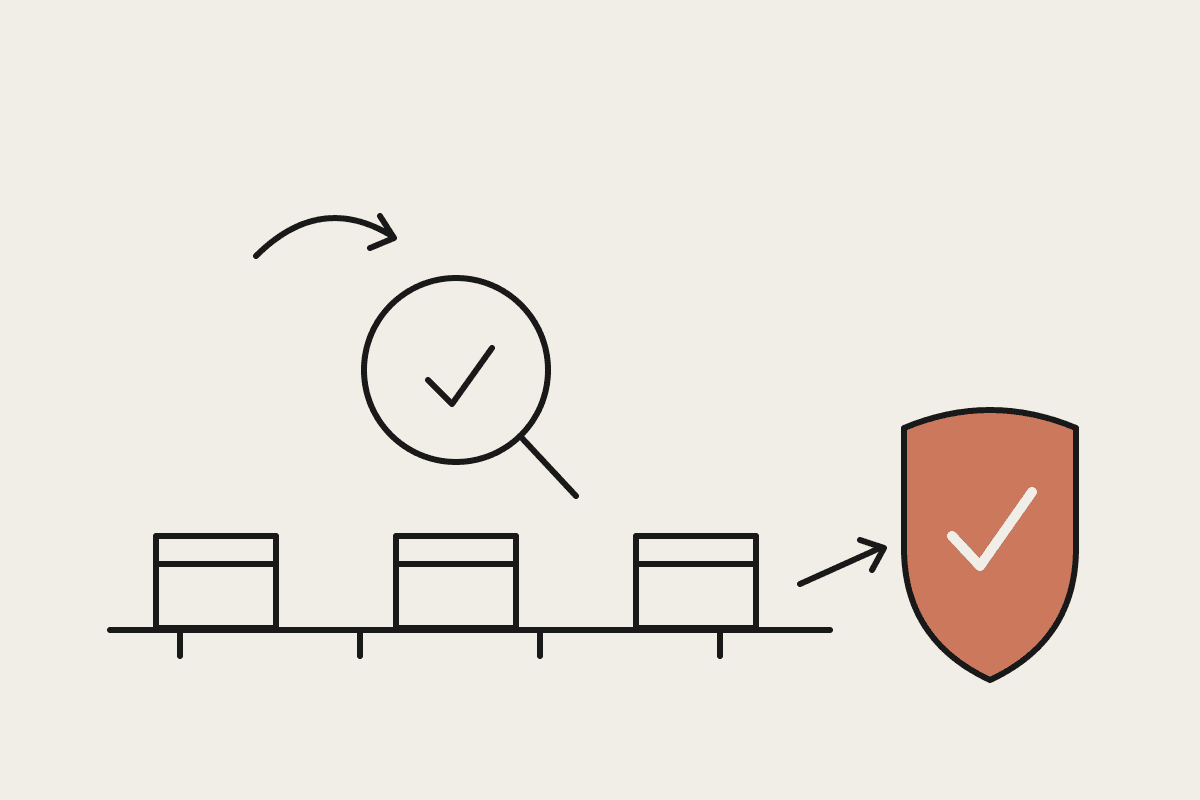
Used well, Claude sits between your raw records and your accounting file as a fast, careful reviewer. It is strong at the parts that are tedious for a person but mechanical enough to check.
Reading and summarising statements: hand it a bank export or a stack of supplier invoices and it lists the transactions, flags which ones look GST-free, and totals the GST for you to verify.
Catching coding errors: ask it to review your Xero or MYOB transaction list for the quarter and it surfaces the outliers, the personal spend that slipped into the business account, and the invoices with no GST where you would expect some.
Drafting the working papers: a plain summary of total sales, GST on sales, GST on purchases and PAYG withholding, with the logic written out so your agent can check the reasoning.
Answering the how questions: what counts as a GST-free supply, how to treat a mixed-use vehicle, when the margin scheme applies, each with a trail you can confirm against the ATO site.
It has hard limits you must respect.
It does not lodge. Only you or a registered BAS or tax agent can submit the statement to the ATO.
It can be confidently wrong on a specific ruling. Treat every figure as a draft to verify, never a final answer.
It only knows what you give it. Feed it a partial bank feed and the summary will be partial too.
It is not advice on a genuinely tricky position. When real money or risk is on the line, that is a conversation for your accountant.
The Quarter-by-Quarter Playbook
The trick to a painless BAS is to stop treating it as a quarterly event and start treating it as a light monthly habit that Claude carries. Here is the cycle that works for most Australian small businesses on quarterly lodgement.
Months one and two: keep the file clean
Once a month, export your bank transactions and paste them to Claude with a simple prompt: review these against my usual categories and flag anything unusual or missing GST. Ten minutes a month stops the end-of-quarter pile-up, so by the time the BAS is due the coding is already sane.
The final month: build the working paper
Two weeks out, give Claude the full quarter of transactions and ask for a BAS working paper: total sales, GST on sales, GST on purchases, PAYG withheld, and any instalment. Ask it to show the transactions behind each number so you can spot-check. This is the document that turns a four-hour reconciliation into a thirty-minute review.
Deadline week: review, verify, lodge
Check Claude's figures against your accounting software totals. Where they disagree, ask it to explain the difference; the gap is usually a timing issue or a miscoded transaction, and finding it is exactly the needle-in-a-haystack search it is good at. Once the numbers reconcile, you or your agent lodge through the ATO Business Portal, myGov or your software.
Standard quarterly deadlines fall on 28 October, 28 February, 28 April and 28 July, and lodging through a registered agent usually buys an extra four weeks. Put the monthly habit on a calendar reminder and the deadlines stop being a scramble.
A Worked Example
Take a Melbourne cafe turning over about $480,000 a year. The owner used to spend most of a Sunday each quarter on the BAS and paid a bookkeeper about $900 a year to fix the coding. After moving to the monthly-habit model with Claude, the quarterly review dropped to under an hour, the bookkeeper cleanup fell close to zero, and the owner reclaimed roughly $2,000 a year in their own time valued conservatively. The BAS itself did not change. The preparation did.
Getting the Guardrails Right
Two things matter before you paste a single transaction. First, privacy: your records hold customer and supplier details covered by the Privacy Act, so use a business-grade Claude plan and avoid pasting anything you would not put in a work email. Second, verification: build the habit of checking every total against source figures. Claude makes you faster, but you remain the person who signs the statement.
Set up this way, BAS stops being the quarterly dread and becomes a short, boring, well-documented routine, which is exactly what a compliance task should be.
If you want help wiring this into your Xero or MYOB file and your own quarter, book a free brainstorm with Automata AI and we will map it to how your business actually runs.