Most Australian bookkeeping firms sell hours, and most of those hours go into moving numbers from one place to another. Receipts get keyed into Xero. Bank feeds get coded. Invoices get matched. It is careful, necessary work, and it is also the work clients least want to pay a premium for. The firms growing fastest right now are the ones shifting that load onto software and selling their judgement instead. Claude, the AI assistant built by Anthropic, has become one of the more practical tools for making that shift, because it reads messy documents, follows written procedures, and drafts client-ready explanations without a developer in the loop.
Where the hours actually go
Before automating anything, it helps to see where a typical practice loses time. In a small Sydney firm handling 40 to 60 clients, the monthly cycle tends to concentrate around a handful of repetitive tasks. None of them need a registered BAS agent's brain for more than a fraction of the time they consume.
Coding bank transactions that the rules do not catch, then chasing the client for context on the odd ones.
Keying supplier bills and receipts that arrive as PDFs, phone photos, or forwarded emails.
Reconciling accounts and hunting down the last few dollars that will not balance.
Preparing the same BAS and payroll summaries every quarter, in the same format, for every client.
Writing the monthly email that explains what the numbers mean, usually late at night.
What Claude can take off the desk today
The point of automation here is not to remove the bookkeeper. It is to remove the keystrokes so the bookkeeper can do the part clients actually value. A few workflows are ready to hand over now, with a person checking the output before it reaches the client or the ATO.
Reading a pile of supplier invoices and returning a clean table of date, supplier, amount, GST, and a suggested account code for review before import.
Drafting the plain-English monthly commentary from the trial balance, so the bookkeeper edits rather than writes from a blank page.
Turning a client's shoebox of receipt photos into a structured list and flagging anything that looks personal rather than business.
Answering the recurring client questions, such as why GST is higher this quarter, with a first-draft reply the bookkeeper approves.
Summarising a new client's prior-year file into a one-page brief before the onboarding call.
Each of these still ends with a person. The value is that a task that took ninety minutes now takes fifteen, and the fifteen minutes are the skilled part.
The advisory shift, in dollars
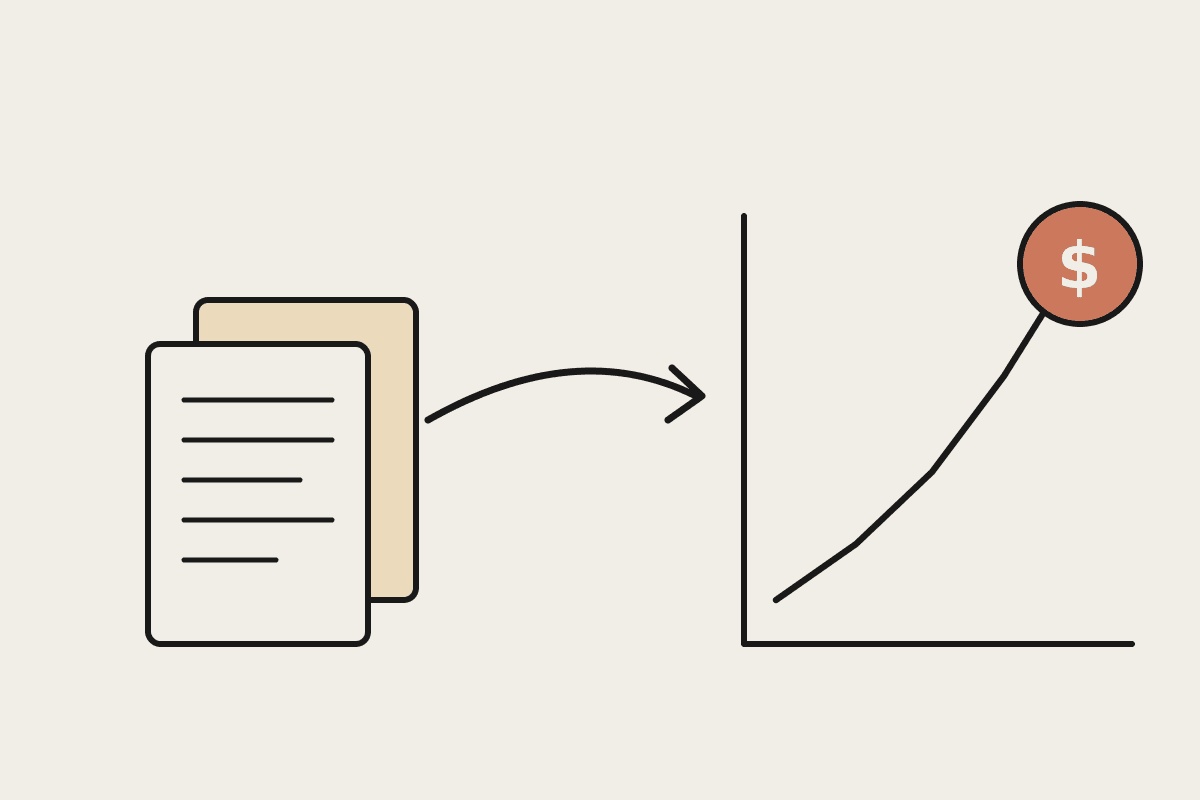
This is where the business case lives. A bookkeeper billed out at $90 an hour who spends 25 hours a week on data entry is generating $2,250 of low-margin work. Redirect that same 25 hours into advisory conversations, cash-flow forecasting, and quarterly reviews and it can bill at $150 to $200 an hour, because clients pay for insight in a way they never pay for typing. Move even half of those hours up the value chain and the weekly revenue on that one staff member climbs from around $2,250 to over $3,000, without adding headcount or hours.
Scale that across a three-person practice and the annual difference is real money. Reclaiming 12 hours a week per person and rebilling them as advisory work adds roughly $120,000 of higher-margin revenue a year, on costs that are mostly already paid. The software itself sits in the low hundreds of dollars a month. The constraint is not the tooling. It is the decision to stop selling data entry.
A worked example
A Brisbane practice we worked with was spending about $8,000 a month in staff time on invoice coding and receipt entry across its client base. After moving the first-pass extraction to Claude and keeping a bookkeeper on review, that figure dropped by more than half within two months. The firm did not cut a single role. It moved two staff onto advisory packages it had wanted to launch for a year, and those packages now bring in more than the data entry ever did.
What stays human
Automation in a bookkeeping practice runs straight into professional obligations, and pretending otherwise is how firms get burned. A few lines should not move.
Final sign-off on any BAS or lodgement stays with the registered agent. The Tax Practitioners Board holds a person accountable, not a model.
Client data handling has to meet the Privacy Act and your own engagement terms. Know where documents are processed and stored before you send anything sensitive.
Anything the client will read or the ATO will see gets a human review. Claude drafts; the firm decides.
Judgement calls on deductibility, entity structure, and tax position remain advice, and advice is the product you are trying to sell more of.
Used this way, automation actually strengthens compliance, because the bookkeeper spends their attention on review and exceptions rather than on the mechanical keying where mistakes tend to hide.
A practical 90-day path
The firms that succeed do not automate everything at once. They pick one painful task, prove it on real files, and build trust with the team before expanding.
Weeks 1 to 4: pick your highest-volume task, usually invoice or receipt extraction, and run Claude alongside the current process on real files. Compare, correct, and note where it slips.
Weeks 5 to 8: write the procedure down as a repeatable checklist so the output is consistent across staff and clients, then let it handle first drafts with mandatory review.
Weeks 9 to 12: package the reclaimed hours into a named advisory offer, price it, and take it to your five best clients first.
The move from data entry to advisory is not really a technology project. It is a business-model change that technology has finally made affordable for a small Australian practice. Start with one workflow, keep a person on the review, and reinvest the hours into the work clients are glad to pay for. If you want help mapping which tasks to hand over first, book a short call and we will walk through your practice.