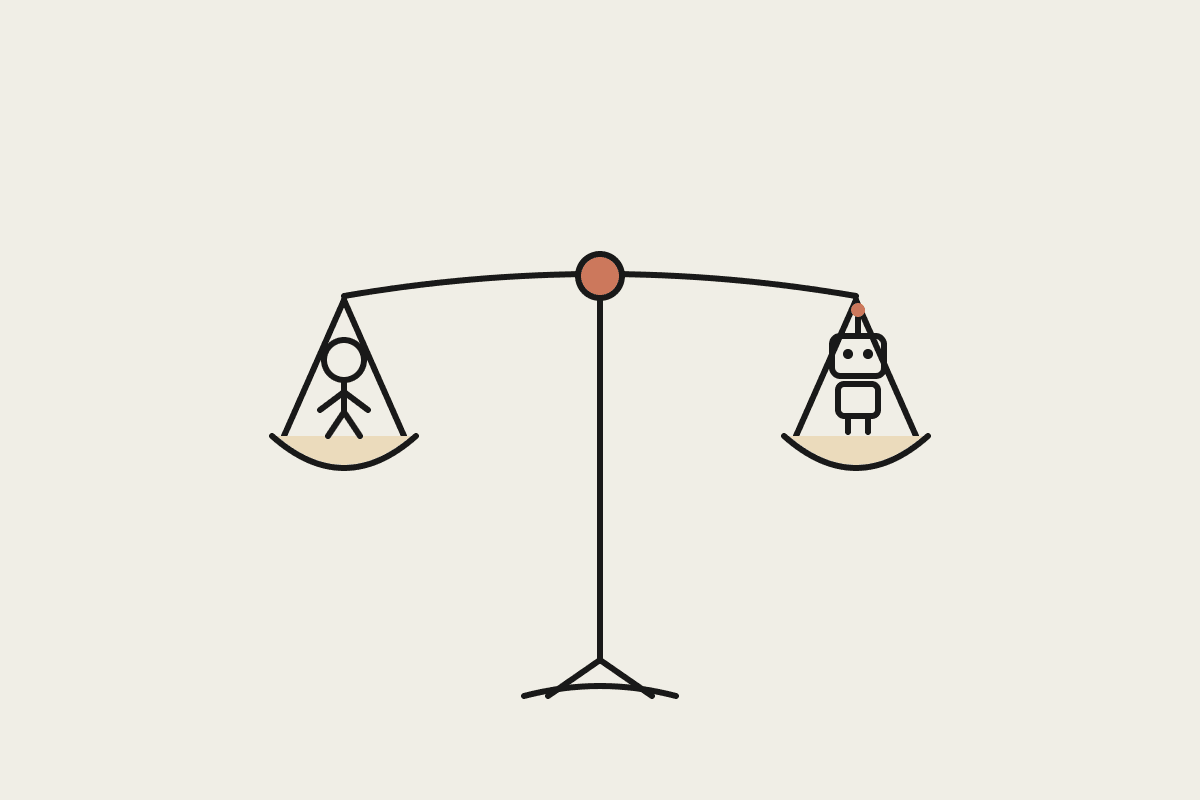
There's a clear line here, and it's worth stating plainly upfront: Claude can help you organise, draft and understand information for a tax return. It cannot, and should not, be treated as a substitute for a registered tax agent or BAS agent when it comes to actual tax advice or lodgement. This isn't a limitation to work around, it's a genuine regulatory boundary that exists to protect you.
What sits clearly on the organising and drafting side
Claude is genuinely useful for the preparation work around a tax return: pulling together a plain-language summary of receipts and expenses you've gathered, drafting a list of questions to bring to your accountant, organising a messy pile of invoices into categories, or explaining in general terms what a specific ATO term means so a conversation with your registered agent is more efficient. None of this involves telling you what to claim, what your specific liability is, or how a specific rule applies to your specific circumstances.
Organising: sorting receipts and expenses into categories before handing to your agent
Drafting: preparing a summary or a list of questions ahead of an appointment
Explaining: general, plain-language descriptions of common tax terms
Not: advice on what you should claim, what you owe, or how a rule applies to your situation
Why this line exists, not just where it sits
Under Tax Practitioners Board rules, providing tax agent services or BAS services for a fee is a regulated activity restricted to registered practitioners, and that registration exists because getting it wrong has real financial and legal consequences for the taxpayer. A general-purpose AI model, however capable at organising information, doesn't hold that registration, doesn't carry professional indemnity insurance against a wrong recommendation, and isn't accountable to the ATO or the TPB the way a registered agent is. That's not a technical limitation Claude will eventually grow out of. It's a structural difference in who's actually accountable when something goes wrong.
A practical way to use it well
The genuinely useful pattern: use Claude to prepare thoroughly before you see your accountant, not to replace seeing one. Gather receipts, draft a clear summary of the year's income and expenses, note anything unusual or uncertain, and walk into that appointment with organised information and specific questions rather than a shoebox of paper. That preparation step can meaningfully cut the time, and therefore the cost, of the actual appointment, since a registered agent working from organised information moves faster than one starting from scratch.
A worked example of the boundary in practice
A Sydney sole trader used Claude to sort a year of scattered expense receipts into rough categories, home office, vehicle, equipment, and to draft a summary noting a few unusual transactions she wasn't sure how to classify. She brought that organised summary, plus her specific questions about the unusual items, to her registered tax agent, who confirmed the categorisation and gave the actual advice on two ambiguous items. The prep work cut her appointment from the usual 90 minutes to under 45, worth roughly $150 in reduced billable time at her agent's hourly rate, without Claude ever making a single call about what was actually deductible.
If something looks like it's crossing the line
If a tool, any tool, gives you a specific answer about what you should claim, what you owe, or how a rule applies to your exact situation without a registered practitioner's name attached to that advice, treat that as a signal to check it with an actual agent before acting on it, not as a shortcut that saves the appointment entirely. The cost of a wrong claim, penalties, interest, an amended return, is almost always higher than the cost of the professional advice that would have caught it.
Setting this up with a team, not just a sole trader
For a small business with a few staff also using Claude for general admin, it's worth being explicit that the same boundary applies to bookkeeping and BAS-adjacent questions, not only individual tax returns. Anyone on the team asking Claude something like "does this expense qualify as GST-free" is asking a question that belongs with a registered BAS agent, not a general-purpose assistant, even though the two can feel similar in the moment. A short, written note in your team's Claude usage guidelines, stating plainly that tax and BAS advice questions get routed to the registered agent, prevents that boundary from blurring gradually as people get comfortable using the tool for everything else.
Used within that boundary, as a genuinely useful preparation tool rather than a replacement for professional advice, Claude can make tax time noticeably less painful without putting you in a position your registered agent then has to untangle.