Most WooCommerce stores in Australia are run lean. One or two people manage the catalogue, write the product copy, answer the emails, chase the couriers and still try to find time to actually grow the business. The two jobs that quietly eat the most hours are writing product content for a catalogue that keeps expanding, and answering the same order questions over and over. Claude is well suited to both, and you do not need to rebuild your store to get value out of it.
Where WooCommerce stores lose hours
Before adding any tooling, it helps to name where the time actually goes. Across the Sydney and Melbourne stores we have worked with, the pattern is consistent. The work is not hard, but there is a lot of it, and it is repetitive enough that it rarely gets done well when a small team is stretched.
Product descriptions: a supplier sends a spreadsheet of 200 new SKUs with three-word titles and no copy, and someone has to turn each into a title, short description and long description.
Order status questions: "where is my order", "can I change the delivery address", "has it shipped yet" arrive daily and each needs a look at the order before a reply.
Returns and refunds: customers ask whether an item is eligible, and staff re-explain the same policy in slightly different words every time.
Category and SEO copy: category pages sit empty because writing 300 words about "kitchen storage" is nobody's favourite Tuesday task.
A store adding 50 products a month can easily spend a full day just on descriptions. At a loaded cost of around $45 an hour, that is roughly $4,300 a year on copy alone, before you count the support inbox. That is the money on the table.
Product content at scale
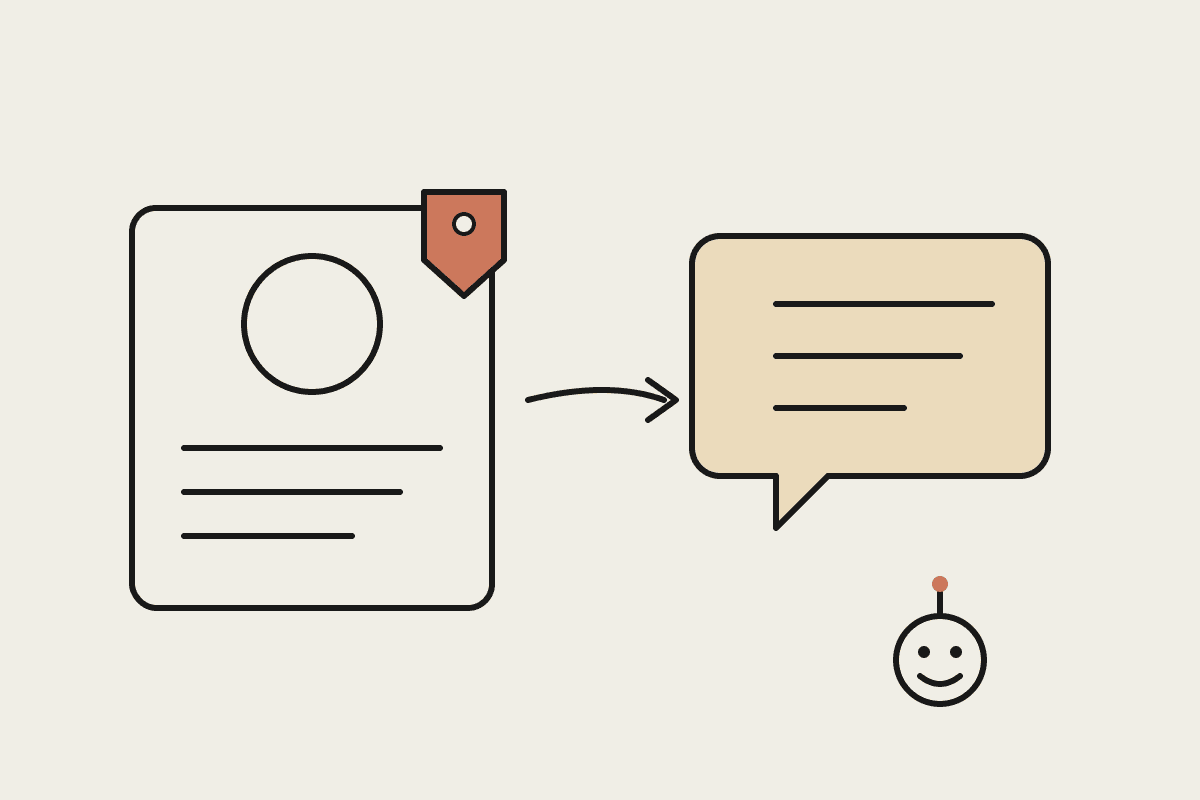
The most direct win is product copy. You give Claude the raw fields you already have, the product name, a few specs, the supplier blurb, and ask for output in the shape your store needs: a short meta description under 155 characters, a punchy 40-word summary for the listing, and a longer description with the benefits spelled out. Because Claude follows a brief closely, you can hand it your tone rules once, plain Australian English, no hype, spell colour and organise the British way, and get consistent copy across hundreds of items.
For a catalogue that lives in a spreadsheet or a CSV export, this becomes a batch job. Export your products, run each row through a Claude prompt that returns clean fields, and re-import via a plugin like WP All Import. A store owner in Brisbane we helped set this up cut a two-week backlog of 400 unwritten products down to an afternoon of review. The writing was done in a batch; the human time went to checking accuracy and approving, which is where it should go. One caution: always keep a person in the approval seat for claims about sizing, materials or compatibility, because a confident description of the wrong measurement costs you a return.
Answering order queries without a bigger team
The support inbox is the second big drain, and it is where stores are tempted to bolt on a generic chatbot that frustrates everyone. A better pattern keeps Claude as a drafting assistant behind the scenes rather than a bot talking directly to customers. When an order email comes in, Claude reads the message, pulls the order details, and drafts a reply your staff member approves and sends in one click. The customer gets a fast, accurate, human-signed response; your team stops writing the same three sentences forty times a day.
"Where is my order" becomes a drafted reply with the tracking link already pulled from the order record.
Address-change requests get a drafted confirmation plus a flag if the order has already been picked, so nothing ships to the wrong place.
Returns questions get answered against your actual policy text, so the wording is consistent every time.
A store handling 300 support emails a month at five minutes each spends about 25 hours in the inbox. Halving the drafting time gives back most of a working week every month, which for a two-person team is the difference between keeping up and falling behind during a sale.
Keeping it safe and on-brand
Two things matter for an Australian store. First, customer data. Order queries contain names, addresses and sometimes payment context, so your obligations under the Privacy Act apply. Keep the data flow tight: send Claude only what a reply needs, avoid pasting full customer records into random tools, and prefer a setup where content is not retained for training. Second, consumer law. Product claims and returns handling sit under the Australian Consumer Law, so a person should sign off on anything that promises a refund right or a product capability. Claude drafts; a human owns the promise.
A sensible way to start
Pick one job and prove it before you scale. Product descriptions are the easiest first step because the output is easy to check and the time saved is obvious within a day. Once your tone brief is dialled in and the team trusts the output, add the order-query drafting on top. You do not need a new platform or a big project; you need a clear brief, a review step, and a fortnight to build the habit. If you want a hand mapping which of your WooCommerce jobs are worth automating first, you can book a short call with us and we will walk through it with your actual catalogue and inbox in mind.