Most Australian small businesses that close their doors were not unprofitable. They ran out of cash at the wrong moment: a large invoice paid 40 days late, a quarterly BAS bill, a payroll run that landed the same week as a big supplier payment. Profit is an opinion; cash is a fact. Over the past quarter we ran a field test to see whether Claude could give a small business owner a genuinely useful rolling cash-flow forecast, rather than a static spreadsheet that goes stale the moment it is saved. The client was a Sydney electrical contracting business with lumpy invoicing and eight staff. Names and exact figures have been changed, but the shape of the numbers is real.
The problem: profit on paper, panic in the bank account
The owner had a healthy-looking profit and loss. What he did not have was any reliable sense of what his bank balance would be in six weeks. His bookkeeper produced monthly reports that were accurate and roughly four weeks out of date. By the time a problem showed up in a report, it had already happened. The specific pain points will be familiar to anyone who has run a trades business in Australia:
Invoices issued on 30-day terms that were routinely paid in 45 to 55 days.
Wages of about $34,000 a fortnight that had to clear regardless of what customers did.
A quarterly GST and PAYG bill that could top $28,000 and always seemed to arrive at the worst time.
Materials bought upfront on jobs that would not invoice for several weeks.
No single view that pulled all of this together, week by week.
What we built with Claude
We did not build a bespoke app. We built a repeatable process the owner could run himself in about fifteen minutes each Monday. The inputs were three exports he already had: open invoices from Xero, a supplier payment list, and his payroll calendar. Claude took those, applied the payment-timing assumptions we agreed on, and produced a rolling 13-week forecast with a plain-language summary of the tight weeks.
The weekly loop
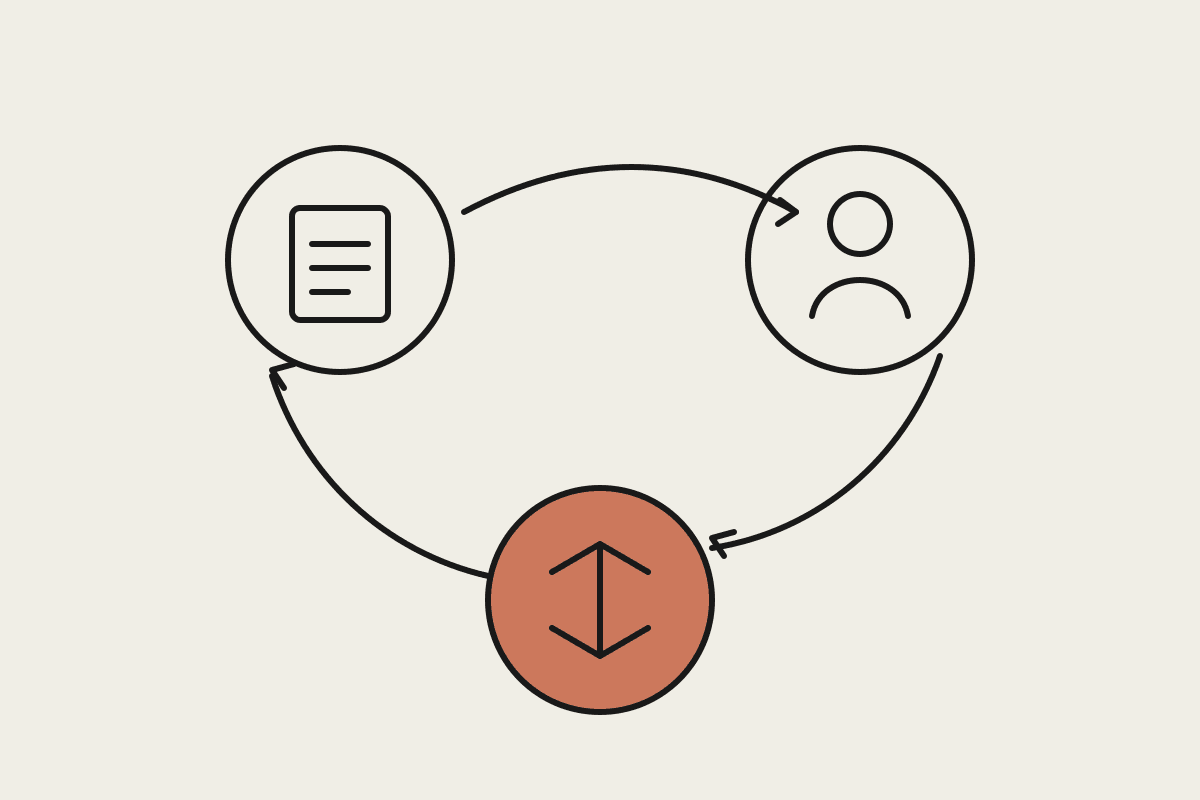
Monday: export three CSVs and hand them to Claude with a saved prompt.
Claude reconciles expected receipts against known outgoings, week by week.
It flags any week where the projected closing balance drops below the owner's $15,000 buffer.
It writes two or three sentences in plain English explaining why a given week is tight and what would fix it.
The forecast was never presented as certainty. Each week carried a confidence note based on how reliably each customer had paid in the past. A council client that always paid on day 47 was modelled at day 47, not day 30. That single change made the forecast honest enough that the owner started to trust it.
The numbers: what it cost and what it returned
The build took roughly A$4,500 in consulting time, most of it spent agreeing the payment-timing rules and testing the forecast against three months of actual bank data. Running it costs the owner almost nothing: a few dollars of Claude usage a month and fifteen minutes of his Monday. Against that, the forecast caught two specific problems in the first eight weeks. The first was a week in which a $34,000 payroll run and a $19,000 supplier payment were due to land two days apart, against expected receipts of only $21,000. Seeing that three weeks out, the owner brought forward invoicing on a completed job and arranged a short extension with the supplier. No overdraft, no scramble. The second was a quieter win: the forecast showed more surplus sitting in April than he expected, which let him clear a $12,000 equipment lease early and save on interest.
The point of the field test was not the specific dollars saved. It was that the owner stopped making decisions blind. A forecast that is 85 per cent right and available today beats a report that is 100 per cent right and four weeks late.
Where a human still has to sign off
Claude is very good at the mechanical work: reconciling dates, applying rules consistently, spotting the week that does not add up, and explaining it clearly. It is not a substitute for judgement. The payment-timing assumptions still come from someone who knows the customers, and a forecast is only as honest as the numbers fed into it. Claude will faithfully project a bad assumption. We were also deliberate about what the tool does not touch: it reads exports, it does not connect to the bank, and it never moves money. Any decision to draw on an overdraft, chase a debtor, or delay a payment stays with the owner. For a business owner weighing up AI, that boundary matters as much as the forecast itself.
Should you try this?
If your business has predictable outgoings and unpredictable receipts, which describes most Australian trades, agencies, and professional services firms, a rolling cash-flow forecast is one of the highest-return uses of Claude we have found. It is cheap to run, it needs no new software, and it turns a monthly rear-view report into a weekly steering wheel. The build is the hard part: getting the payment-timing rules right for your specific customers is where the value sits, and it pays to do that properly the first time. If you would like to see whether this fits your numbers, book a short brainstorm with us and we will walk through your own cash position on the call.