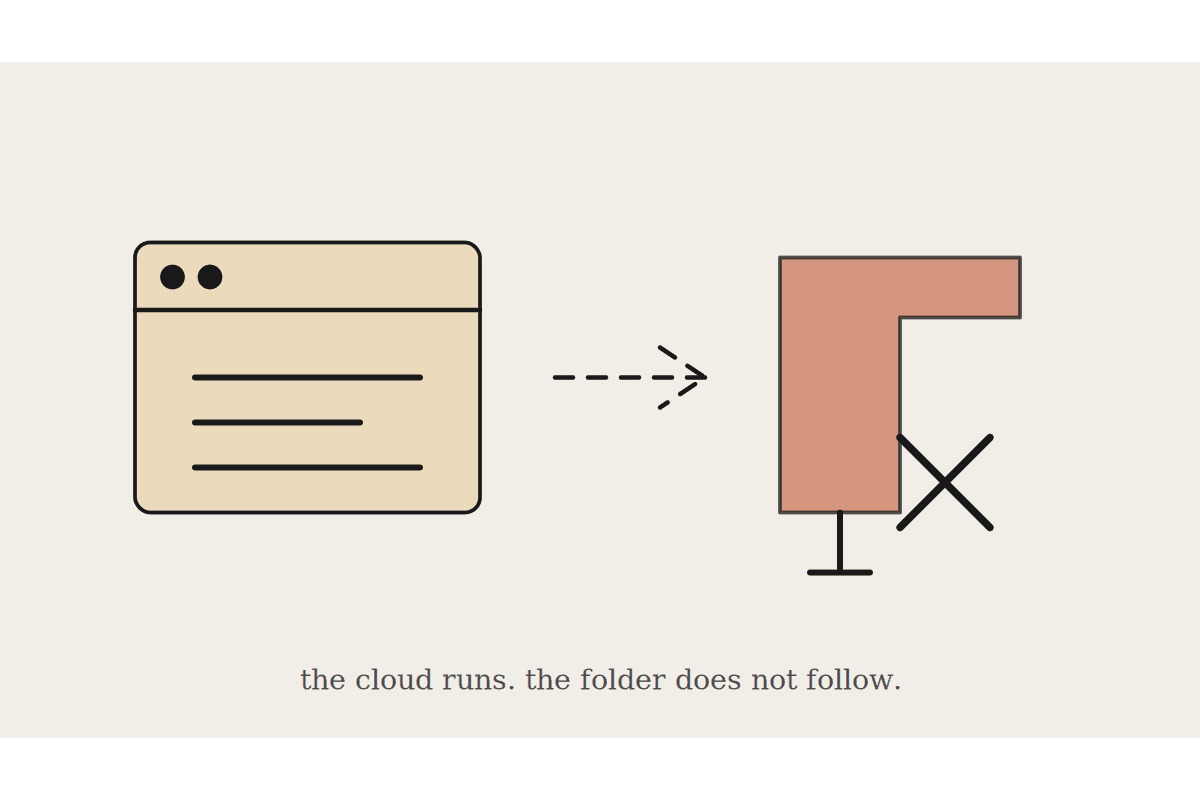
Claude Code is about to change how it bills automated usage, and if your business runs any kind of pipeline against it, the change lands on 15 June 2026. Anthropic is separating Agent SDK and non-interactive usage from your regular Claude plan and moving it onto a dedicated monthly credit. For most Australian teams this is a small adjustment. For anyone pushing real volume through automated pipelines, it is the difference between a job that keeps running and one that stops mid-month.
What is actually changing
From 15 June 2026, three categories of usage stop drawing on your plan limits and move to a separate monthly agent credit:
claude -p, the non-interactive or piped mode used inside scripts and CI jobs
Direct calls through the Claude Agent SDK
Any automated or programmatic usage that runs without a person at the keyboard
Interactive usage stays exactly where it is. Working in the terminal, the IDE extension, or standard Claude.ai chat still draws on your existing plan, and nothing changes for a developer typing prompts in real time. The split only touches code that calls Claude on its own.
The new credit allocations
Each plan gets a fixed monthly agent credit. In US dollars the allocations are $20 on Pro, $100 on Max 5x, and $200 on Max 20x. At current exchange rates that maps roughly to:
Pro: $20 USD, about $30 AUD per month
Max 5x: $100 USD, about $150 AUD per month
Max 20x: $200 USD, about $300 AUD per month
Those numbers look small, and for occasional automation they are. A nightly script that summarises a handful of documents will not come close to the ceiling. The risk sits with teams that have quietly built Claude into the core of their delivery, where automated calls can run well past $1,000 AUD a month without anyone tracking it as a separate line item.
The watch-out that will catch teams off guard
When the monthly agent credit runs out, Agent SDK requests stop entirely. They do not silently fall back to your plan limits. The only thing that keeps them running is pay-as-you-go usage credits, which have to be switched on in your Anthropic account settings. If a pipeline your team depends on hits the ceiling at 2am on the 20th and usage credits are off, that pipeline simply fails until the next billing cycle or until someone notices.
For a Sydney engineering team running code review, test generation, or release automation through claude -p, that is a production incident waiting to happen. The fix is a single setting, but only if you check it before 15 June.
Who this affects most
CI/CD pipelines that call claude -p for code review, test generation, or documentation on every commit
Background automation that batch-processes work through the Agent SDK overnight
Multi-agent orchestration built on the Claude Agent SDK
Teams on Pro who run more pipeline volume than the $30 AUD monthly credit covers
What to do before 15 June
Audit your usage. Work out how much of your current Claude spend comes from claude -p and Agent SDK calls versus interactive use.
Enable usage credits. If there is any chance your pipelines exceed the monthly allocation, turn on pay-as-you-go so a credit ceiling never takes a pipeline offline.
Consider Max. If you run serious agentic volume, the 5x and 20x tiers give far more headroom than Pro.
Separate your budgets. Interactive and automated usage now track as distinct costs, which makes per-project costing cleaner for client work.
Why this is good news for cost control
For most Australian businesses running occasional automation, this is a cleaner setup. Interactive and background usage no longer compete for the same pool, so a heavy automation week no longer eats into the limit a developer relies on for day-to-day work. It also gives finance teams a real number for what automation actually costs, which matters for anyone reporting AI spend to a board or, in regulated sectors under APRA oversight, folding it into an operational risk picture. The change rewards teams that know their own usage and exposes the ones that have never looked.
How Automata AI reads it
We track these changes so our clients do not get caught by them. For heavy pipeline users the message is simple: check your usage credit setting before 15 June, or risk a quiet outage. For everyone else, this is a tidy-up that makes Claude automation easier to budget, not harder. Either way the underlying platform is not getting more expensive; it is getting clearer about which costs belong where.
If you are not sure how exposed your pipelines are, we can audit your Claude Code deployment and set the right guardrails before the deadline. Book a brainstorm with our team.