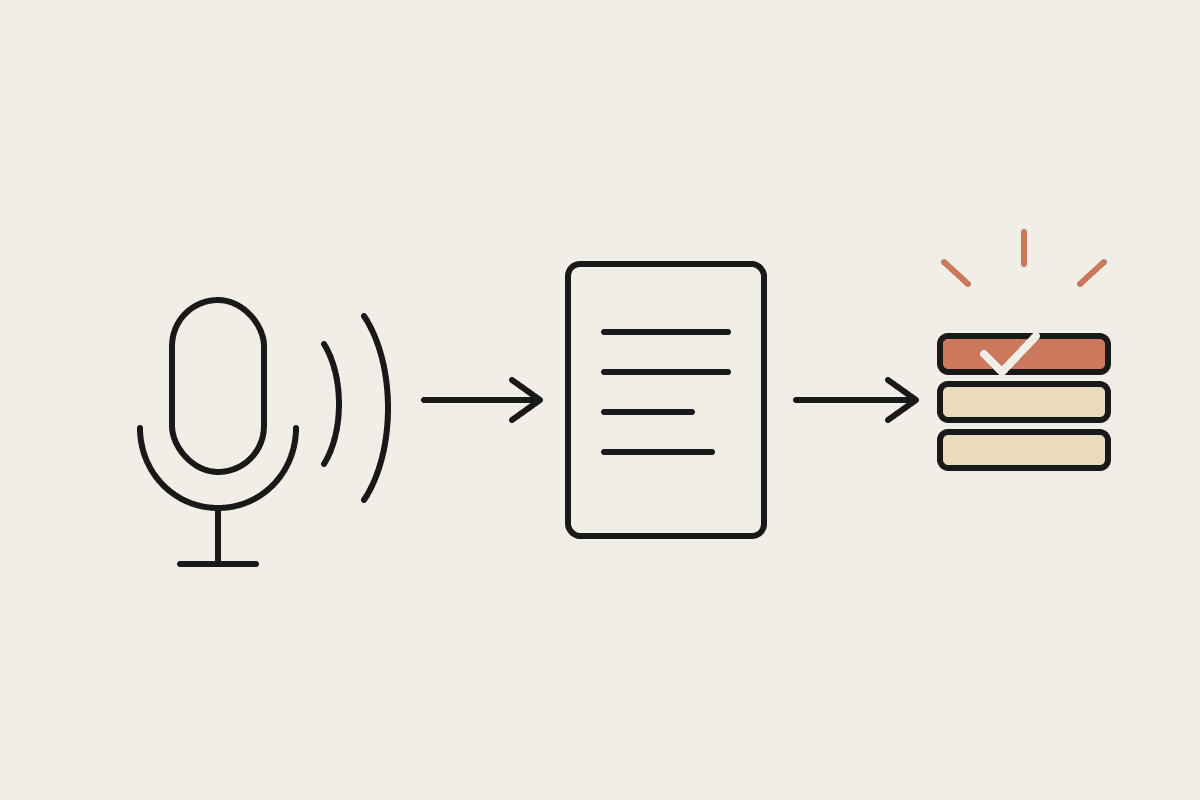
A month-end close involves genuinely more coordination than calculation, chasing department heads for their outstanding expense approvals, reconciling half a dozen sub-ledgers against the general ledger, and pulling together a close checklist that has to happen in a specific order because half the steps depend on the ones before them, which makes the close a coordination problem as much as an accounting one, and coordination is exactly what Cowork is well suited to handling.
Where a close actually slows down
This coordination problem tends to get worse, not better, as an Australian business grows past a handful of departments, since each additional department head adds another person whose individual response time the close now depends on, and a close that took three people's timely input at ten staff can easily depend on eight people's timely input at fifty, without the underlying accounting complexity having grown nearly as much.
The close rarely slows down because the accounting itself is hard; it slows down waiting on other people, a department head who hasn't approved their team's expenses, a sub-ledger that hasn't been reconciled because the person responsible is on leave, a step that can't start until an earlier one finishes and nobody's tracking that dependency actively. A finance manager ends up spending a disproportionate share of close week chasing status rather than doing the actual accounting work the role is meant to focus on.
A close checklist tracked against actual dependency order, flagging what's genuinely blocking the next step
Automated reminders to department heads for outstanding approvals, escalating only when genuinely overdue
Sub-ledger reconciliation status pulled automatically rather than manually chased department by department
A daily close-progress summary during close week, so the finance manager isn't rebuilding the picture from memory each morning
Coordinating people, not just tracking tasks
A checklist alone doesn't solve the coordination problem if nobody's actively chasing the people behind each blocked step; the setup that actually speeds up a close pairs the dependency-aware checklist with automated, appropriately-toned chasing of the specific people holding up the next step, department heads for approvals, specific staff for sub-ledger reconciliation, freeing the finance manager to focus on the accounting judgement calls rather than the chasing itself.
A Melbourne manufacturing business's finance manager had been running a five-day close that consistently stretched to seven or eight days most months, almost entirely due to chasing four department heads for expense approvals and two sub-ledger owners for reconciliation status, a task that ate the better part of each close week alongside the actual accounting work. Automating the dependency tracking and the chasing, with the finance manager stepping in personally only for genuinely overdue items after two automated reminders, brought the close back to a consistent five days, and the CFO estimated the two to three recovered days each month were worth approximately $19,000 a year in finance team time, on top of getting management reporting into the board's hands meaningfully earlier each cycle.
Handling a close that spans multiple entities
A business closing more than one entity each month needs the dependency tracking to work per-entity, since one entity's close being blocked shouldn't obscure visibility into another entity that's actually on track, and a combined single checklist across entities tends to hide exactly the entity-specific bottleneck that's worth surfacing clearly.
Handling the close-week crunch on the finance manager themselves
Automating the chasing doesn't remove every bottleneck; a finance manager who's personally the last reviewer on every single line item is still a bottleneck regardless of how well-coordinated everyone else's inputs are, and larger finance teams get more value pairing this automation with a deliberate delegation of some review authority to senior team members, rather than automating everyone else's inputs while leaving the finance manager as a single point of failure at the final step.
What this isn't
This is the coordination and chasing layer around a close, distinct from the accounting judgement calls themselves; this speeds up getting to the point where a finance manager can actually do the accounting work, it doesn't replace their judgement in doing it.
Automata AI builds close-coordination workflows for Australian finance teams tired of a five-day close routinely stretching to eight. Get in touch via /contact with your current close checklist and a rough sense of which specific people or steps tend to hold it up, and we will map the full dependency chain against your actual close process and identify precisely where the genuine coordination gap sits today, before building or automating anything at all inside your actual monthly close process.
Keep going
For the full setup path, see the Claude Cowork setup guide. Related on this topic: