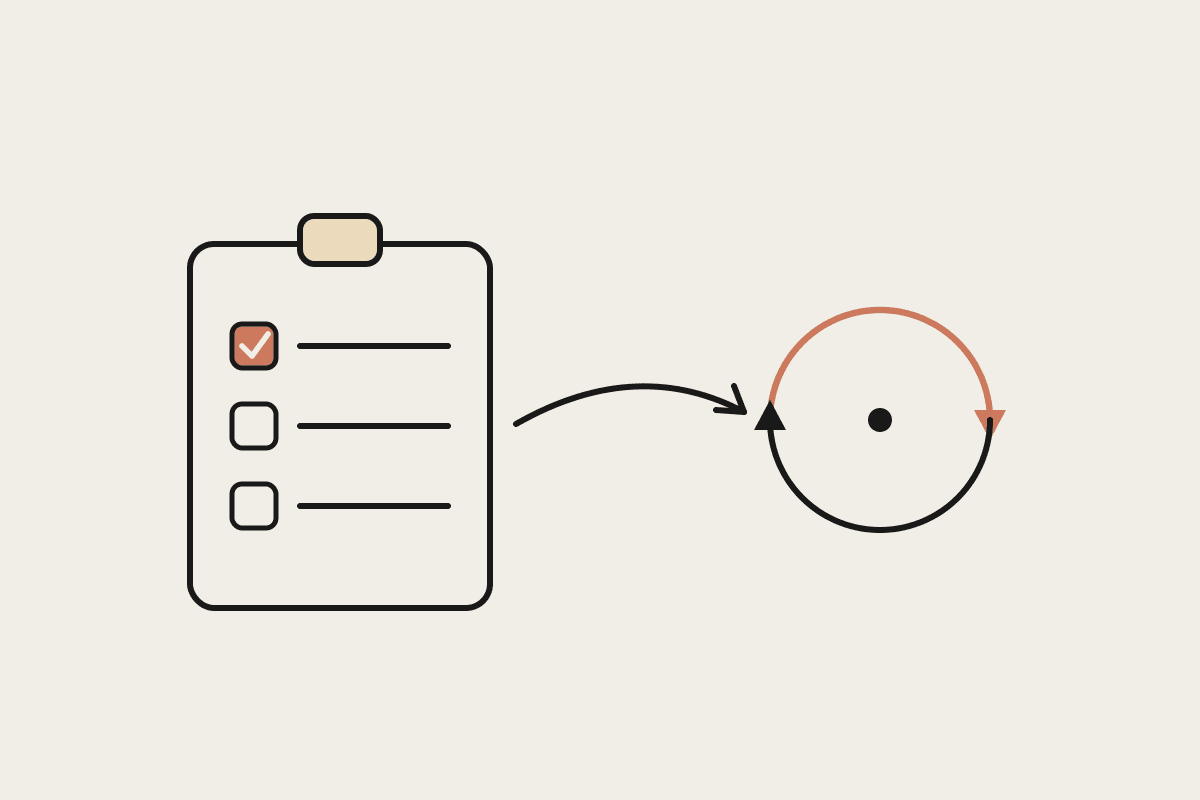
Every operations manager keeps a shelf of standard operating procedures that were written once, filed carefully, and read by almost no one. The document says how the month-end report gets built, how a new supplier is onboarded, how the weekly roster goes out. The reality is that a person still does each of those things by hand, every time, because a written procedure has never actually run anything. Claude Cowork narrows that gap. It lets you hand a procedure to an agent that reads your files, drafts the output the SOP describes, and passes it back for a quick human check.
What a self-running SOP actually looks like
The phrase sounds like marketing, so it helps to be precise. Claude Cowork does not replace your judgement or take irreversible actions on its own. What it does is take the repeatable middle of a procedure, the reading and sorting and drafting and formatting, and do that part on a schedule or on request. You still open the result and approve it. The difference is that the blank-page work is already done when you sit down.
A few procedures that map well onto this:
Month-end reporting: the agent pulls figures from your saved exports, drops them into the same template you use each month, and writes the plain-language summary your board expects.
Supplier onboarding: it reads a new vendor's documents, checks them against your standard checklist, and flags anything missing before a person signs off.
Weekly rostering drafts: it takes availability and last week's pattern and produces a first-cut roster for the team lead to adjust.
Incident and complaint logs: it turns a rough email thread into a structured record in your format, ready to file.
What these share is a fixed shape. The inputs live in files you already keep, the output follows a template you already use, and the judgement calls are few and known in advance. When a procedure has that shape, describing it well is most of the work.
A week in the life, before and after
Consider an operations coordinator at a Melbourne services firm who spends roughly six hours a week on recurring admin: assembling reports, chasing document gaps, formatting the same three deliverables. None of it needs a senior decision. All of it needs someone to sit down and grind through it. After moving four of those procedures into Claude Cowork, the same coordinator spends closer to ninety minutes a week, reviewing drafts and handling the exceptions the agent flagged, rather than producing everything from scratch.
That is the honest shape of the benefit. The work does not vanish. The coordinator's time shifts from production to review, which is both faster and a better use of an experienced person.
The AUD maths
Put rough numbers on it. An operations coordinator on $85,000 a year costs roughly $55 an hour once on-costs are included. Six hours a week of recurring admin is about $17,000 a year of that person's time. If a set of Cowork procedures cuts that to ninety minutes a week, you recover something like $12,000 a year of capacity, not as a redundancy, but as hours redirected to work that was previously getting squeezed out. For a team of three coordinators, the same pattern points at $35,000 or more of freed capacity a year. The tooling itself costs a small fraction of that.
The figures will vary with your salaries and how much of your admin is genuinely repeatable. The method does not: measure the hours a procedure eats now, estimate the share that is mechanical, and price it against a subscription. Most operations teams find the repeatable share is larger than they expected.
Where a human stays in the loop
The procedures that run themselves are the ones where a mistake is cheap to catch and easy to reverse. Anything touching payments, employment decisions, or personal data needs a person on the final step, and often on earlier steps too. If a workflow handles employee or customer information, your Privacy Act obligations do not change because an agent drafted the output. You are still accountable for how that data is used and stored. Rostering and pay-adjacent processes sit near Fair Work considerations, so keep the approval gate firmly with the manager who owns the decision.
A practical rule for Australian operations teams: let Claude do the reading, drafting and formatting, and reserve the sending, approving and deciding for a named person. Build that gate into the procedure itself, so the review step is never optional.
How to start without a big project
You do not need a transformation program. Pick one procedure you personally find tedious, that runs at least weekly, and where the output is a document rather than an action. Write the SOP plainly, as if briefing a capable new starter, and hand it to Claude Cowork. Run it alongside your manual process for a fortnight and compare. If the draft saves you time and you trust the review step, add a second procedure. That is the whole adoption curve.
If you want a hand picking the first few procedures and setting up the review gates properly, that is the kind of work we do with Australian operations teams. You can book a short brainstorm and we will map your most repeatable procedures against what Cowork can safely take on.
Where to go next
If you are setting Cowork up from scratch, start with Claude Cowork setup guide. Two pieces that sit closest to this one: