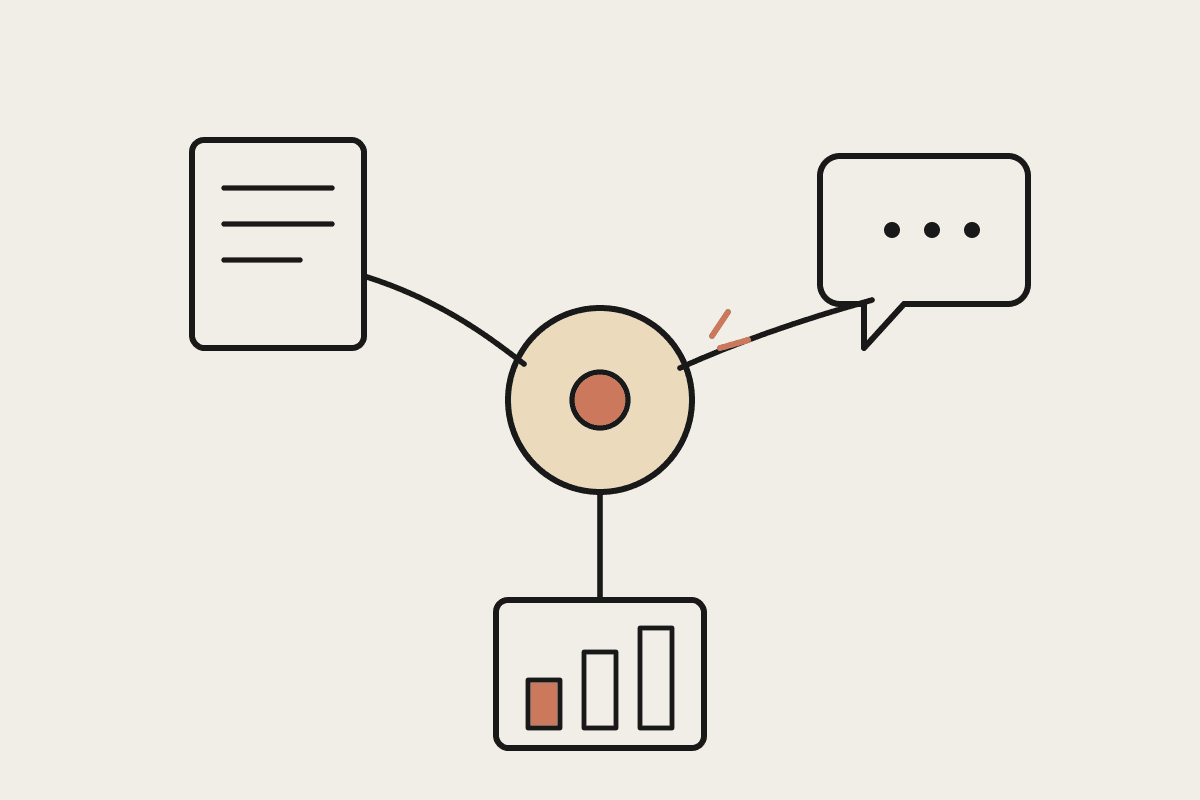
Marketing teams run on a hundred small jobs: brief the writer, check the copy against the brand guide, pull last month's numbers, draft the newsletter, size up a competitor. Claude can do most of them well, but only when it understands your formats, your tone, and where your data lives. That is the job of a plugin. A Cowork plugin is an installable bundle that teaches Claude how your marketing function actually works, so the same request returns a usable draft rather than a generic one. The difference is the gap between a tool you have to coach every morning and one your team trusts to start the work.
What a Cowork plugin actually contains
A plugin is not a single feature. It groups three kinds of building blocks so they install together and stay in sync across your team.
Skills: step-by-step playbooks for a repeatable task, such as drafting a launch email, running a brand-voice check, or building a campaign brief. The skill carries the format and the guardrails so you do not re-explain them each time.
Connectors (MCP): secure links to the tools your data sits in, such as your analytics, your CRM, or your content calendar. These let Claude read the real numbers instead of asking you to paste them.
Commands: named shortcuts that kick off a workflow in one line, so a junior marketer gets the same result as your most experienced operator.
Bundling matters because marketing work is rarely one step. A performance report needs the analytics connector, the reporting skill, and your house format for the summary. Ship them as a plugin and every person on the team runs the same version. When you refine the brand-review skill or update a template, you publish once and the whole team picks up the change, rather than chasing five people to update their private prompts.
The marketing jobs worth packaging first
Do not try to automate the whole function at once. Pick the jobs that are frequent, format-heavy, and low-risk to draft. These four earn their place first for most Australian marketing teams.
Content drafting: blog posts, social captions, and email sequences built to your structure, with your calls to action already in place.
Brand review: a check of any draft against your style guide and messaging pillars, flagging off-tone lines before they reach a channel.
Campaign planning: a full brief with objectives, audience segments, channel mix, and a content calendar, generated from a short prompt.
Performance reporting: a monthly read of the numbers with plain-language commentary on what moved and what to try next.
The pattern under all four is the same. The skill holds the format, the connector holds the data, and Claude does the drafting. A marketer reviews and approves. Nothing goes out without a human deciding it should, which keeps the speed without handing over the editorial call.
A realistic rollout for an Australian marketing team
Picture a five-person marketing team at a Sydney scale-up. Before plugins, the monthly report takes a senior marketer most of a day: exporting numbers, formatting the deck, and writing the narrative. At a loaded cost of roughly $90 an hour, that single report costs about $650 a month in time, and the newsletter and campaign briefs cost more again.
With a reporting plugin wired to their analytics, the same person spends about an hour reviewing and sharpening a draft that already has the numbers and the commentary. Across reporting, content, and briefs, a team of that size typically frees up $4,500 to $6,000 of time a month. That capacity does not vanish. It moves to the work software cannot do: talking to customers, testing new channels, and improving the offer.
A sensible sequence is to start with one plugin and one connector, prove it over a fortnight, then add the next. Teams that install everything at once tend to trust none of it, because they never build the habit of reviewing a draft and shipping it. Start narrow, measure the hours saved on that one job, and let the results make the case for the next plugin.
Governance: what plugins do not fix
A plugin makes good work faster. It does not make judgement optional. Three things stay firmly with your team.
Approval: every customer-facing piece needs a person to sign off. Draft, review, then publish.
Data handling: if a connector touches customer records, your obligations under the Privacy Act still apply. Decide what Claude may read and keep sensitive fields out of scope.
Voice: a brand-review skill enforces your rules, but someone has to write those rules honestly first. The plugin is only as good as the guide behind it.
Handled this way, plugins give a small marketing team the output of a larger one without the generic sheen that gives AI-written content away. The team still decides what to say. Claude just clears the busywork between the idea and the draft.
If you want help scoping which marketing jobs to package first, book a short brainstorm and we will map your formats and tools to a plugin your whole team can run.
Keep going
For the full setup path, see the Claude Cowork setup guide. Related on this topic: