University professional staff carry a quiet, constant load that rarely shows up in strategy documents: the committees. Academic boards, faculty boards, learning and teaching committees, research ethics panels, audit and risk committees. Each one needs an agenda, a pack of papers, and a set of minutes that stands up to scrutiny months later. For a mid-sized Australian university, that can mean several hundred committee meetings a year, and behind each one sits an executive officer or governance coordinator doing the same careful, repetitive drafting work.
Claude, the AI assistant from Anthropic, is well suited to this work. It handles long documents, holds a formal register, and follows house style closely. Used properly, it takes the first-draft burden off committee secretaries so they can spend their time on judgement, accuracy, and the relationships that actually make governance work.
The committee paper problem
A committee paper is not a free-form document. It has a structure the governance team expects: purpose, background, discussion, recommendation, resource and risk implications, and a clear decision sought. Drafting one from a program lead's rough notes or a two-line email request is slow, and the slowness compounds when a single meeting has fifteen items on the agenda.
The minutes are the other half of the problem. They have to capture the decision, the mover and seconder where relevant, action items with owners and due dates, and enough discussion to explain why a decision was made without turning into a transcript. Writing them from handwritten notes on a Friday afternoon, then chasing corrections the following week, eats hours that professional staff would rather spend supporting students and academics.
Where Claude fits the workflow
The point is not to hand governance over to a machine. It is to give the person who owns the committee a fast, reliable first draft they can check and correct. Claude is genuinely useful across the paper and minute lifecycle:
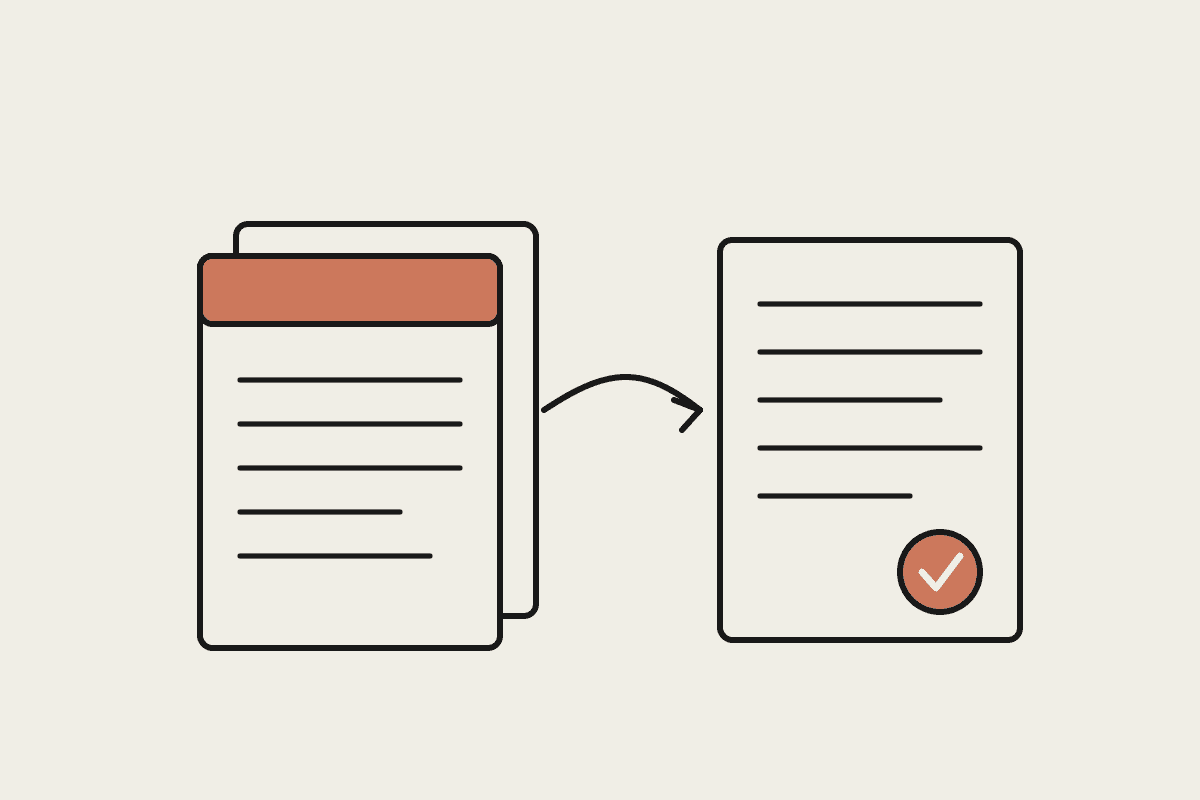
Turning a program lead's dot points into a properly structured committee paper in the university's template.
Summarising a long attached report into a one-page cover paper with a clear recommendation.
Drafting minutes from rough notes, with action items pulled into a separate table.
Producing a plain-English version of a dense policy change for members who sit outside the specialist area.
Building the action-tracking register that follows items from one meeting to the next.
Checking a draft agenda against standing items so nothing recurring is missed.
Drafting a committee paper with Claude
The workflow that holds up in practice starts with the committee secretary giving Claude three things: the university's paper template, the raw material from the item sponsor, and a short instruction about tone and audience. Claude returns a structured draft that follows the template, flags where information is missing, and keeps the recommendation wording tight enough to become a resolution.
Because Claude works from the material you provide rather than inventing facts, the secretary stays in control of accuracy. The staff member reads the draft, corrects any misreadings, confirms the figures against the source, and adds the institutional knowledge that only a person who has sat in the room can supply. A paper that used to take ninety minutes to draft from scratch often takes twenty to review and finalise.
Minutes without the Monday-morning slog
For minutes, the pattern is similar. During the meeting the secretary keeps notes as usual. Afterwards, Claude converts those notes into formal minutes in the house format, separating decisions from discussion and lifting every action into a table with an owner and a date. The secretary checks the record against what actually happened, which is far quicker than composing the whole document from a blank page.
A few practical habits make this reliable:
Keep meeting notes structured under each agenda item so Claude maps them cleanly to the minute headings.
Always confirm names, titles, and figures against the source rather than trusting the draft.
Never paste confidential or personal information into a tool that is not covered by your institution's approved arrangements.
Have a second staff member sight the minutes before they go to the chair, exactly as you would today.
Governance, privacy and records
Australian universities operate under real obligations, and committee records are often the evidence that those obligations are being met. Registered providers answer to TEQSA under the Higher Education Standards Framework, and committee minutes are frequently the artefact an auditor asks to see. Personal information about staff and students is covered by the Privacy Act 1988 and, in most states, by state records and information-privacy legislation as well.
None of that changes because a draft was written with Claude. The record of decision is still the university's, still subject to the same retention schedules, and still owned by the governance team. The sensible rule is to use enterprise arrangements where your data is not used to train models, to keep genuinely confidential material out of any tool that sits outside approved systems, and to treat every Claude draft as exactly that, a draft that a responsible officer signs off. Handled this way, the AI sits inside your existing governance rather than around it.
What it is worth in staff time
The case for this is not abstract. Take a governance team supporting forty committees, each meeting four times a year, so one hundred and sixty meetings. If drafting papers and minutes for each meeting takes six hours today and Claude cuts that to three, you save roughly 480 hours a year. Costed at a professional-staff rate of around $65 an hour including on-costs, that is close to $31,000 of capacity returned to the team, before you count the reduced overtime around board and academic-board cycles.
Scale that across a large Sydney or Melbourne university with several hundred committees and the recovered capacity easily runs past $95,000 a year. The value is not really the dollar figure though. It is that skilled governance staff stop spending their evenings retyping notes and start spending their time on the parts of the job that need a human: spotting the risk nobody flagged, managing a difficult item, and keeping the institution's records defensible.
Getting started safely
The lowest-risk way in is to pick one committee, agree the templates and the sign-off steps with your governance lead, and run Claude alongside your normal process for a full meeting cycle. Compare the drafts, tune the instructions, and only widen the rollout once the quality is proven and the privacy questions are settled. Most Australian professional-staff teams find the paper and minute workflow pays for itself within a term.
If you want help designing that first pilot with the right guardrails for a university setting, book a short call and we can map it to your committee structure.