OpenAI has published a practical guide to building with its GPT-6 family, and the most useful part for business buyers is not a benchmark. It is a model-selection map. The guide splits the family into three jobs: GPT-6 Astra for complex reasoning, GPT-6.1 Sol for coding and research, and GPT-6 Luna for routine operations at scale. The message is clear: stop sending every request to your most expensive model.
That advice is sound, and it applies to Claude as much as to GPT-6. The harder question for an Australian mid-market firm is how many tiers you should actually run, and who in your team will own the rules that decide which request goes where. This piece is about that routing decision, not about which model scores higher.
Is a three-tier GPT-6 stack cheaper than running Claude?
On token price alone, a tiered stack can be much cheaper, because routine traffic goes to the cheapest model. But the saving only appears if requests are routed correctly. Every extra tier adds a price point, a behaviour profile and a set of failure modes to test. For most mid-market workloads, two well-chosen tiers with a clear routing rule beat three tiers that nobody fully understands, whichever vendor you pick.
The spread in OpenAI's own pricing shows why the guide pushes tiering so hard. According to OpenAI's practical guide to building with GPT-6, Luna starts at $0.10 input and $0.50 output, while Astra runs to $10 input and $50 output, with cached tokens priced well below both. That is a hundredfold gap between the bottom and top of the family. Send a routine classification task to Astra by mistake and you pay a hundred times more than you needed to. Send a hard contract-review task to Luna and the cost shows up later, as rework.
| Tier | OpenAI's stated job | Published price (input / output) | Routing question for your team |
|---|---|---|---|
| GPT-6 Luna | Routine operations at scale | $0.10 / $0.50 | Which requests are truly routine? |
| GPT-6.1 Sol | Coding and research | Not stated in the guide summary | Where does research end and reasoning begin? |
| GPT-6 Astra | Complex reasoning | $10 / $50 | What justifies a hundredfold price step? |
What OpenAI's guide gets right
Much of the guide is good operating practice that we would give any client, whichever model family they run:
Implement prompt caching. OpenAI says it can cut costs by up to 95% on repeated context.
Use context compaction for long conversations, so you are not paying to resend a full history every turn.
Put monitoring in place before you deploy, not after the first surprising invoice.
Measure task success, latency and cost per successful task rather than raw accuracy alone.
Give the model a clear assignment rather than an over-specified prompt, and use mid-turn steering, asynchronous tool calls and multi-agent delegation for long, independent subtasks.
Two of those points already have their own write-ups on this blog. We looked at why cost per correct task matters more than token price for GPT-6.1 Sol, and why your cache hit rate decides the real caching saving. The headline discount means little if your prompts change every call. This article stays with the part neither of those covers: the cost of the routing layer itself.
The guide also notes that computer use lets the model act directly on websites and apps that have no API. For businesses stuck with old line-of-business software, that is worth knowing about, though it raises its own testing and permissions questions. OpenAI cites Harvey, Cognition, Hex and Invideo as case studies.
The hidden cost of routing between tiers
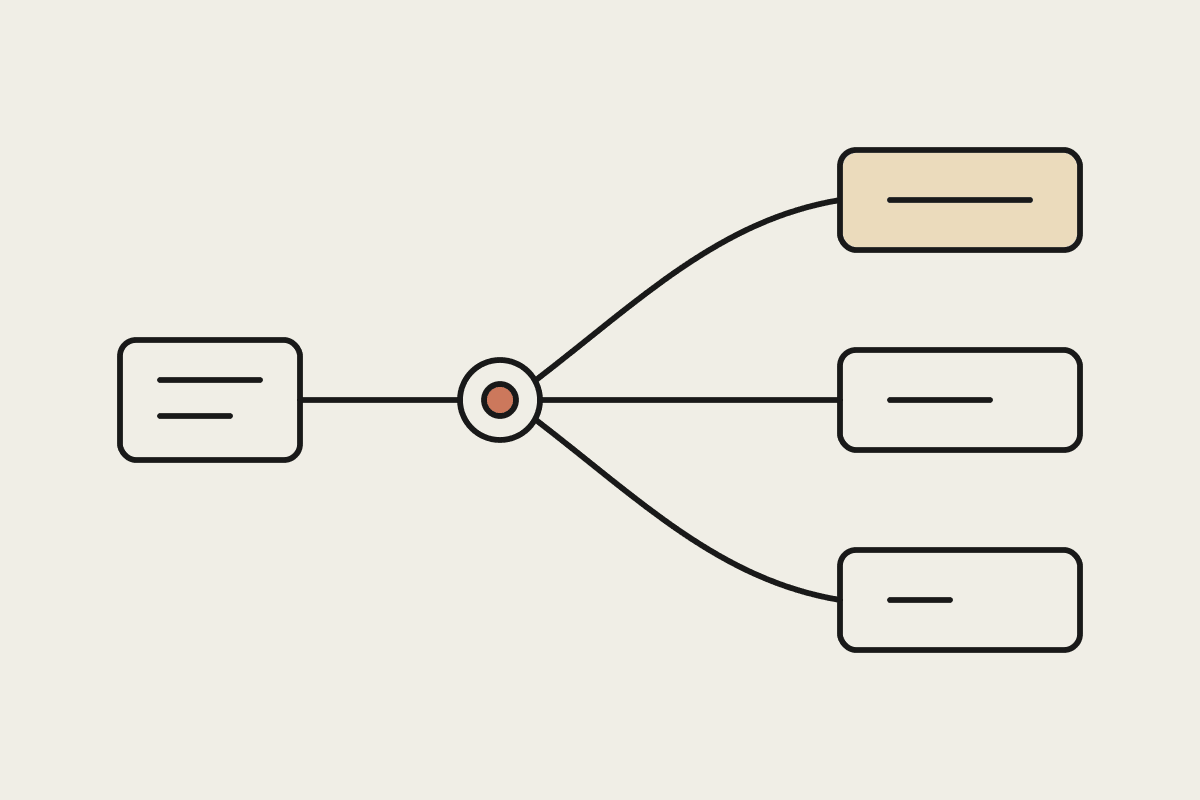
Tiering moves cost from the model bill to your team. Someone has to write the rule that decides whether a customer email is routine or complex. Someone has to test each tier against your real work, because three models means three sets of quirks in tone, formatting and tool use. And someone has to notice when the router starts sending the wrong traffic to the wrong place.
In our experience with Australian clients, the routing rule is where tiered stacks quietly go wrong. A rule written in March drifts by September, because the mix of work changes. A new product line creates longer emails, the router reads length as complexity, and the expensive tier starts carrying traffic it does not need. Nobody sees it until the monthly bill or a quality complaint arrives.
There is a quieter cost too. Each tier you add is another model to re-test whenever the vendor ships an update. Three tiers means three regression runs, three sets of prompts to adjust, and three places for a behaviour change to slip through into production. For a firm without a dedicated platform team, that maintenance load can outweigh the token saving within a year.
An illustrative example in AUD
Take an illustrative Sydney professional services firm with an internal assistant handling 40,000 requests a month. Suppose the model spend is A$6,000 a month if everything runs on a premium tier. A sensible two-tier split, sending 70% of traffic to a cheaper model, might bring that to around A$2,500. Adding a third tier might save another A$400 a month on paper. If building and maintaining that third route takes a developer two days a month at A$1,200 a day, the third tier costs more than it saves. These figures are illustrative, not quotes, but the shape of the sum is one we see often. Our ROI calculator lets you run your own numbers.
How this applies if you are building on Claude
Claude has tiers too, and the same discipline applies. We set out how to pick a Claude model by job to be done in an earlier guide. The difference we care about is not the number of models on a vendor's price list. It is how many your team has to reason about day to day, and how consistently they behave when the router hands work between them.
For most of the mid-market Claude builds we run, we start with one model and add a second only when the volume data shows a clear, repeatable class of routine work. That keeps the stack simple enough for an operations lead to explain, test and audit. If a third tier earns its place later, the monitoring is already there to prove it.
A practical sequence for any firm weighing Claude against a three-tier GPT-6 stack:
Log a month of real requests and sort them by task type before choosing any tiers.
Price each task type on cost per successful task, including staff review time.
Add a tier only when a task type is large enough that the saving clearly beats the cost of routing and testing it.
Write the routing rule down, give it an owner, and review it each quarter.
What not to read into the guide
A vendor's model-selection guide is written to help you spend well on that vendor's models. It is useful, and much of its advice is vendor-neutral. It is not evidence that a three-tier stack is the right shape for your business, or that one family is cheaper than another for your workload. Only a test on your own tasks answers that.
If you would like help sizing the right number of tiers for your workload, or comparing Claude with GPT-6 on your own tasks, get in touch with our team for a short conversation.