Claude's computer use and browser use capabilities let an agent move a cursor, click buttons, fill forms, and read what is on screen. For Australian teams piloting AI in 2026, the harder question is not how these capabilities work but where they belong in your business. The answer separates teams that get a measurable return on AI from teams that burn $80,000 of budget on a demo that never reaches production.
What computer and browser use actually do
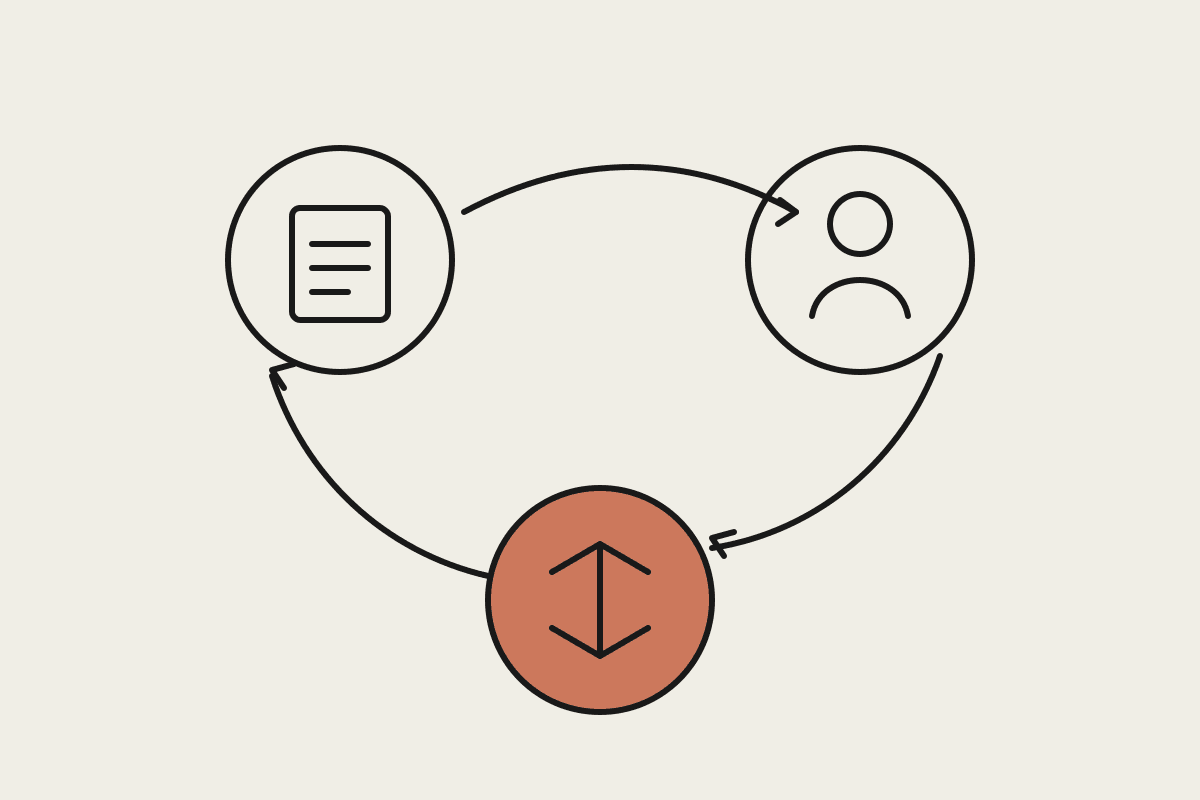
Computer use gives Claude a screenshot of a desktop and lets it issue mouse, keyboard, and scroll actions. Browser use is the narrower web-only version: Claude sees a rendered page, clicks links, fills forms, navigates tabs, and reads DOM-aware structure. Both modes loop: take an action, observe the new state, decide the next action.
These capabilities sit on top of the Claude 4.6 model family and the newer Opus 4.7 release. The browser-use path runs faster and is more reliable on well-structured sites. Computer use covers the long tail of legacy thick-client apps where no API exists. Each carries different latency, cost, and risk profiles, and the right choice usually depends on whether a vendor API will ever appear.
Where Australian teams should deploy it
The right starting point is internal, back-office, high-volume, low-stakes work. Three patterns we see working with our Sydney and Melbourne clients:
Accounts payable. A finance team in Brisbane reduced manual invoice keying into Xero by 71% by handing the data-entry step to a Claude browser-use agent, with a human approving every batch above $5,000.
Supplier onboarding. A WA mining services firm runs Claude through 18 separate supplier portals to register new vendors, cutting an 11-hour process to under 90 minutes.
Internal reporting. A Melbourne professional services group uses computer use to pull weekly utilisation reports from a legacy practice management system that has no API, saving roughly $45,000 a year in analyst time.
The common thread is straightforward: the work is repetitive, the inputs are structured, errors are caught downstream, and no customer sits on the other end of the screen. If the agent gets confused, the worst outcome is a queued task for a human reviewer, not a public mistake.
Where Australian teams should not deploy it
The pattern we steer clients away from is customer-facing autonomy. Live chat replacement, autonomous trade execution, social media response, and any workflow where a wrong click is visible to a customer or counterparty should not run on computer or browser use today. The technology is good. It is not yet good enough for that risk profile in regulated Australian environments.
Three categories deserve hard stops in 2026:
APRA CPS 230 perimeter. Banks, super funds, and insurers need traceable decision logs and human oversight at the decision point, not after the fact. A loose agent loop will not pass that bar.
AUSTRAC-reportable transactions. A misclassified payment can trigger reporting obligations that an autonomous agent should not be in the loop for.
Privacy Act 1988 protected information. If the agent might paste data into the wrong field or browser tab, the Notifiable Data Breaches scheme does not care that it was an AI.
The data handling questions that come up first
Every Australian compliance team asks the same four questions before approving a computer or browser use pilot. We cover the full answer set in our Claude security briefing, and we are happy to walk you through it. The short version is below.
Screenshots taken by Claude during computer use are sent to the model for inference. If your screen shows sensitive personal information, that information sits inside the request. Claude does not train on API traffic by default under the standard commercial terms, but your data handling team will still ask where the request lands, who can see it, and how long it is retained. The Anthropic enterprise terms cover most of this, though you will need to confirm specifics with your data protection officer for any APP 11 reasoning.
Browser use exposes session cookies and local storage in the headless browser the agent drives. Run the agent in a clean session per task, never in a logged-in browser that holds other credentials. We brief AU clients to treat the browser-use sandbox the same way they treat a contractor laptop: provisioned, scoped, and revoked.
A starter pattern that actually works
For an AU team starting from zero, the pattern we recommend is the Approval Loop. The agent proposes the next action, a human approves anything that mutates state, and approvals over a configurable dollar value escalate to a senior reviewer. This is not the demo-day version of agentic AI. It is the version that ships and survives the first audit.
Build cost for the first pilot, including model usage, scaffolding, and an approval UI, lands between $18,000 and $35,000 depending on the workflow complexity. Run cost for a single back-office process at moderate volume sits around $400 to $1,200 per month, and most of that is the model spend rather than infrastructure. The break-even point arrives quickly when the displaced labour is a contractor or BPO line item that the CFO already wants to question.
What to do next
If you have a back-office workflow with high volume, structured inputs, and clear approval gates, computer or browser use with Claude is probably ready for a pilot. If you are looking at customer-facing autonomy, give the technology another two release cycles before you commit production load to it. The model is improving rapidly, but the risk profile is what it is today, and AU regulators are not lenient about the difference.
We run scoped two-week Claude pilots for Australian teams, including the security and compliance documentation your risk committee will ask for. Book a brainstorm if you want to map your shortlist of workflows against what is actually shippable on Claude this quarter.