No. Most of what a small or mid-sized Australian business actually needs from Claude, drafting emails, summarising documents, answering questions about a spreadsheet, researching a competitor, runs entirely through claude.ai or Claude Cowork's chat interface, no code involved at any point. The confusion usually comes from seeing "Claude Code" in the product name and assuming every serious use case requires it. It doesn't.
What genuinely doesn't need code
Anything you would normally do by typing, reading, or reasoning through a task in front of a screen, drafting a client proposal, summarising a long contract, brainstorming marketing angles, checking a spreadsheet for errors, answering a customer email in your business's tone, works through plain conversation. Claude Cowork extends that further: connecting Claude to your Gmail, calendar, or a folder of documents so it can read and act on real files and messages, still without writing a line of code yourself.
Drafting and editing: emails, proposals, policy documents, social posts, all through conversation.
Research and summarisation: condensing a long report, comparing options, pulling key facts from a document you upload.
File and inbox work via Cowork: reading attachments, organising a folder, drafting replies to a batch of emails, no scripting required.
Skills: pre-built instruction sets you or someone else writes once in plain English, then reuse repeatedly, closer to writing a recipe than writing software.
Where code actually enters the picture
Code becomes relevant once you want Claude wired directly into a business system in a way that runs automatically, without someone opening a chat window each time: pulling live data from Xero every morning, posting to a CRM the moment a form is submitted, checking an inventory system on a schedule. That is what MCP connectors and scheduled automations are for, and building one of those genuinely does involve some development work, either from your own team or a specialist.
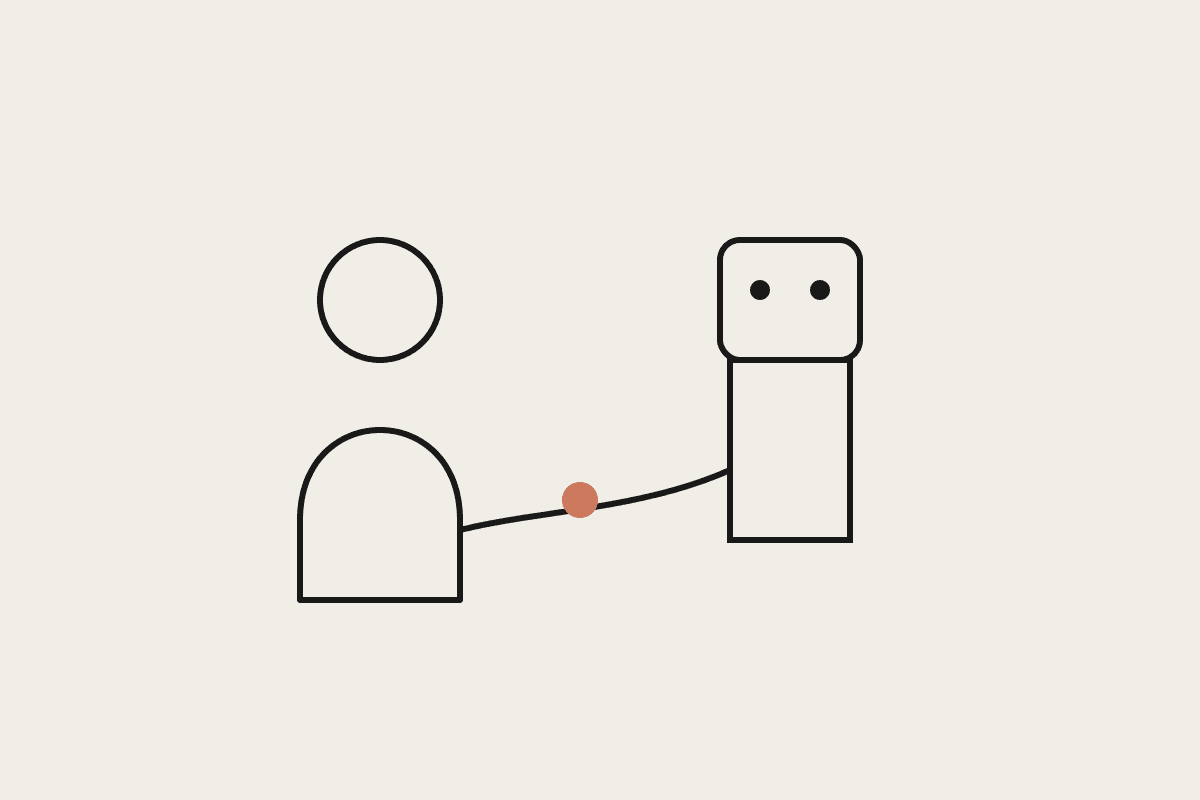
Even then, the coding sits at the connection layer, the piece that lets Claude talk to Xero or your CRM safely and with the right permissions, not in how you interact with Claude day to day once it is built. A business owner using a finished Claude-Xero integration still just asks plain-English questions and reviews drafts. The code was a one-time setup cost, not an ongoing skill the business needs in-house.
Skills deserve a closer look here too, since they sit right at the boundary and confuse people the most. Writing a Skill looks a little like writing instructions in a document, plain English describing how a task should be done, what tone to use, what to check before finishing. It is not programming in any real sense, closer to writing a detailed brief for a new staff member than to software development, and a non-technical business owner can write a perfectly usable one without any prior experience.
A useful way to think about the line
If the task starts and ends inside a conversation, drafting something, answering a question, reviewing a document, no code is needed, regardless of how sophisticated the task feels. If the task needs to happen automatically, on a schedule, or reaching into a system Claude doesn't already have a ready-made connector for, that is when a build, and likely some code, enters the picture. Most Australian SMBs spend their first six months to a year entirely in the first category, and that is a perfectly legitimate place to stay if it is delivering value.
A worked example of both sides of the line
A Melbourne accounting practice we worked with wanted two things: help drafting client update emails in a consistent tone, and an automatic weekly summary of overdue invoices pulled from Xero. The first was solved entirely through conversation, a Skill capturing the practice's preferred tone and structure, reused every time a partner needed to draft an update, no code touched at any point. The second needed an actual integration: a scheduled connection to Xero's API, checked every Monday morning, formatted into a summary and sent automatically. That one genuinely required a build.
The point of that example is not that one path is better than the other. It is that a single business can sit on both sides of the line at once, and knowing which side a given task falls on saves you from either over-hiring a developer for work that never needed one, or under-investing in the one workflow that actually would benefit from a proper integration.
The Automata AI take
We meet plenty of business owners who assume they need a developer on staff before they can "do anything real" with Claude, and that assumption alone stops them from capturing months of easy wins available through plain conversation and Cowork. When a business genuinely does hit the point where a live system integration makes sense, that is a scoped, typically one-off build, A$2,500 to A$8,000 depending on the system, not a reason to hire an engineer.
Book a brainstorm and we will help you work out whether your next Claude use case actually needs a build, or just a conversation.