The AI workflow that only one staff member understands is a liability the moment that person takes leave, changes roles, or leaves the business entirely. This happens more often than it should, because a workflow that started as one person's personal shortcut rarely gets formally documented until the day someone else urgently needs to run it and discovers nobody wrote down how.
What actually needs documenting
The exact prompt or instructions used, not a rough description of what it does
Where the workflow's inputs come from and where its outputs go, including any manual steps around the AI part
What a good output looks like versus a bad one, with two or three real examples of each
Who to contact if something breaks, and what 'broken' typically looks like for this specific workflow
Any account, API key or subscription details needed to actually run it, stored securely but accessibly
Why this gets skipped so consistently
Documentation feels like overhead when a workflow is working fine and the person who built it is still around, which is exactly the period when it's cheapest and easiest to write down. A Brisbane professional services firm discovered this the hard way when the operations manager who'd built their client-onboarding AI workflow left with two weeks' notice, and the handover revealed the workflow existed only as a half-remembered sequence of steps in her head, with the actual prompt buried in a personal notes app nobody else had access to. Reconstructing it from her handover notes and a week of trial and error cost the firm roughly $3,400 in lost productivity and consultant time, against what would have been perhaps two hours to document properly while she was still there.
A lightweight documentation format that actually gets used
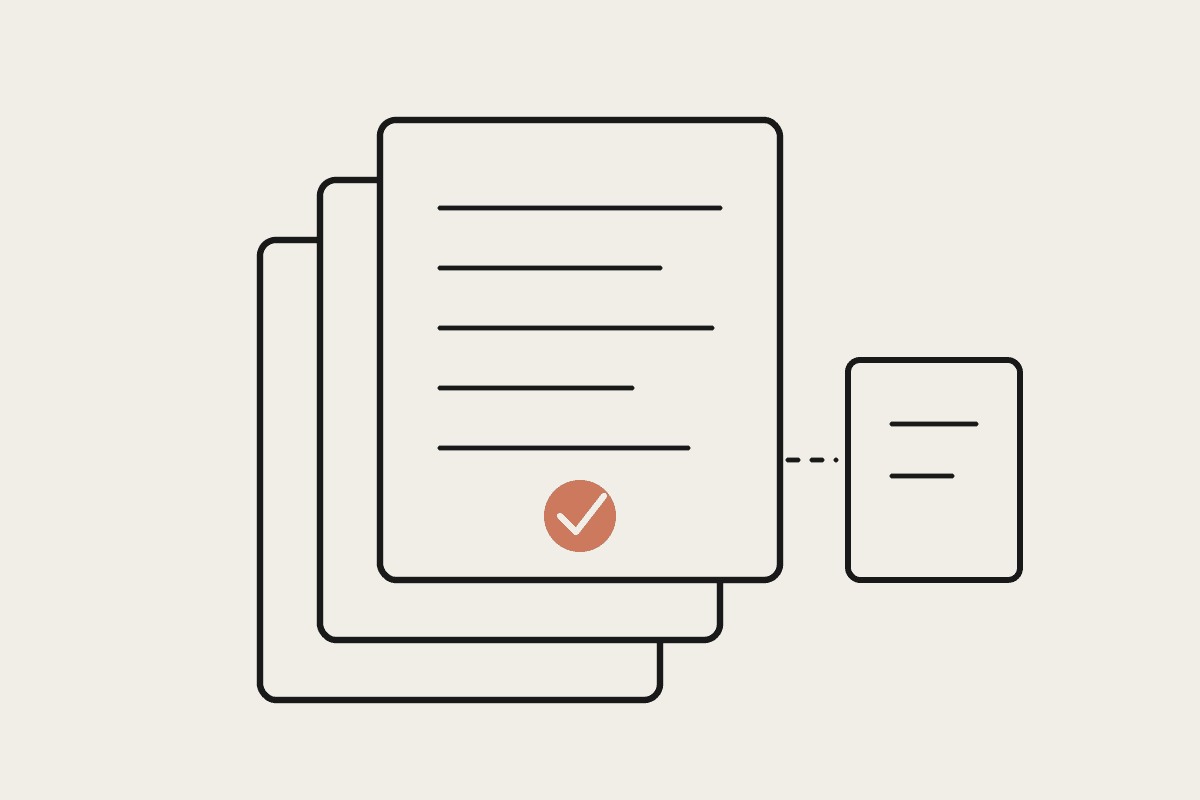
The documentation that survives isn't a comprehensive manual, it's a single page per workflow: the prompt, the inputs and outputs, two examples, and a named owner. Anything more elaborate tends to go stale because nobody wants to maintain it. A single page is quick enough to write in the first place and quick enough to update when the workflow changes, which matters more for long-term survival than initial thoroughness.
Making it a habit, not a one-off catch-up project
Rather than a single large documentation push covering every existing workflow at once, which tends to stall out, build documentation into how new workflows get created: no workflow goes live without its one-page document existing first. This catches new workflows automatically and lets a business work through the existing undocumented backlog gradually, prioritising by which ones would hurt most if the person who built them left tomorrow.
If your business has AI workflows that exist mainly in one person's head, that's worth fixing before it becomes urgent. Get in touch through /contact and we'll help you build a documentation habit that actually sticks.
What to prioritise if you're starting from zero
Most Australian businesses have somewhere between five and twenty distinct AI workflows in regular use once they actually count, and documenting all of them at once is rarely realistic alongside normal operations. Rank them by a simple combination of how business-critical the workflow is and how few people currently understand it, and start with whichever sits highest on both measures. A workflow that's both critical and understood by only one person is the highest-risk gap in the business, and it's usually obvious once the list is written down which one that is.
For the Brisbane firm, the reconstruction wasn't just a cost in dollars, it also meant two new client onboardings were delayed by roughly ten days while the replacement workflow was rebuilt and tested, a knock-on cost to client relationships that never showed up on an invoice but was arguably more damaging long-term than the direct $3,400 figure.
A note on where this documentation should live
Store workflow documentation somewhere that survives the departure of any single person, a shared drive or wiki the whole relevant team can access, not a personal notes app or an individual's own file structure. This sounds obvious stated plainly, but it's precisely where the Brisbane firm's process broke down, and it's a pattern that recurs across most undocumented-workflow failures once you look closely at how they actually happened.
None of this needs to be elaborate to work. A single shared document listing every workflow, its one-page summary, and its named owner is enough for most businesses under fifty staff, and the discipline of keeping that list current matters more than any particular documentation template or tool chosen to hold it.
Treat the exercise as insurance rather than admin. Nobody enjoys writing documentation for a workflow that's working fine today, but the two hours it takes is trivial against the cost of reconstructing it under pressure during a handover that was never planned for.