Ask an Australian business why it wants to self-host an open-weight model and the answer is almost always data residency. Ask the same business which Essential Eight controls cover the new inference server and the room usually goes quiet. That silence is the gap this post is about.
The Essential Eight, published by the Australian Signals Directorate through the Australian Cyber Security Centre, is the baseline most Australian organisations already report against: application control, patching applications, Microsoft Office macro settings, user application hardening, restricting administrative privileges, patching operating systems, multi-factor authentication and regular backups. A self-hosted model is not exempt from any of it. From a security point of view it is simply another piece of infrastructure that needs patching, access control and monitoring.
Does the Essential Eight apply to a self-hosted open-weight AI model?
Yes. A self-hosted open-weight model runs on servers you own or rent, through inference software you install, with weights and fine-tuning data you store. Every one of those is squarely inside the Essential Eight's scope, because the framework was written for software you install and control. The model does not get a pass because it is AI, and an auditor will treat the inference server like any other production system.
This is the opposite of the question we covered in where Claude fits against the Essential Eight. A hosted service like Claude stretches the framework because the processing happens outside your boundary. A self-hosted model sits right inside it, which means the controls apply in full and the work of meeting them is yours.
Residency is one question, not the compliance story
Most of the self-host-for-sovereignty advice circulating in September 2026 treats data residency as the whole compliance case. Keep the data in Sydney, keep it on your hardware, done. That framing misses the practical risk. A model server running outdated inference software with weak access control is a bigger exposure than most residency questions, because it is a new, internet-reachable application that few people in the business know exists.
The pattern we see is familiar. An engineer stands up vLLM or Ollama on a spare GPU box to test a use case. It works. Staff start using it. Six months later it holds a fine-tuned copy of the model trained on internal documents, nobody has patched it since the week it was installed, and it does not appear on the application allow-list because it was never formally a project.
Where self-hosted models open new gaps
Two controls take most of the strain:
Application control. An inference server running vLLM or Ollama is a new application surface. It belongs on your allow-list and your patch schedule, not in the category of side projects someone in engineering stood up.
Restricting administrative privileges. Model weights and fine-tuning data are high-value targets. The people who can modify, swap or retrain a self-hosted model need the same privilege discipline you already apply to database administrators.
Patching applications. The Essential Eight's patching control is usually read as the operating system and office suite. It needs to be extended explicitly to the inference stack and its Python dependencies, which move quickly.
Backups. Weights, adapters, prompt templates and evaluation sets are all artefacts you would need to rebuild after an incident. If they are not in the backup regime, recovery means starting again.
Monitoring is not one of the eight strategies by name, but any mature mapping adds it. Logging should be configured to catch unusual query patterns against the model, the same way you would watch for odd query volumes against a production database. If agents or tools are wired to the model, the containment layer becomes your responsibility as well.
The table below is a starting mapping. It is not an ASD publication, and your assessor may weight things differently, but it gives a risk committee something concrete to argue with.
| Essential Eight control | What it covers for a self-hosted model | Commonly missed |
|---|---|---|
| Application control | Inference server, model runtime, admin tools | Test servers that quietly became production |
| Patch applications | vLLM, Ollama and their dependencies | Python packages pinned at install and never updated |
| Restrict admin privileges | Who can change weights, adapters and prompts | Shared engineering accounts on the GPU host |
| Multi-factor authentication | Access to the model API and host | Internal endpoints left open because they are 'inside' |
| Patch operating systems | GPU host OS and drivers | Driver updates deferred because they risk breaking the stack |
| Regular backups | Weights, fine-tunes, evaluation sets | Fine-tuned adapters that exist only on one disk |
What it costs to do properly
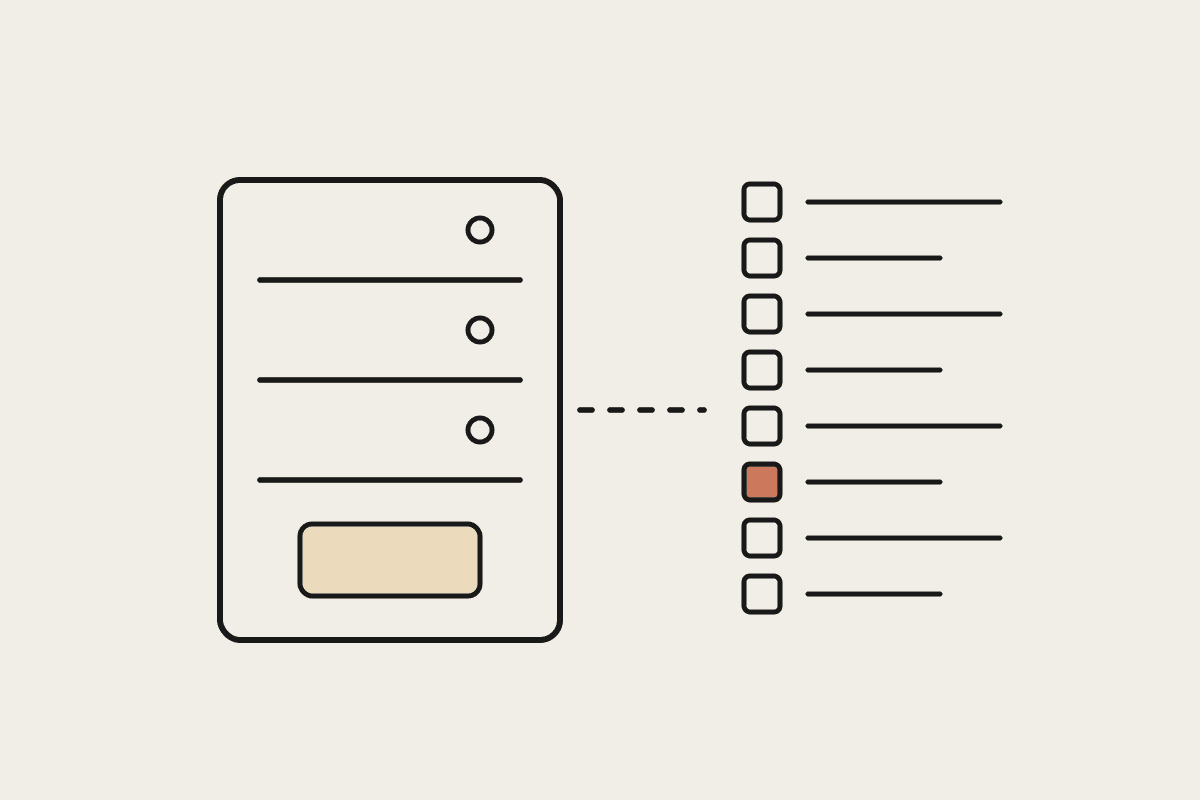
Building an Essential Eight aligned deployment checklist for a self-hosted open-weight model typically adds $3,000 to $7,000 to a project that skipped this step. That is the one-off work: the mapping, the allow-list entries, the privilege review, the logging configuration and the documentation an auditor will ask for.
The larger cost is ongoing. Patching discipline for a fast-moving inference stack is a recurring labour line that a lot of Australian businesses underestimate when they price out free open source AI. We have costed that labour separately in the DevOps line item self-hosting calculators miss, and the security controls themselves are covered in more depth in our guide to securing a self-hosted open source LLM.
This is also one of the quieter reasons Claude remains the lower-effort choice for regulated Australian businesses even when a self-hosted model looks cheaper on paper. A hosted enterprise service arrives with a documented security and compliance posture you can point an auditor at. With a self-hosted model you are writing that posture yourself, and keeping it true every month.
A quick self-check before your next audit
If you already run an open-weight model, five questions will tell you where you stand:
Is the inference server listed on your application allow-list?
When was the inference software last patched, and who owns that task?
How many people can change the model weights, and do they use MFA?
Would you know if query volume against the model tripled overnight?
Could you restore a fine-tuned model from backup this afternoon?
Two or more uncertain answers means the mapping has not been done. If your board or risk committee is asking for an AI vendor comparison and nobody has mapped it against the Essential Eight yet, that is worth fixing before the next audit rather than during it. Our advisory services include this mapping as a fixed-scope piece of work, and you can book a session with us to talk through where your deployment sits.