Aged care and allied health providers sit in an unusual position for AI adoption. The tasks that would benefit most from automation, care note summarisation, roster optimisation, incident report drafting, family communication, all involve some of the most sensitive personal information the Australian Privacy Act covers. Health records, behavioural notes and next-of-kin details are not the place to experiment with a model whose training data and safety testing you cannot verify.
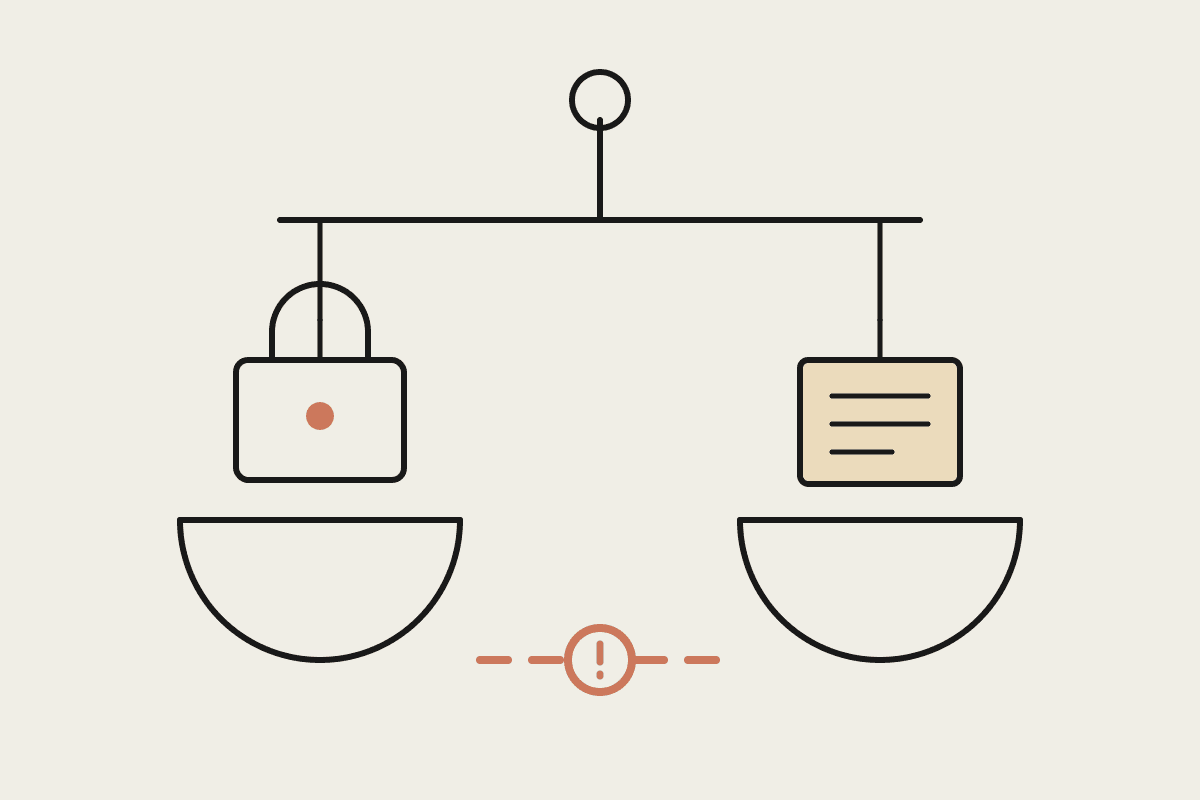
That does not rule out open-weight models. It does mean this sector cannot approach the open-weight versus managed decision the way a retailer or a marketing team might, where a wrong answer produces an awkward tone in a social post rather than a breach involving a vulnerable person's health information.
What actually works well in this sector
Providers we talk to get real value from AI in a narrower band of tasks than they initially expect, and the narrowness is a feature rather than a disappointment:
Drafting first-pass incident reports and care plan updates for a nurse or care worker to review and finalise. Never auto-sending, never auto-filing.
Summarising long care note histories ahead of a family meeting or case review, cutting a 45-minute read-through to a 10-minute skim with the source still one click away.
Rostering and shift-matching support, where the data involved is operational rather than clinical and the consequences of an error are a phone call.
Drafting responses to routine administrative enquiries, again with a person sending them.
Where providers get into trouble is pushing a model directly into resident-facing or family-facing communication without a human in the loop. That risk sharpens considerably with a self-hosted open-weight model, where nobody has independently verified how it handles a distressed or confused query, and where a poor response lands on a family already having the worst month of their year.
The self-hosting question, specifically for this sector
An open-weight model hosted entirely on infrastructure your organisation controls can be a real data sovereignty win. Nothing leaves your systems, and that is a genuinely strong answer to give a board or a family. But it only holds if your organisation actually has the security capability to run it properly, and most aged care providers, including large ones, do not have an in-house team equivalent to what a hyperscale vendor runs.
Before committing to self-hosting for sovereignty reasons, an honest capability check covers:
Whether you have staff who can patch, monitor and secure a model deployment to the standard you would apply to any other clinical system.
Whether you could demonstrate to an auditor, or to the Aged Care Quality and Safety Commission, that the self-hosted system meets the same standard as your other clinical software.
Whether the cost saving against a managed platform is still real once specialist oversight is included at market rates.
Who is accountable at 2am when it stops working, and whether that person exists on your org chart today.
A mid-sized provider self-hosting a model to keep data in-house typically spends $40,000 to $70,000 a year on the infrastructure and specialist oversight needed to do it safely. That is frequently more than a well-governed managed service with the right data processing agreement in place, which is the outcome that surprises people, because self-hosting sounds like the cheaper and safer option and is often neither.
What we usually recommend
For most Australian aged care and allied health providers, the practical answer is a managed platform with a signed data processing agreement that satisfies Privacy Act obligations, reserving self-hosted open-weight models for narrow, low-risk, non-clinical tasks where the infrastructure cost is easy to justify.
Two caveats on that. It is a recommendation about the typical case, and a large provider with an existing security team and an established clinical systems function may genuinely be better off self-hosting. And a signed agreement is not a substitute for a policy about what staff actually put into the system, which is where most real incidents originate regardless of where the model runs.
The useful starting point is not a technology decision at all. It is a list of your tasks sorted by what a wrong answer costs, with the clinical ones at one end and the rostering at the other. Almost every safe automation in this sector lives at the operational end of that list, and starting there builds the confidence and the habits to move carefully toward the rest.
If you want a plain-English conversation about what is actually safe to automate in your service, without a vendor pitch attached, book a session and we will work through your task list with you.