Every second construction-tech vendor pitch in Sydney and Melbourne this year has included a slide about open-weight models. Llama, Qwen and DeepSeek variants are free to download, and on paper that looks like an easy way to cut the AI line item out of a tight margin business. The reality for Australian builders, project managers and estimators is messier: running an open model yourself means owning the GPU bill, the fine-tuning, the security patching and the liability, and most construction firms have neither the headcount nor the appetite for that.
What open-weight AI actually costs a builder
The model weights are free. Everything around them is not. A mid-sized Brisbane contractor we spoke with priced out a self-hosted Llama deployment for site-report summarisation and variation tracking: cloud GPU hosting alone ran to roughly $3,800 a month, before adding an engineer to keep the fine-tune current and the inference stack patched. Compare that to a Claude subscription tier that handles the same document-heavy workload for a fraction of the cost, with no infrastructure to babysit and updates that ship automatically.
The pitch for open-weight models makes sense for a hyperscaler or a defence contractor with a dedicated ML team. It makes much less sense for a construction business whose competitive edge is winning tenders and running sites on schedule, not maintaining a private inference cluster.
Where Claude fits the day-to-day work
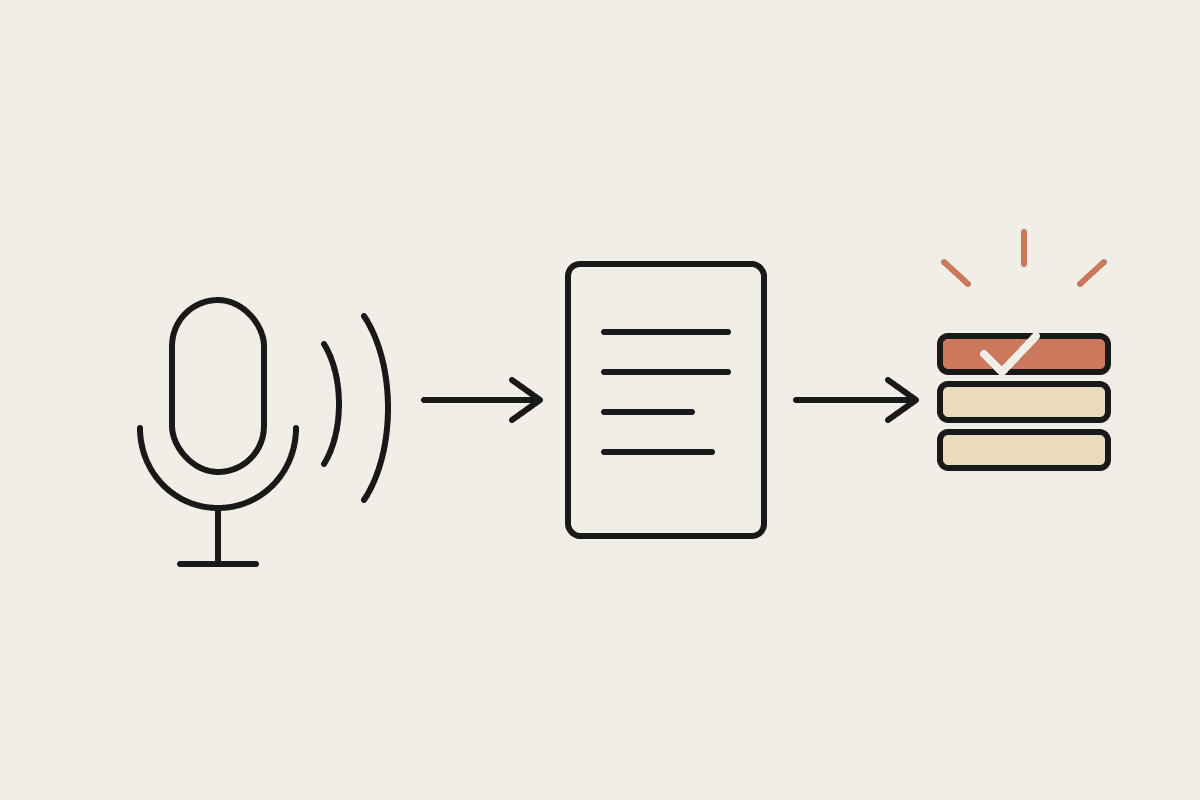
Construction firms across NSW and Victoria are using Claude for the unglamorous paperwork that eats project manager hours: turning daily site diaries into formatted progress reports, cross-checking variation claims against the head contract, and drafting RFIs that reference the right clause on the first attempt. None of that needs a custom-trained model. It needs a capable general model that can read a PDF specification, hold context across a long contract, and produce output a site super will actually trust.
Daily site diary photos and voice notes turned into a formatted progress report in minutes, not at 9pm after a full day on site.
Variation claims checked against the head contract clause by clause, flagging gaps before they go to the client.
Subcontractor RFIs drafted with the right cross-references, cutting the back-and-forth that stalls approvals.
The compliance angle open-source skips over
Construction contracts in Australia carry real exposure: defects liability periods, security of payment claims, WHS documentation that regulators can and do audit. An open-weight model you host yourself puts you on the hook for every part of that chain, from data residency to access logging to model behaviour under edge cases. Claude's enterprise agreements are built for exactly this kind of scrutiny, with clear data handling terms a head contractor's legal team can actually review rather than a GitHub README.
Security of payment disputes under state-based legislation in NSW, Victoria and Queensland already turn on paper trails and timing. Adding an AI system into that workflow without a clear data handling agreement is a liability question a construction lawyer will ask about, and 'we downloaded the weights ourselves' is not a satisfying answer in a dispute. Claude's terms give a head contractor something concrete to point to when a client or a principal asks how AI-assisted documents were produced and stored.
None of this means open models are a bad idea everywhere. A national developer with an internal data science team and a genuine reason to fine-tune on proprietary drawings might get real value out of a private deployment. For the vast majority of Australian construction businesses, subcontractors, mid-tier builders, quantity surveying firms included, the honest comparison is a $45,000-a-year hosting and tuning commitment against a Claude subscription that starts working the same afternoon.
Getting started without a science project
The firms getting the most value aren't running a model at all in the sense of managing weights and GPUs. They're using Claude through the interfaces their teams already work in: email drafts, spreadsheet formulas for cost variance, a Cowork setup that watches a shared inbox for subcontractor queries. That's the pragmatic version of AI adoption for construction: less infrastructure, more output, and a Sydney-based partner who can wire it up around your existing project management stack rather than asking you to hire a machine learning engineer first.
A Melbourne fit-out contractor we work with rolled this out in three weeks: connect the shared project inbox, connect the site diary app export, and let Claude draft the weekly client progress report for a human to review before it goes out. No GPU procurement, no model fine-tuning, no new hire. The estimator who used to lose four hours a week to report formatting now spends that time on the next tender instead, which is where a construction business actually makes its margin.
The broader lesson for Australian builders evaluating any AI vendor pitch is to separate the model from the product. A vendor waving an open-weight model as a cost story is quietly asking you to become their infrastructure team. A Claude-based build asks you to point it at your existing documents and workflows, with the hosting, security patching and model updates handled on the other end. For an industry running on thin margins and tight programmes, that difference is the whole decision.