Here is the one paragraph: an MCP server is a small program that exposes a specific set of actions, like reading a Xero invoice, searching a Notion database, or sending a Slack message, to an AI model in a standard format, so the model can use real business tools instead of just generating text. That's it. Everything else is detail about how it works and what to do with that fact.
Why the one-paragraph version matters
Most explanations of MCP start with the protocol's technical plumbing, JSON-RPC, transports, tool schemas, before ever answering the question a business owner actually has: what does this let me do that I couldn't do before? The honest answer is connection. Without an MCP server, Claude can talk about your invoices in the abstract. With one connected to Xero, Claude can actually read your current aged receivables and draft a chase list from real numbers. The server is the bridge between conversation and action.
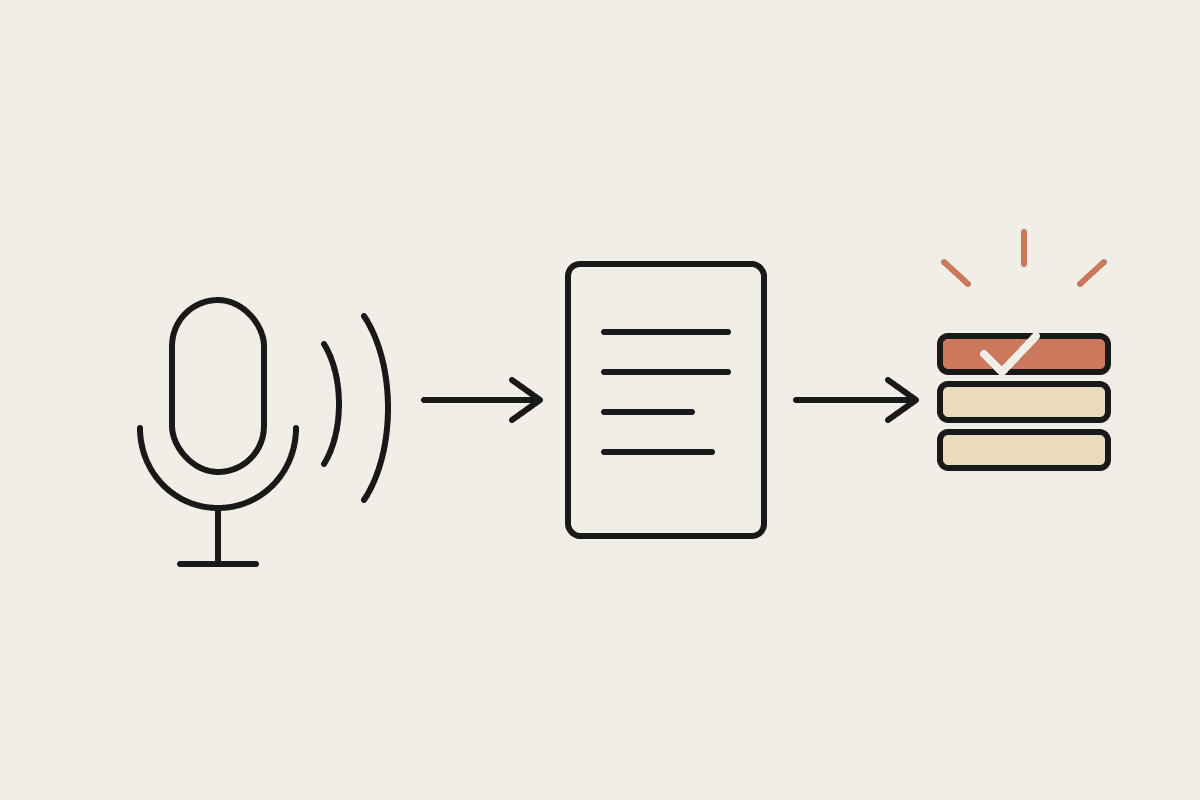
Model: the AI doing the reasoning, deciding when to call a tool
MCP server: the bridge exposing a specific set of actions in a standard format
Business system: the actual software being read from or written to, Xero, Gmail, Notion, a CRM
What it costs to have one
For most Australian small businesses, you never build an MCP server yourself, you connect to ones that already exist. Anthropic's connector directory and third-party MCP servers cover the common tools already, Gmail, Google Calendar, Notion, Slack, and a growing list of accounting and CRM platforms. Connecting one is typically a five-minute OAuth flow inside Claude's settings, not a development project. Building a custom one for an internal system without an off-the-shelf connector is a different proposition, usually a day or two of a developer's time, worth roughly $800 to $1,600 in AU labour for a straightforward internal API.
What it doesn't do
An MCP server doesn't make the model smarter, doesn't guarantee the model uses the right tool at the right time without oversight, and doesn't replace the judgement calls a person needs to make about what an AI agent should be allowed to do unsupervised. It's plumbing, genuinely useful plumbing, but plumbing rather than intelligence. A server that connects Claude to your email doesn't decide on its own to send anything, that decision still sits with the model's behaviour and whatever approval gates you've put around it.
The practical takeaway for a business owner
A slightly longer version, for when one paragraph isn't quite enough
If the one-paragraph version leaves you wanting more, here's the next layer: MCP, the Model Context Protocol, is an open standard, not something Anthropic controls exclusively, which is why servers built for MCP tend to work across multiple AI providers rather than locking a business into one vendor. A server declares a set of tools with names, descriptions and expected inputs, the model reads that list, decides when a tool is relevant to the task at hand, and calls it with the right parameters. The protocol itself doesn't decide anything, it just standardises how the request and response are shaped so any compliant model and any compliant server can talk to each other.
For a business owner evaluating whether this matters, the practical signal to look for is simple: does the tool you use every day, your accounting software, your CRM, your project management system, already have an MCP server built by the vendor or a reputable third party? If yes, connecting it is a configuration task. If no, you're either waiting for one to be built, or commissioning a custom one, and that's the point where a technical conversation about cost and scope actually needs to happen.
One more thing worth naming plainly: security. A well-built MCP server should only expose the actions it explicitly declares, nothing more, and a business connecting one should still apply the same judgement they'd apply to any staff member with system access, read-only where possible, write access scoped narrowly, and a human in the loop for anything that can't easily be undone. The protocol standardises the connection, it doesn't remove the need for sensible permission boundaries around what gets connected.
If someone tells you 'connect Claude to your CRM,' what they mean, in the one-paragraph sense, is: install or authorise an MCP server for that CRM, and Claude gains the ability to read and, if you allow it, write real records instead of guessing. Checking whether your specific tools have an existing MCP server is worth five minutes before assuming you need a custom build. Most Australian SMB stacks, Xero, MYOB, HubSpot, Google Workspace, Notion, already have one.