Two trillion-parameter models made headlines this week. A three billion parameter one did not, and it may matter more to most Australian businesses. Nanbeige 4.2 landed quietly alongside Kimi K3 and Inkling, but its size, small enough to run on a single consumer GPU or a decent laptop, points at a category of AI use case that flagship models were never built for, and that most Australian SMBs are already paying too much to solve the wrong way.
A quieter release worth noticing
This week's open-weight news cycle was dominated by scale. Kimi K3 launched at 2.8 trillion parameters. Inkling, a new lab's debut release, came in at 975 billion. Both are genuinely capable systems, and both need serious infrastructure to run: multi-GPU clusters, real budget, and a use case large enough to justify the spend. Nanbeige 4.2, at 3 billion parameters, needs none of that. It is not trying to compete with either model on raw reasoning ability, and it does not need to. Most of what an Australian SMB actually asks an AI system to do day to day does not require trillion-parameter judgement. It requires a model that is fast, cheap, and reliably available.
The economics make the gap obvious. Running a trillion-parameter model in production, even via a hosted API, means paying per token for every request, and costs scale directly with volume. A Brisbane retailer classifying ten thousand product descriptions a day is paying for reasoning capacity it never uses. A 3B model doing the same job on a single GPU, or even on-premises hardware the business already owns, turns that recurring cost into a fixed one, and often a small one.
The case for small
Every large open-weight release this year has pushed a bigger-is-better story. A 3B model that fits comfortably on a single GPU, or even a mid-range laptop, opens up a category of on-device, offline, genuinely low-cost inference that a trillion-parameter model can't touch, and won't ever be priced to touch. For a Sydney logistics operator processing shipping manifests, or a Melbourne accounting practice sorting incoming invoices, that difference is the whole business case.
A small local model can run entirely on-premises with zero per-token API cost, which matters for high-volume, low-stakes tasks like document classification or basic data extraction where a business might process millions of records a year.
On-device inference removes an entire category of data sovereignty risk under the Privacy Act, because nothing leaves the building, which matters for any Australian business handling sensitive records without wanting to build a full compliance case for cloud AI.
Small models are cheap enough to run many experiments in parallel, letting a technical team test a dozen prompt variations in an afternoon rather than budgeting cloud inference costs for every run.
Latency drops close to zero once inference happens on the same machine as the workflow, which matters more than people expect for anything that sits in a live customer or staff-facing process rather than a background batch job.
Where the trade-off bites
Small models are not a free lunch, and the trade-off shows up exactly where you would expect. Capability drops meaningfully once a task requires nuanced judgement, multi-step reasoning, or handling ambiguous or adversarial input, and that is most of what customer-facing AI actually has to do well. A 3B model that classifies invoices reliably can still misfire badly on a support ticket that requires reading tone, weighing competing facts, or making a judgement call a human would normally make. The failure mode is also less predictable than a flagship model's, which makes it harder to catch in testing before it costs someone real time or money.
Expect a 3B model to handle rigid, well-defined tasks reliably, and to fail in less predictable ways on anything requiring judgement calls.
Budget for a human review layer on any small-model output that feeds a customer-facing decision, since the error modes are harder to anticipate than a flagship model's.
Treat a small model as one component in a pipeline, not a replacement for Claude on tasks where getting it wrong carries real cost to the business or the customer relationship.
A sensible pattern for AU SMBs
We increasingly recommend a hybrid setup for cost-conscious clients: a small local model handling the bulk of volume on simple, well-defined tasks, and Claude handling the remainder that actually needs judgement, context, or a conversation. This kind of pipeline typically costs under $8,000 to design and pilot properly, well below what most Australian businesses assume AI infrastructure requires, and it scales down to a single laptop for a proof of concept before anyone commits to production infrastructure.
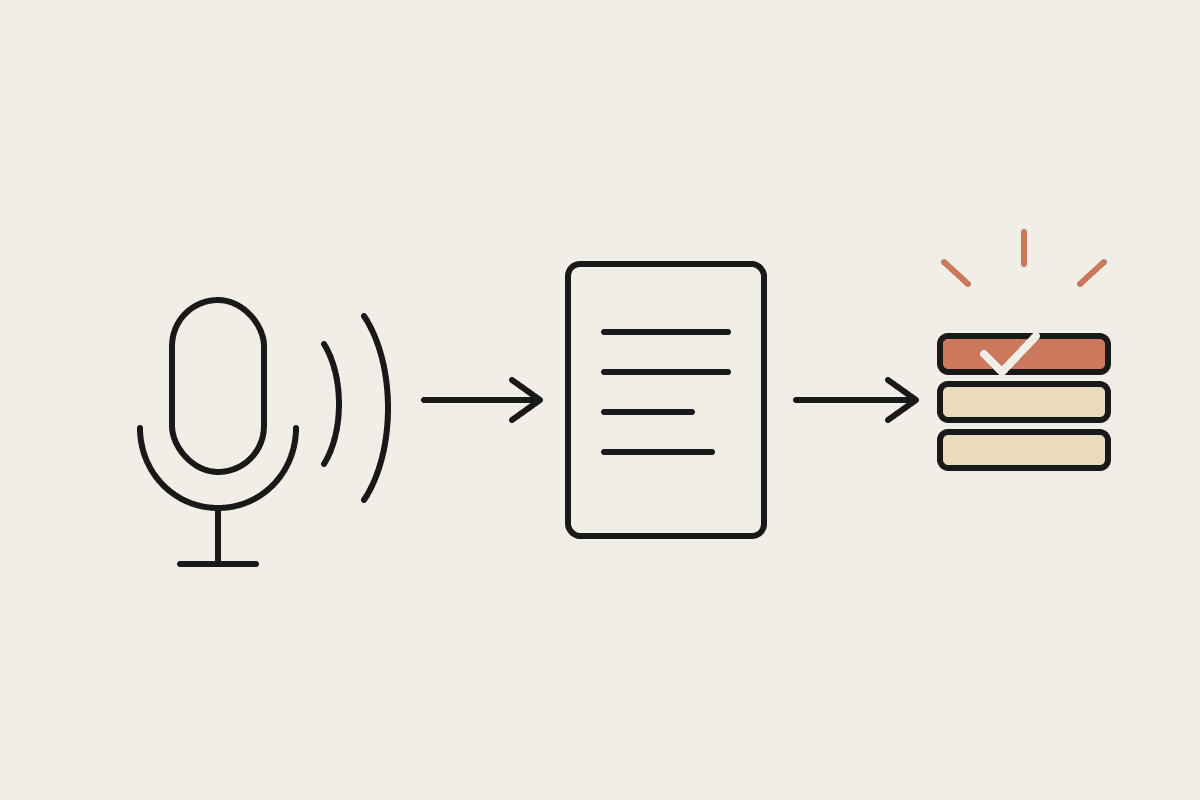
In practice this looks like a small model doing the first pass on every incoming document or ticket, sorting the ninety percent that fits a known pattern and routing the remaining ten percent, the genuinely ambiguous cases, to Claude for a proper read. The business gets the cost profile of a small model on volume and the reliability of a flagship model on anything that actually matters, without paying flagship prices for every single request that comes through the door.
The right split between small local models and Claude depends on what your business actually processes day to day, not on which model made headlines this week. If you want to know whether a small local model fits anywhere in your workflow, book a call and we'll walk through it together.