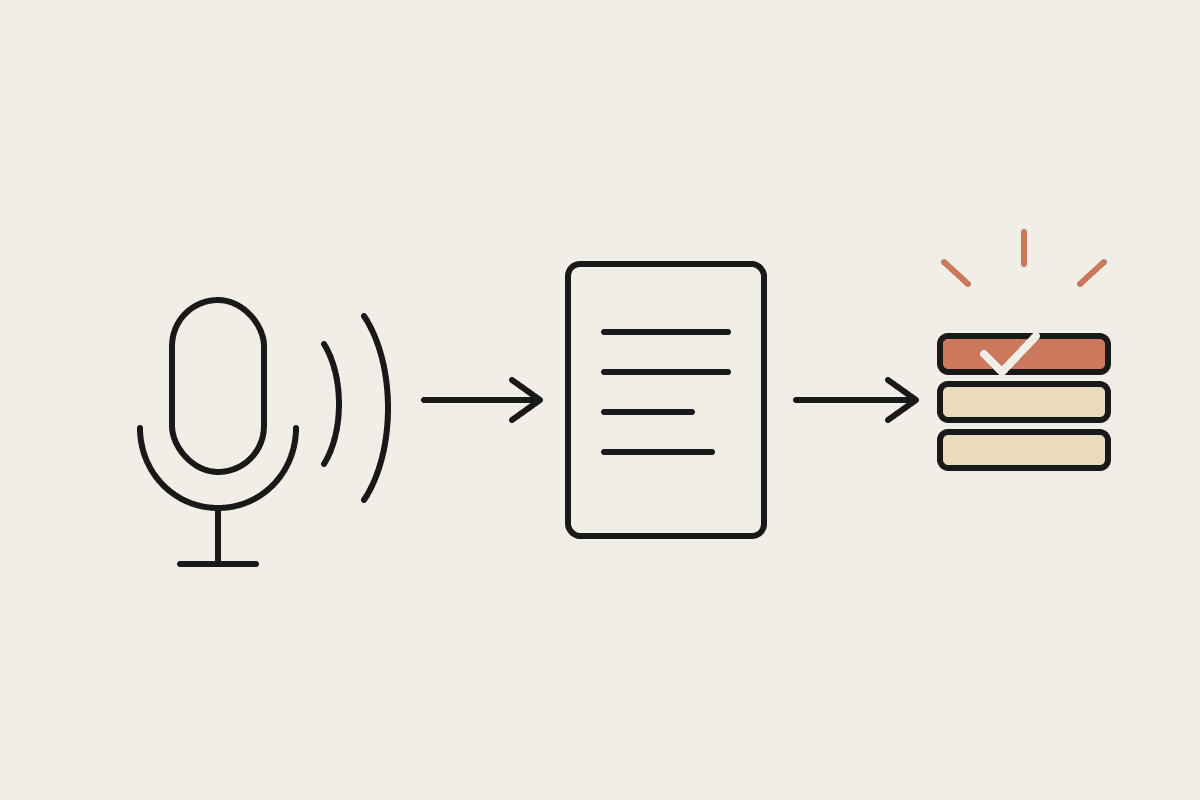
A sales manager spends three weeks refining a prompt that turns a rough call transcript into a client-ready proposal, tuned to the company's exact tone, structure, and the specific objections their market raises. It works brilliantly. Then the sales manager takes a fortnight of leave and the prompt lives only in their personal chat history, unreachable by the rest of the team. That prompt was a real business asset the moment it started reliably saving hours, and it was never treated like one.
Why a prompt is intellectual property
A refined prompt encodes real business knowledge: what a good proposal for this specific company looks like, what objections matter, what tone the brand uses, what structure clients respond to. That is not meaningfully different from a well-built spreadsheet template or a sales script, both of which most businesses already treat as assets worth protecting, documenting, and handing over during onboarding. Prompts deserve the same treatment, and most Australian SMBs simply have not built the habit yet because the format is new.
There is a second reason to treat prompts this way beyond continuity: a genuinely good prompt is a competitive asset in the same sense a well-tuned sales script or a proven cold-email template is. A prompt that reliably turns a discovery call transcript into a proposal your close rate actually likes is not something you want walking out the door with whoever built it, any more than you would want a top performer's playbook disappearing unrecorded.
Store working prompts in a shared, version-controlled location, not an individual's chat history.
Name and date each prompt so the team can tell which version is current when someone improves it.
Document what each prompt is for and what a good output looks like, so a new hire can use it without three weeks of trial and error.
Treat a prompt change like a small code change: note what was adjusted and why, so nobody accidentally reverts a fix.
Building a prompt library that survives staff turnover
A Sydney marketing agency lost its best-performing client-report prompt when the account manager who built it left for a competitor, six months of refinement gone because it existed only in that person's saved conversations. The agency's fix, adopted after the fact, was a shared prompt library: a simple folder structure with one document per workflow, the current best prompt, a short explanation of what it does, and a change log. Rebuilding that lost prompt from scratch took roughly nine hours of a senior staffer's time, worth close to $900, a cost that a five-minute save-to-shared-folder habit would have avoided entirely.
The same agency now runs a short handover checklist for anyone leaving the business: list every AI workflow you use regularly, confirm each one's prompt is saved to the shared library, and note anything that lives only in your personal account. It takes fifteen minutes and has already saved the agency from a repeat of the original loss twice since it was introduced.
Treating prompts as versioned assets
The same discipline that applies to a codebase applies here: a prompt that works should be saved somewhere the whole team can find it, changes should be tracked so a bad edit can be reverted, and someone should own keeping the library current as workflows evolve. Claude Cowork's saved skills are a natural home for this, turning a chat-history prompt into a named, reusable asset the whole team can run without needing to know the underlying prompt engineering at all.
What this is worth in practice
Businesses that treat prompts as owned assets rather than personal habits recover value twice: once when a good prompt saves time every time it runs, and again when that prompt survives the person who built it moving to a different role or a different company. For a business running even five or six regular AI-assisted workflows, that second recovery is the difference between an asset and a habit that quietly disappears the day someone hands in their notice.
A simple starting structure
A workable prompt library does not need special software. A shared drive folder with one document per workflow, a plain-English description of what the prompt does, the current version of the prompt itself, and a short changelog is enough for most Australian businesses under 50 people. The habit that matters more than the tooling: whenever someone tunes a prompt to work noticeably better, that improvement gets saved back to the shared copy the same day, not left in their personal chat history until someone remembers to ask for it.
Auditing what prompts your team currently relies on, and where they actually live, is a half-day exercise worth doing before the next resignation makes the gap obvious. Most businesses that run this audit for the first time are surprised how much of their day-to-day AI use depends on knowledge sitting in one person's head, or one person's chat history, rather than anywhere the wider team can reach.