Claude keeps turning up in unexpected corners of the security world, and one of the more striking examples landed on Anthropic's blog on 22 July 2026. Outtake, a startup whose customers include major hedge funds, AI labs and US federal agencies, has built an autonomous "Recon Agent" on Claude Code that investigates cyberattacks the way a human analyst would, just continuously and at scale. For Australian business owners who assume agentic security tools are still a few years off, the case study is worth a proper look.
What Outtake actually built on Claude Code
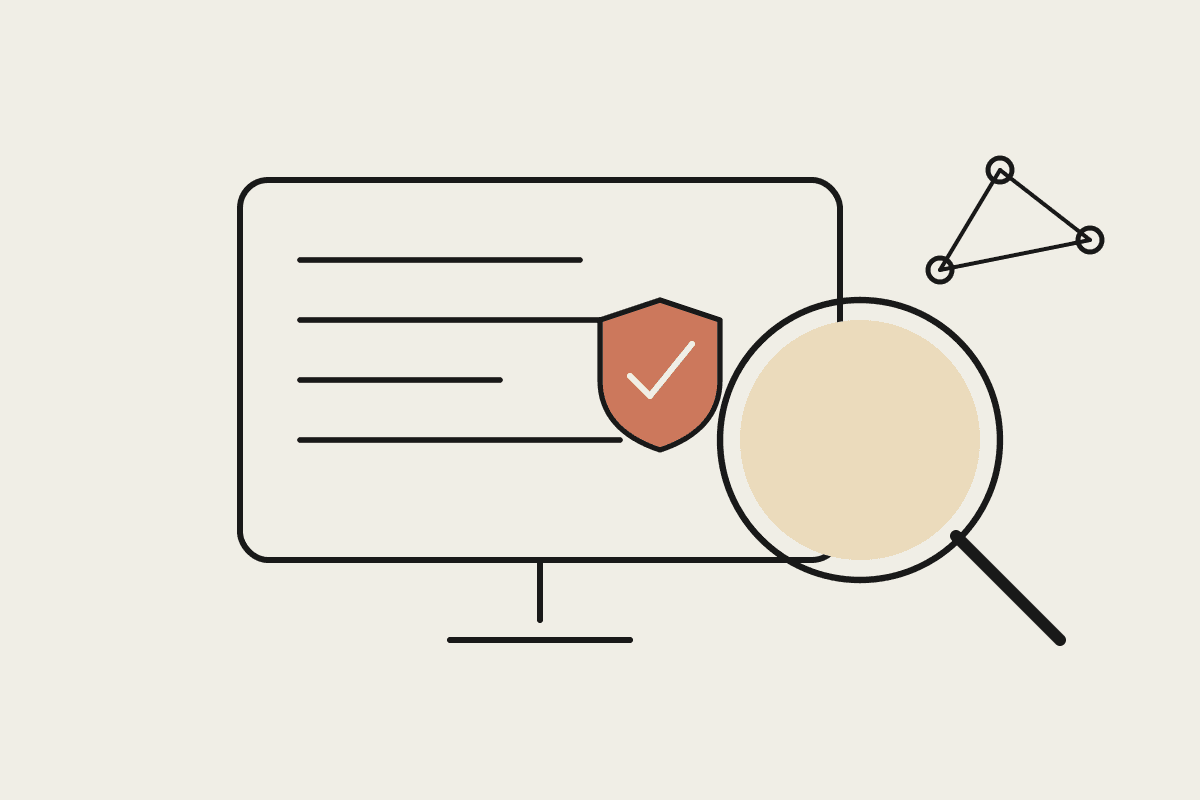
Most brand-protection tools do one job well: they spot a fake login page or a cloned website and get it taken down. Outtake's Recon Agent goes further. When it finds an impersonation, it follows the trail, mapping the infrastructure behind it, including linked domains and fake support accounts, and building out a graph of the wider adversarial network. The output is a full investigation report with a threat-actor profile and timeline, not just a takedown notice.
Investigation sessions typically run around 16 minutes, but the company says some stretch well past an hour, with the longest running to two hours of autonomous work before returning results. In 2025 alone, Outtake scanned more than 20 million potential cyberattacks and grew annual recurring revenue sixfold over the same period, according to the case study.
Why this matters beyond one vendor
The specific product isn't really the story for an Australian small or mid-sized business. What matters is what it represents. Attackers are already running the weaponise, impersonate, exploit sequence at AI speed, and point defences that watch a single stage of that chain, brand monitoring here, endpoint detection there, a separate threat intel feed somewhere else, increasingly miss the connections between stages.
An agent that can read across data sources, reason about what it's seeing, write code to test a theory, and follow a lead is a genuinely different category of tool to a dashboard that flags anomalies for a person to triage next week. That gap is exactly where a lot of Australian businesses are exposed today, not because the individual tools are bad, but because nothing is watching the seams between them.
Australian businesses are not exempt from this shift just because Outtake's named customers are mostly overseas. Brand impersonation, fake support accounts and cloned checkout pages hit Australian retailers, brokers and financial services firms just as often, and the Privacy Act 1988 and the Notifiable Data Breaches scheme still apply regardless of where the attacking infrastructure is hosted. The gap most Sydney and Melbourne SMBs actually have isn't a missing tool. It's the absence of anything that watches the connections between the tools they already own, which is precisely the seam an agent like this is built to cover.
Questions worth asking before you assume you're covered
Does our current security stack watch the whole attack chain, or one slice of it, brand, endpoint, email, identity, in isolation from the rest?
If an incident spans multiple systems, does anything stitch the evidence together automatically, or does that fall to a person during business hours?
How long would it actually take us to notice if someone cloned our login page or impersonated our brand today?
Are we handling customer or staff data in a way that would trigger Privacy Act notification obligations if a gap like this were exploited?
Who owns the decision to invest in agentic monitoring versus simply adding another point tool to an already crowded stack?
Where this fits for a Sydney business right now
Running Outtake's exact setup isn't the point for most SMBs, and it's not what most businesses need. What is worth doing is an honest audit of where your current monitoring stops watching and where the gaps between tools actually sit. That's a scoped piece of work, not a platform migration, and for most Sydney and Melbourne businesses it looks more like a fixed-fee engagement in the order of $3,500 AUD than an open-ended project.
None of this is a claim about Claude's own security certifications or compliance posture, and it shouldn't be read as one. It's a description of what one customer built on top of it, and a prompt to check whether your own stack could do something similar.
If you want a plain-English read on where agentic AI actually changes your risk posture, not a vendor pitch, that's a conversation we have with Australian business owners regularly. Book a free brainstorm with Automata AI and we'll walk through what agentic monitoring would actually look like for your business.