For most of software history, the assumption behind every delivery process was that writing code is the slow part. Planning meetings, design reviews and change approvals all sit downstream of that assumption, sized for a world where a developer lands a few hundred lines on a good day. Claude Code breaks that assumption at the build stage first. Once build speeds up, the bottleneck in a software team doesn't vanish. It moves.
The queue doesn't disappear, it relocates
Claude's own applied engineering team has been mapping this pattern across customer deployments, and the shape holds up consistently. When an agent is doing a meaningful share of the writing, a team doesn't ship faster in a straight line. It ships faster right up to the point where a human has to look at the output, and then everything backs up at that point instead. Plan, review and deploy were never built to absorb agent-paced throughput, because nobody designed them expecting build to stop being the constraint.
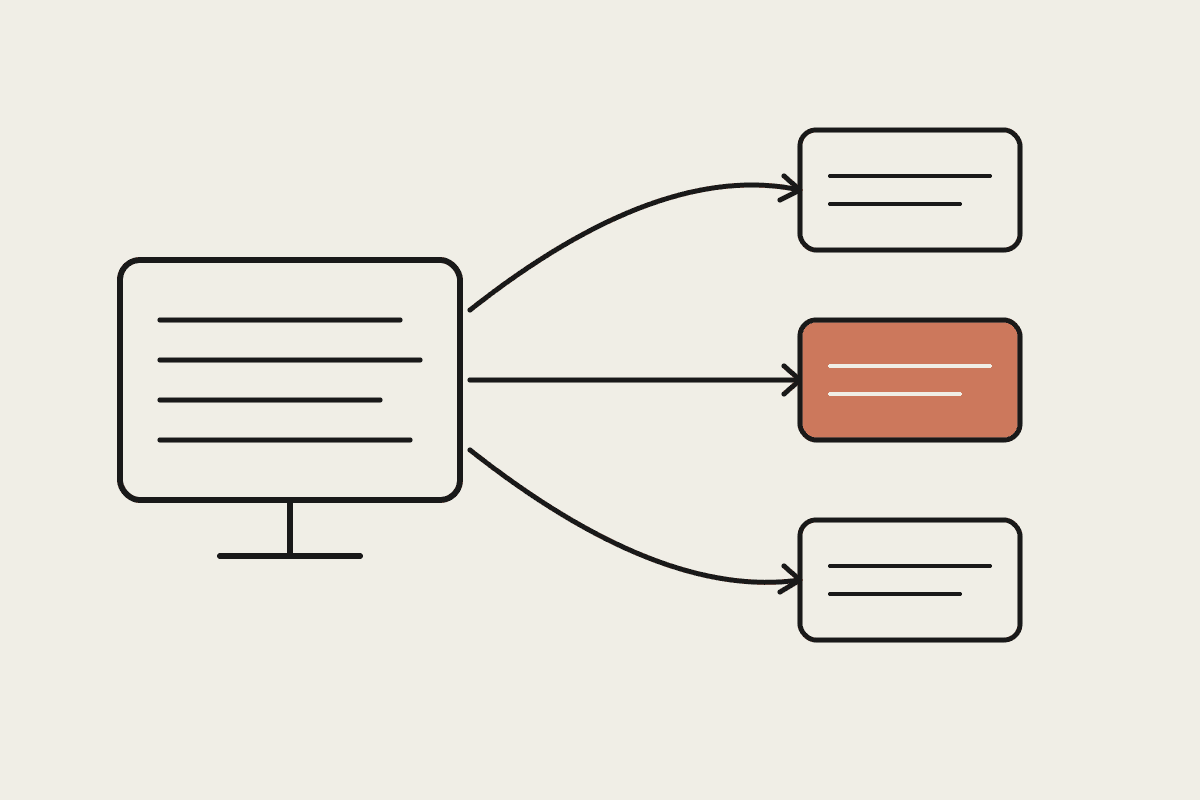
The traditional software development lifecycle assumes every stage runs at roughly the same, human-limited speed. Agentic coding breaks that assumption at the build stage first.
When build accelerates, the pinch point shifts to planning, review and deployment: the stages still gated by a person's calendar rather than a model's.
Controls designed for human-paced review (weekly change advisory boards, line-by-line sign-off) don't scale to agent-paced output. They need redesigning, not just more reviewers added to the roster.
What this looks like inside an Australian engineering team
Picture a 60-person product and engineering team based in Melbourne, running a mix of Claude Code and traditional development across three squads. Six months after adopting Claude Code for the bulk of feature and bug-fix work, build time per ticket dropped by roughly a third. On paper that is close to $210,000 a year in reclaimed engineering hours at their loaded cost base. In practice, almost none of that showed up as extra shipped features, because the security and code review queue backed up by two to three weeks. Engineers were finishing work faster than the two people responsible for sign-off could review it, so finished work sat in a queue instead of reaching production.
This is not a Claude problem or an engineering problem. It is a capacity-planning problem that only becomes visible once the constraint moves. A regulated business, an APRA-regulated lender, an ASX-listed retailer, anyone handling personal information under the Australian Privacy Act, cannot simply wave code through to clear a backlog. But it also cannot leave a security team sized for pre-agent throughput as the permanent bottleneck, because the backlog itself becomes its own kind of risk. Unreviewed code sitting in a branch for three weeks is exposure too, just a quieter kind.
Redesigning controls instead of adding headcount
The fix in Claude's own writing on this, and the one we see hold up with clients, is not more reviewers. It's redesigning what review actually checks and when it runs. A few patterns are worth testing:
Move some checks earlier: automated policy and security scanning at the point Claude Code opens a pull request, rather than a human starting from zero on every change.
Tier the review. A copy fix or a test update gets a lighter check than anything touching authentication, payments or customer data.
Track time-in-queue as its own metric, not just time-to-build, so a team can see the constraint moving before it becomes a three-week backlog.
None of this is about trusting the agent more than the humans in the loop. It's about giving those humans a queue they can actually clear, with the highest-risk changes still getting full attention and everything else moving through a lighter, faster path.
Before you restructure anything, check it's actually your bottleneck
Not every team that adopts Claude Code will see this pattern. Rule it out before redesigning a review process that isn't actually broken. If your release cadence was already gated by something else, a slow QA environment, a manual deployment run book, a change freeze around EOFY, faster build won't expose a review bottleneck at all. It will just make the existing constraint more visible sooner.
A simple way to check: track how long work sits at each stage of the pipeline for two or three sprints, from ticket picked up to merged in production. If time-in-build has dropped but time-in-review or time-in-deploy hasn't moved, the bottleneck has shifted and this playbook applies. If every stage moved together, the constraint sits somewhere else, and the fix is different.
A slow or flaky QA environment caps release speed regardless of how fast code gets written.
A manual, ticket-based deployment process gates throughput at deploy, not review, and needs a different fix: more automation, not more reviewers.
A three-person team where everyone already reviews everyone else's code in real time may never see this bottleneck, because there was no separate review stage to begin with.
If your build phase has genuinely sped up since adopting Claude Code but your release cadence hasn't moved, the constraint has quietly relocated somewhere else in the pipeline. Mapping exactly where, before assuming the fix is more prompting or a bigger team, is the useful first conversation. Automata AI works through this stage-by-stage mapping as part of our Claude Code rollout engagements for Australian mid-market teams — book a session if you want a second pair of eyes on where yours has moved.