GitHub went down for close to three hours recently, the same week Cursor opened the beta for Origin, its own code hosting platform built specifically for AI coding agents rather than human pull request review. The timing is a coincidence, but it's a useful prompt to check how your own Claude Code setup handles the same pressure points, without needing to switch platforms.
What Cursor built
Origin syncs repos from GitHub and replaces the usual pull request workflow with one designed for several AI agents committing to the same repository at once. Cursor is quoting specific numbers: 22.6 commits per second per repo, 296,000 clones an hour, and sub-400ms global sync latency.
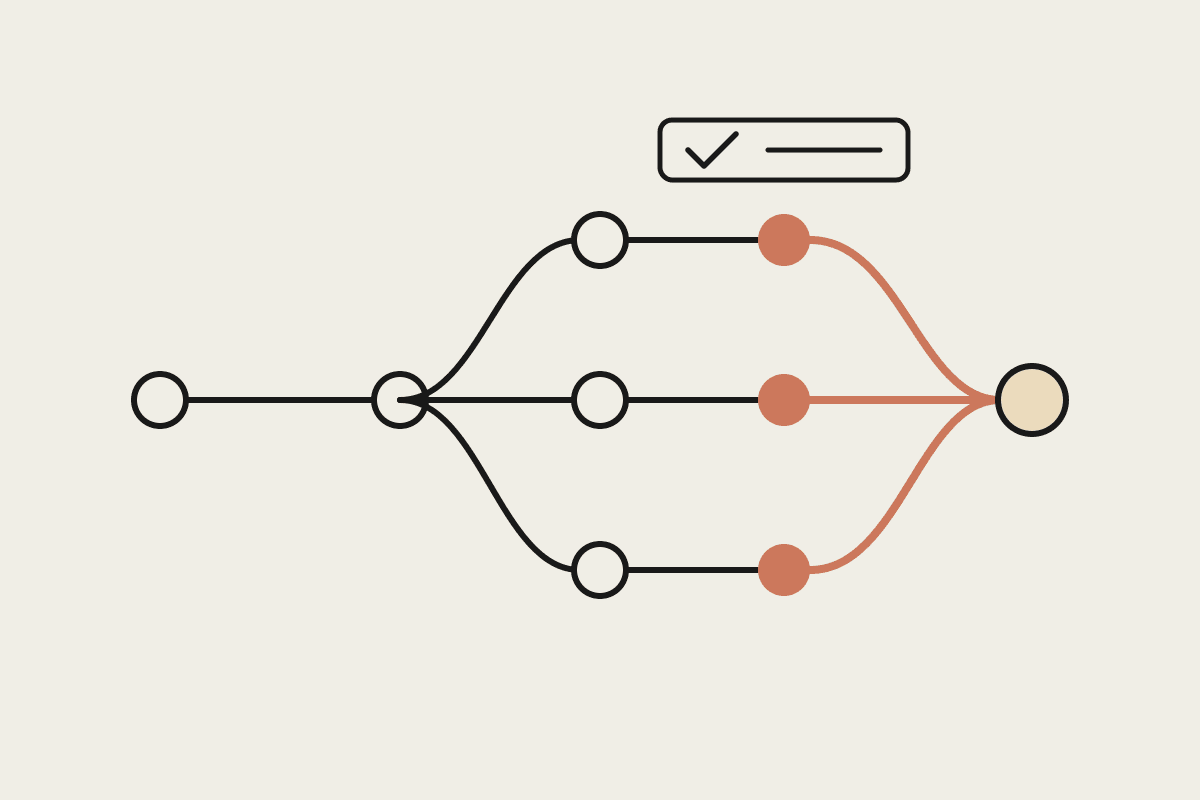
The platform auto-resolves merge conflicts with AI rather than queuing them for a human, on the logic that conflict handling can't wait when multiple agents are pushing in parallel. It builds on Graphite's stacked-pull-request model, following Cursor's acquisition of the Graphite team in 2025, where related changes move forward independently and merge automatically once ready.
It's still beta, and Cursor isn't pitching it as a GitHub replacement yet. It reads more as an extension of its own ecosystem, covering everything from code generation through merge and deploy.
Why this matters if you're not using Cursor
Most Australian teams running Claude Code today are still working inside a GitHub-first world, and that's not a problem on its own. But the questions Origin is trying to answer with new infrastructure are the same ones any team running more than one Claude Code agent against a shared repo has to answer with process.
Who owns a task branch. How conflicts get resolved when two agents touch the same file. What happens to your delivery pipeline if your git host has an outage mid-sprint. Cursor's answer is to build a platform. Most businesses can get most of the benefit by writing three things down.
Three checks worth running on your own setup
Are your Claude Code agents working on isolated task branches or worktrees, with a clear review gate before anything merges to main?
Do you have a documented fallback if your git host goes down mid-build, or does the whole pipeline simply stop until it comes back?
Is conflict resolution between concurrent agent branches a manual step someone has to remember, or is it built into the workflow?
If the honest answer to any of these is that it depends who's working that day, that's the gap. It won't hurt you on a quiet week. It will hurt on the week you have three agents running and a release due.
Worktrees are the practical unit of isolation
The single highest-value habit for a team running parallel Claude Code sessions is giving each agent its own worktree rather than sharing a checkout. It's a native git feature, costs nothing, and removes an entire category of confusing failure where two agents fight over the same working directory and neither is obviously wrong.
Pair that with a naming convention that makes the owner of a branch legible at a glance, and most of the coordination problem resolves itself. You don't need auto-resolving merge AI if agents rarely collide in the first place, and the cheapest way to avoid collisions is scoping tasks so they touch different parts of the codebase.
The review gate is not optional
The temptation with agent-generated code is to relax review because there's more of it and it mostly looks fine. That's exactly backwards. Volume is the argument for a tighter gate, not a looser one, because the failure mode shifts from occasional human error to systematic error repeated at speed.
What works in practice for small teams is a short, explicit checklist rather than a formal review process: does this touch anything security-sensitive, does it change a public interface, does it add a dependency. Anything that trips one of those gets human eyes. The rest can move with lighter oversight.
What this costs to sort out
None of it requires new infrastructure. It's mostly a case of making explicit what a lot of teams are currently doing by habit, and writing it somewhere a new starter will find it. For a business running Claude Code without a dedicated platform engineer, the fix is usually a short setup pass covering branch conventions, a review checklist, and a fallback plan. That's typically a A$2,000 to A$4,000 scoped engagement rather than a platform migration.
Compare that against the cost of a Sydney dev team losing half a day to an unresolvable merge state, or discovering mid-release that nobody knows which agent produced a particular commit, and it's an easy call.
The bigger pattern
Whether or not agent-native git hosting like Origin becomes mainstream, the direction of travel is clear. Infrastructure that assumed one human at a time is going to keep getting pressure-tested by teams running multiple AI agents in parallel, and the tooling will keep moving to accommodate that.
Claude Code already supports parallel sessions and worktrees. For most Australian businesses the gap isn't the tooling, it's having a written process for how agents share a codebase safely. That's worth sorting out before you're debugging a merge conflict at 9pm, not after.
If your team is running more than one Claude Code agent against a shared repo and the rules live in someone's head, that's a short fix. Book a session and we'll go through what your workflow needs written down.