On 28 August 2026, OpenAI said it will stop supplying its models to Cursor, proposing a shutoff date of 12 November 2026 following Cursor's acquisition by SpaceX. For Australian engineering teams the interesting part is not the falling-out between two American companies. It is the reminder that a coding tool your whole team depends on can lose its core capability because of a contract you never signed and cannot see.
What actually happened between OpenAI and Cursor?
OpenAI announced in August 2026 that it is winding down the commercial contract under which Cursor served OpenAI models inside its editor, with a proposed cutoff date of 12 November 2026. The trigger was Cursor's acquisition by SpaceX, and OpenAI said it could not be confident the new owner would use the technology within its terms of service. Cursor keeps trading and keeps its other model suppliers. What it loses, on a fixed date, is one of them.
A four-year commercial relationship ended because of an ownership change the customer did not choose and the end users had no say in. OpenAI has said it is giving the maximum notice the contract allows, which is decent behaviour, and also beside the point. You can read the original announcement for the full reasoning.
The failure mode is the supply chain, not the editor
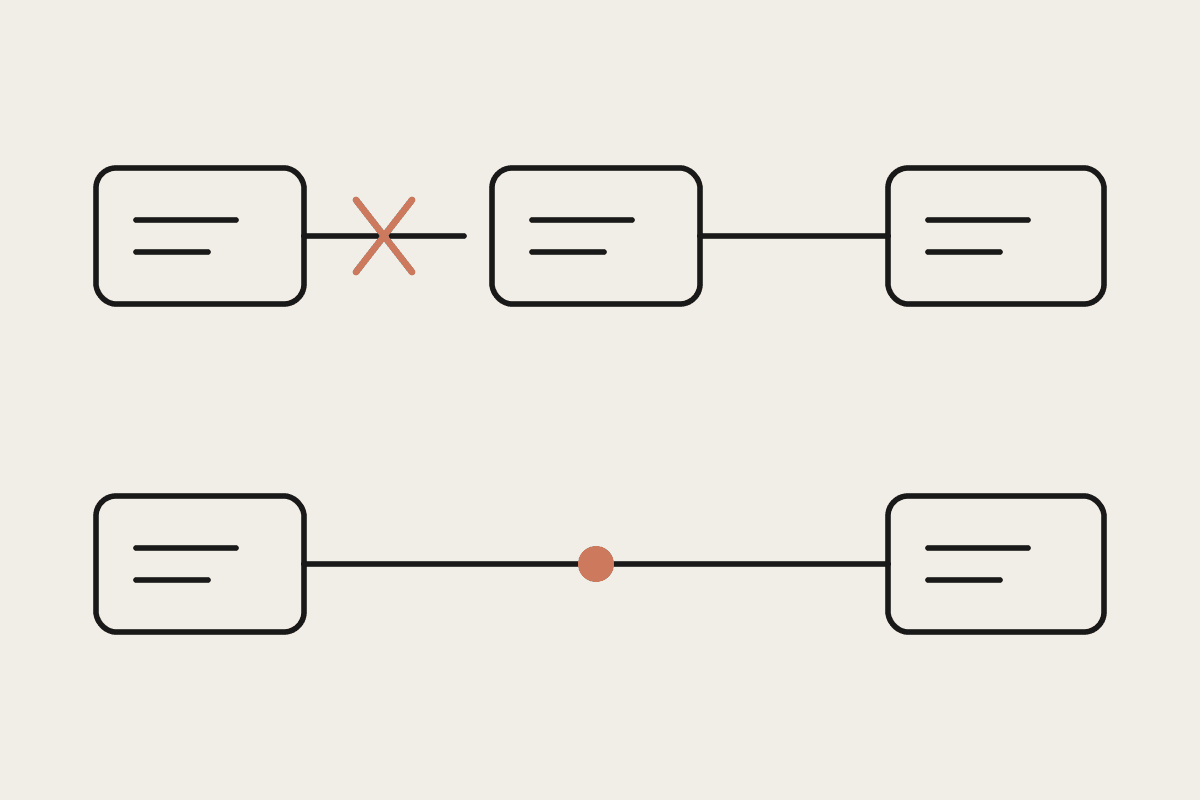
Cursor is a capable product and plenty of good teams run it. That is not in dispute here. The exposure is structural: the thing that makes an agentic coding tool useful is the model behind it, and when that model arrives through a reseller agreement, the tool's core capability is rented from a party you have no relationship with. Product quality does not protect you from a contract being withdrawn.
Every team standardising on an agentic coding tool is implicitly betting on a supply arrangement. Worth knowing which one you have bet on:
How many contracts sit between your developers and the model that does the work.
Whether your vendor owns the model or resells it under terms you cannot read.
What notice period you would actually receive if the upstream supply stopped.
Whether your security review covered the vendor only, or the model supplier as well.
For teams under APRA CPS 230 obligations, whether that upstream supplier is named in your material service provider register at all.
How Claude Code and Cursor differ on model supply
The distinction is narrow but it is the one that mattered in August 2026. Claude Code is Anthropic's own tool running Anthropic's own models, sold to you directly. There is no third-party supply agreement in the middle that a fourth party can terminate. Cursor is a multi-model editor, which is a real strength on capability and a real dependency on supply.
| Question | Claude Code | Cursor |
|---|---|---|
| Who builds the model | Anthropic | OpenAI, Anthropic, Google and others |
| Who you contract with | Anthropic, directly | Cursor, which contracts upstream |
| Can a third party end supply | No intermediary to cut | Yes, as announced August 2026 |
| Notice if supply ends | Set by your own terms | Set by a contract you cannot see |
| Cost of losing a supplier | Switch model tier, same tool | Re-tool the editor workflow |
Being single-vendor is not automatically safer, and we will come back to that. It is simply fewer moving parts. Our longer decision guide for Australian teams covers the capability comparison, which is a separate question from this one.
What does a forced tool change cost an Australian team?
Re-standardising a twenty-developer team on a different coding agent is not a licence swap. The work is rewriting rules and prompt files, re-running security and procurement review, retraining everyone, and absorbing lower throughput for several weeks while habits reset. Across Sydney and Melbourne engagements we have seen that land between $45,000 and $90,000 in internal time for a team that size, before a dollar of new licence cost. A ten-person team is not half the number, because the review and rewrite work barely scales down.
That figure is the reason this is a procurement question rather than a developer preference question. Teams rarely budget for a migration they did not choose. If you want to put real numbers against your own situation, our ROI calculator and our guide to keeping AI options open are both a reasonable starting point.
What not to conclude from this
Three things this episode does not prove. It does not prove Cursor is finished: it keeps other suppliers and a large user base, and losing one model line is survivable. It does not prove single-vendor is inherently safe, because Anthropic can change pricing, deprecate a model, or alter terms like any other supplier, and a direct relationship gives you notice rather than immunity. And it does not prove multi-model tools are a mistake, because the same design that created this exposure is what lets Cursor keep working after November.
The honest lesson is narrower and more useful: count the contracts between your team and the capability, and know who can cut each one. That number is worth knowing before you standardise, not after an announcement lands.
A short checklist before you standardise
Write down every party in the chain between a developer keystroke and a model response.
Ask your vendor, in writing, what notice you get if an upstream model supply ends.
Keep your rules, prompt and agent configuration files portable rather than tool-specific.
Price the migration before you commit, not after, and put the number in the business case.
Re-run the check annually, because ownership and contracts both change without warning.
If you are weighing a move, our seven-day migration plan sets out what the changeover actually involves. We also help AU teams run this assessment properly through our consulting services. If a twenty-minute conversation would be more useful than another article, book a time with us and bring your current tool stack.