OpenAI put its GPT-5.6 family into Kiro, AWS's spec-driven coding agent, in late August 2026. The headline number doing the rounds is an 82% cost reduction on Terminal-Bench 2.1 tasks. If you run an engineering team in Sydney or Melbourne and you already pay for Claude Code, that number probably landed in your inbox with a question attached: should we be looking at this?
Short answer: the benchmark is not the thing to compare. The workflow is.
What does spec-driven development actually buy you?
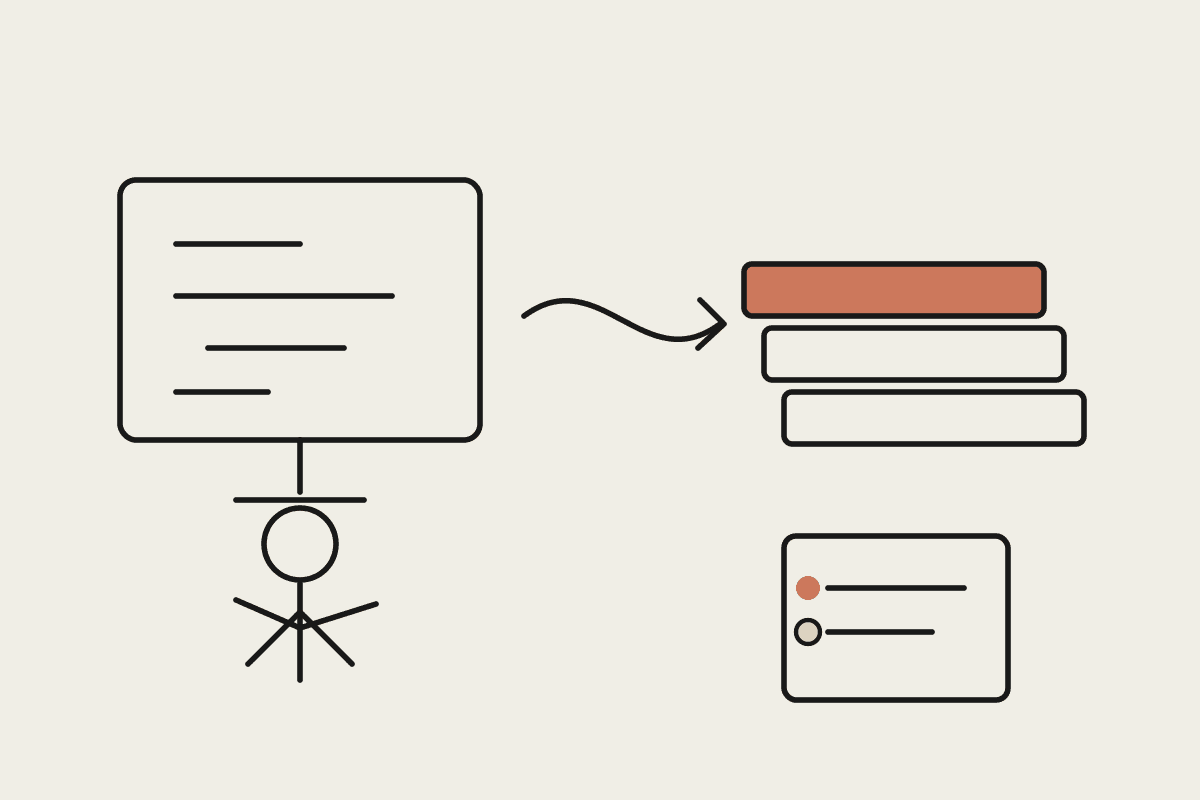
Kiro's pitch is that a coding agent should not start typing until it has written down what it is building. Intent becomes requirements, requirements become a technical design, the design becomes a task list, and only then does the model write code. Review checkpoints sit between each stage.
That is a good idea, and it is good for a boring reason. Most agent failures are not model failures. They are specification failures. The agent built the wrong thing correctly, and nobody noticed until code review. Forcing a written design step in front of the model gives a human a cheap place to catch that.
The question is whether you need a separate product to get it.
Does Claude Code already run plan-then-build?
Claude Code has had this loop natively for a while, with no IDE layer sitting on top:
Plan mode stops the model from editing files until you approve an approach.
CLAUDE.md holds project conventions, architecture constraints and things the agent must not do, and it is read on every run.
Skills package a repeatable procedure so the same task runs the same way each time.
Subagents fan out research or verification work without filling up the main context window.
Hooks fire your own scripts at defined points, so tests and linters become gates rather than suggestions.
The shape is the same as Kiro's: requirements, design, tasks, review. The difference is where it lives. In Claude Code it is configuration in your repository, versioned alongside the code it governs. In Kiro it is a product you adopt, sitting between your team and the model.
What does the 82% cost reduction actually mean?
Terminal-Bench 2.1 measures whether an agent completes terminal tasks. A cost reduction on that benchmark tells you about token efficiency on a specific task shape under a specific harness. It does not tell you what a feature costs to ship in your codebase.
Two things move real cost far more than model price per token:
How many times the agent has to be corrected. A rework loop that runs three times costs three times, whatever the per-token rate.
How much context the agent has to load before it is useful. A repository with no written conventions makes every run more expensive on every model.
We have watched AU teams cut agent spend by roughly 40% without changing model, purely by writing down the conventions the agent kept guessing at. That work is free and it is portable. Switching model families is neither.
What does switching to Kiro actually cost?
A Kiro-based setup means an AWS-side agent product, the model behind it, and your existing IDE and CI. A Claude Code setup means the model and your repository. Those are different bills and different failure surfaces.
For a six-developer Australian team, seat and usage costs on either path land in a broadly similar band, somewhere around $1,500 to $3,000 a month depending on how hard the agents are worked. The number that separates them is migration: rewriting conventions, retraining the team, and rebuilding whatever automation you have already wired up. Budget $15,000 to $25,000 of engineering time for a real switch, then ask honestly whether an 82% benchmark delta pays that back.
| Item | Claude Code | Kiro-based stack |
|---|---|---|
| What you are buying | The model plus your repository | An AWS-side agent product, the model behind it, plus your IDE and CI |
| Where the workflow lives | Configuration versioned alongside the code | A product sitting between your team and the model |
| Seat and usage a month | About $1,500 to $3,000 | About $1,500 to $3,000 |
| Cost to migrate onto it | None, you are already there | $15,000 to $25,000 of engineering time |
| Australian data residency | Bedrock au. region covers the API and Claude Code | Adds a hop that needs its own answer |
The Australian bit nobody puts in the comparison table
Where the model runs matters here in a way it does not in every market. If you work in financial services, health or government, your Privacy Act obligations and any APRA CPS 234 commitments apply to the agent's data path, not just to the model name on the invoice.
Claude has an Australian residency path through the Bedrock au. region, and that covers the API and Claude Code. A third-party agent layer adds a hop, and that hop needs its own answer on where the code sits while it is being worked on and who can read it. Ask that question before you ask about benchmarks. It rules options in and out faster than any leaderboard.
What to compare instead
Does the agent read and respect a conventions file that lives in your repo?
Can you gate it, so no files are edited until a human approves the plan?
Can your existing CI act as the verification step, or does the tool want to own that?
Where does your code sit while the agent works on it, and does that survive a Privacy Act review?
What does it cost to leave? If the workflow is a product rather than a file in your repo, that answer is worse.
What not to conclude from this
None of this says GPT-5.6 is a weak model or that Kiro is a bad product. Spec-driven development is the right instinct, and AWS shipping a structured wrapper around it will help teams who would never have written a design document unprompted.
The point is narrower. If you already run Claude Code, the loop Kiro sells is one you can switch on today by writing a proper CLAUDE.md and using plan mode. Do that first. If it still is not working after a month of honest use, the problem is your specifications, and a different model family will not fix it.
We help Australian teams get coding agents past the pilot stage: the conventions, the guardrails and the review gates that make agent output trustworthy enough to merge. If you want a second opinion on your setup, book a time.