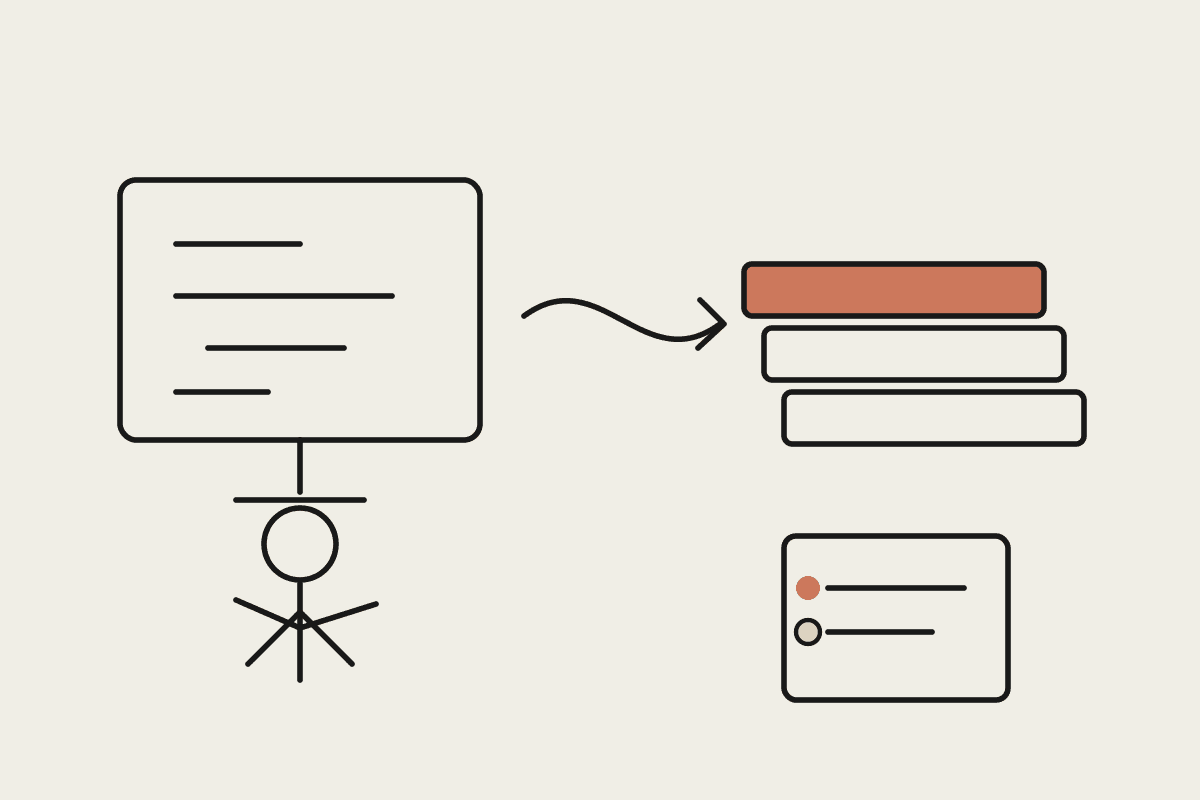
Devin markets itself as a fully autonomous software engineer: give it a task, and it plans, writes, tests, and submits the work with minimal human involvement in between. Claude Code takes a different philosophy: an assisted agent that works alongside a developer in the terminal, moving fast but keeping a human genuinely in the loop at natural checkpoints rather than disappearing for hours to return with a finished pull request.
What 'autonomous' actually means in practice with Devin
Devin's pitch is compelling on paper: assign a ticket, walk away, come back to completed work. In practice, for anything beyond a fairly well-scoped, self-contained task, that autonomy cuts both ways. A team ceding a genuinely ambiguous or architecturally significant task to a fully autonomous agent risks discovering, hours later, that the agent made a reasonable-sounding but wrong assumption early on that shaped everything downstream. The autonomy that saves time on the right kind of task costs time when it goes sideways on the wrong kind, because unwinding hours of independently-generated work is slower than course-correcting a few minutes in.
Why Claude Code's assisted model tends to suit most real engineering work
Claude Code surfaces its plan and reasoning as it works, giving a developer the chance to redirect early rather than discovering a wrong turn after the fact.
It fits naturally into an existing terminal-based workflow most engineering teams already use, rather than requiring a separate platform and process just for AI-assisted work.
For genuinely ambiguous or architecturally significant tasks, the assisted checkpoint model catches misunderstandings while they're cheap to fix, not after a large chunk of code has already been written on a wrong assumption.
It scales down as well as up, a developer can lean on it heavily for a well-defined refactor or lean on it lightly for a task needing close judgement, without switching tools.
Where Devin's autonomy genuinely earns its place
Devin's model does have a real fit: well-scoped, low-ambiguity tasks where the specification is genuinely clear and the risk of a wrong early assumption is low, think a well-defined bug fix with a clear reproduction case, or a mechanical migration task with an unambiguous target state. For that category of work, letting an agent run with minimal check-ins is a legitimate time saver. The judgement call for an engineering team is being honest about how much of their actual backlog fits that description versus how much carries the ambiguity that makes an assisted, checkpoint-based model the safer bet.
What Australian engineering teams are actually choosing
Most of the Australian engineering teams we've worked with in 2026 have settled on Claude Code as the default for day-to-day development work, specifically because the assisted model matches how software teams already review and collaborate on code, with Devin-style full autonomy reserved for a narrow slice of genuinely well-scoped, repetitive tasks rather than the whole backlog. That split, rather than an all-in bet on either philosophy, tends to get the best of both: speed on the tasks that don't need close supervision, and genuine safety on the ones that do.
What the choice actually costs a team
Devin's pricing sits at the higher end of the AI coding-agent market, reflecting its positioning as a more autonomous, higher-capability product, often running well over $500 a month per active user depending on usage volume. Claude Code's pricing is considerably more accessible for a small Australian engineering team, and because it fits into an existing terminal workflow rather than requiring a parallel platform, the actual switching and training cost for a team already comfortable in a terminal is close to zero. For a five-person Sydney engineering team, the practical cost difference between standardising on Claude Code versus Devin can run into the tens of thousands of dollars a year, money most small-to-mid teams would rather put toward headcount or infrastructure than a premium on autonomy they may not fully use.
That cost gap is worth putting in front of a team explicitly before defaulting to whichever tool has the flashiest autonomy pitch, since the actual engineering outcomes for most day-to-day work don't obviously favour the more expensive option once the ambiguity-handling trade-off is factored in honestly.
It's a conversation worth having explicitly at budget-planning time, not left to whichever tool an individual developer happened to trial first.
Get in touch through our contact page if you want a second opinion on where that line should sit for your specific team and backlog.
If your team is weighing up how much autonomy to hand an AI coding agent and where the line should sit, get in touch through our contact page for a candid conversation based on your actual codebase and team.