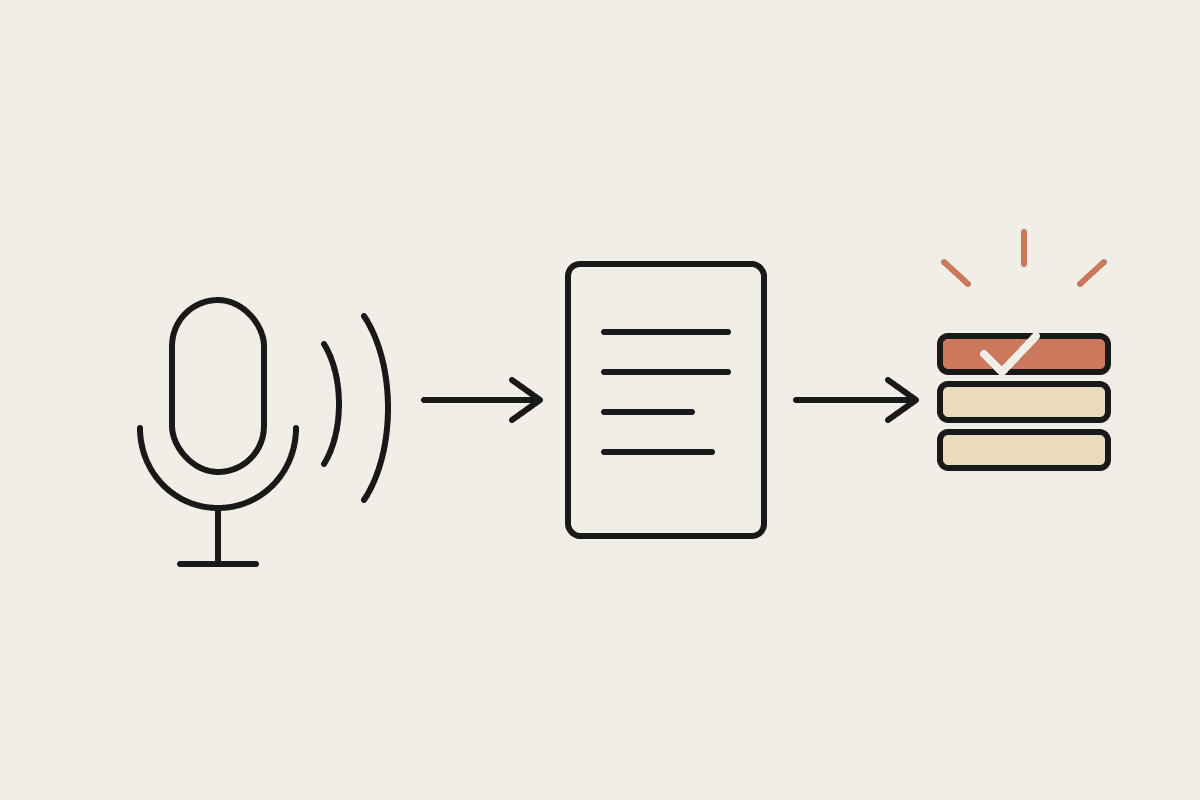
Rolling out Claude Cowork across a 20-person business fails most often not from the technology, but from trying to do too much in week one. Connect everything, train everyone, and automate every process simultaneously, and the result is usually a confused team and a handful of half-finished workflows nobody trusts. A staged 90-day plan gets better adoption because each phase builds real confidence before the next one starts.
Days 1-30: one team, one workflow, real trust
Start narrow. Pick one team, ideally one with a clear, painful, well-understood admin bottleneck, and one workflow to fix it: invoice chasing, meeting notes, inbox triage. Connect only the tools that workflow actually needs. The goal for month one isn't broad coverage, it's a handful of people who've seen Cowork genuinely save them time and are willing to vouch for it internally.
Week 1-2: connect the minimum tools needed for the pilot workflow, and run it manually alongside the automated version to build trust
Week 2-3: hand full operation to the pilot team once the manual comparison checks out
Week 4: gather feedback and one real story of time saved, this becomes the internal case for phase two
Days 31-60: widen to a second team, add connectors
With one proven workflow and a credible internal advocate, extend to a second team and their own highest-value bottleneck. This is also the point to add scheduled tasks and background work for the first team, building on the trust from phase one rather than introducing new risk before the basics are solid.
Days 61-90: shared skills, scheduled tasks and a review
By the final phase, start building shared Cowork skills and scheduled tasks that multiple teams can use, rather than each team reinventing similar workflows separately. Close the 90 days with a proper review: what's actually saving time, what's stalled, and a realistic plan for the next quarter rather than declaring the rollout finished.
A worked example
A 22-person Wollongong engineering consultancy started their Cowork rollout with just the admin team automating client invoicing and meeting-note distribution. By day 90, four of six teams were running at least one automated workflow, with the initial admin-team pilot cited internally as the reason engineering staff, initially sceptical, agreed to trial it themselves. The firm estimated combined time savings across all four teams at roughly $85,000 a year in reclaimed staff capacity once fully bedded in.
Why the narrow start matters more than the plan itself
Businesses that try to roll out to all 20 people simultaneously in week one almost always end up with lower actual adoption at day 90 than businesses that started with five people and one workflow, because early failures in a broad rollout poison trust across the whole team at once, while a narrow pilot contains any early mistakes to a small, forgiving group.
Governance from day one, not day 60
Even a narrow pilot needs basic guardrails set up from the start: what Cowork can send without review, what data it can access, who owns troubleshooting when something goes wrong. Retrofitting governance after a rollout has already spread is much harder than building it in from the first connector.
What this isn't
This isn't a fixed template that fits every business exactly, the specific workflows and team order should match your actual bottlenecks, not a generic checklist. It's also not a plan that ends at day 90, that's the point where the real ongoing rollout begins with a proven foundation.
Getting started
Identify the single most painful, well-understood admin bottleneck in one team
Run the automated workflow alongside the manual one for the first week or two to build trust before fully switching over
Capture one concrete time-saved story by day 30 to use as internal proof
Plan the day-90 review before day one, so it actually happens rather than getting skipped
The businesses that stall at day 40 almost always share the same root cause: they skipped the trust-building comparison step in week one and moved straight to full automation, so when the first genuine mistake happened, nobody had confidence in the system yet to treat it as a normal teething problem rather than a reason to abandon the whole rollout.
A realistic 90-day plan also budgets time for the unglamorous parts, updating a connector permission, correcting a workflow that took a wrong turn, answering the same setup question from three different people. None of that is a sign the rollout is failing, it is what a rollout actually looks like in a business with real people and real deadlines.
If you're planning a Cowork rollout across your team and want a plan tailored to your actual bottlenecks, that's exactly what we help AU businesses build. Get in touch: https://www.automataai.com.au/contact
Keep going
For the full setup path, see the Claude Cowork setup guide. Related on this topic: