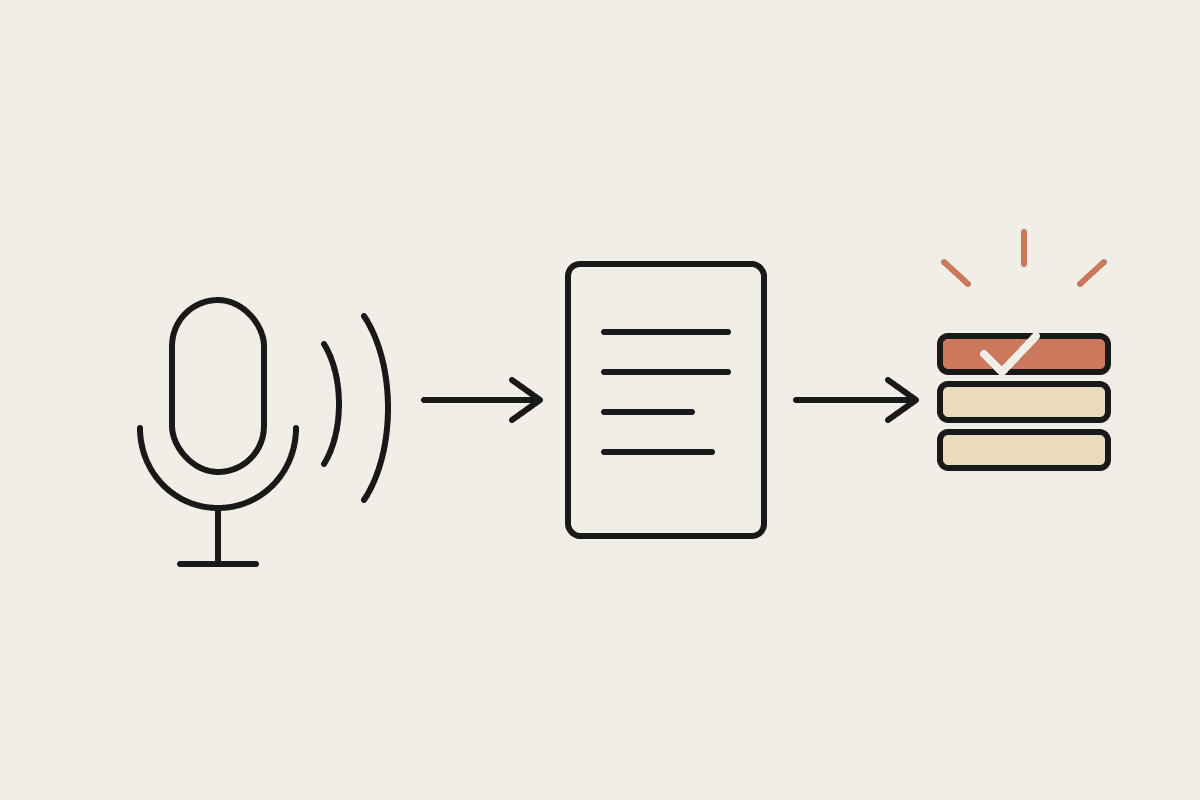
The biggest barrier to a Claude Cowork rollout is rarely the technology, it's a team that's never used an AI tool for real work and doesn't know where to start. Onboarding a non-technical team needs a different approach than onboarding developers: less about capability, more about building basic trust and habit through small, concrete wins.
Why the standard onboarding approach fails here
Handing a non-technical team a list of features and connector options tends to produce exactly one outcome: nobody uses any of it, because there's no obvious starting point and every option feels equally unfamiliar. The teams that actually adopt Cowork start with one narrow, well-chosen task, not a broad tour of capability.
A workable onboarding structure
Session one: one person's single most annoying weekly task, solved live in the room, so everyone sees a real result immediately
Session two, a few days later: each team member tries the same pattern on their own equivalent task, with support on hand
Week two: a short check-in on what worked and what felt confusing, adjusting before pushing further
Week three onward: introduce one new capability at a time, connectors, scheduled tasks, only once the first pattern feels comfortable
What actually builds trust
Non-technical staff trust a tool once they've seen it get something right on their own real work, not a demo example. Use actual client names, actual documents, actual numbers in the first session, not a sanitised sample task, because the gap between a demo and reality is exactly where scepticism sets in and where a generic vendor demo tends to lose the room.
A worked example
A Sydney allied-health practice with eight non-technical administrative staff ran a first session solving one receptionist's real weekly task, chasing outstanding patient forms, live in the room. Within two weeks, six of the eight staff had adopted at least one Cowork-assisted task into their routine, a noticeably higher take-up than the practice manager expected, largely because the first session used the practice's actual patient data and actual forms rather than a generic example.
Naming the fear directly
Non-technical teams often carry an unspoken worry that adopting AI tools reflects badly on their own competence, or threatens their role outright. Address this directly and early: the goal is removing the parts of the job nobody enjoys, not evaluating anyone's performance. Teams that hear this explicitly, rather than assuming it, adopt faster and with less quiet resistance than teams left to guess at leadership's actual real intent.
Picking the right first champion
The first person to successfully use Cowork on a real task becomes the informal internal advocate whether you plan for it or not. Choose someone genuinely respected by their peers for that first session, not necessarily the most technically curious person in the room, their endorsement carries more weight with a non-technical team than any amount of management enthusiasm.
What to do when someone struggles
A team member who's genuinely uncomfortable with new software needs one-on-one time, not a repeat of the group session. Pair them with the internal champion rather than management for this follow-up; peer support tends to land better than a manager troubleshooting, which can feel like being checked up on.
Sizing the payback
Eight staff each reclaiming even 90 minutes a week from tasks handed to Cowork adds up to roughly 600 hours a year across the team, worth well over $18,000 a year at a modest $30 hourly admin rate, well before counting the harder-to-measure benefit of staff feeling less overwhelmed by repetitive admin.
What this isn't
This isn't a training program that ends after week one, ongoing light-touch support matters more for a non-technical team than for a technical one, since there's no instinct to troubleshoot independently yet. It's also not a one-size onboarding, tailor the first task to something that team actually finds painful, not a generic example.
Getting started
Identify the single most tedious, repetitive task shared across the team
Run the first session live, on real work, with real data, not a sanitised demo
Name the job-security concern directly rather than letting it sit unaddressed
Pick a well-respected team member, not necessarily the most tech-curious one, as the first person to try it
Six months on, most practices that got this right report the tool has simply become part of how the team works, no longer something anyone thinks of as "the AI thing" separately from their normal job. That quiet normalisation is the actual sign the onboarding worked.
If you're rolling out Cowork to a team that's never used an AI tool before, we run onboarding sessions built exactly for this. Get in touch: https://www.automataai.com.au/contact
Where to go next
If you are setting Cowork up from scratch, start with Claude Cowork setup guide. Two pieces that sit closest to this one: