Registered BAS Agents carry a different kind of quarter-end pressure to a business owner doing their own BAS. You're not managing one set of books, you're managing dozens of clients on staggered quarters, each with its own reconciliation quirks, its own history of late invoices and mystery transactions, and its own deadline that the TPB expects you to hit without excuses. The generic 'AI for BAS' content out there tends to assume a single business owner's workflow, not an agent juggling a full client book, and applying that single-business thinking to a multi-client practice usually just adds a layer of tooling on top of the same underlying chaos rather than fixing it.
Where a multi-client quarter actually breaks down
The bottleneck for most BAS Agents isn't knowing what to do, it's sequencing dozens of clients through the same set of steps in the two or three weeks before lodgement without anything falling through a gap. Reconciliation for Client A gets interrupted by a phone call about Client F, and by the time you're back on Client A you've lost the thread of which line items still needed chasing. That context-switching cost is invisible on any single client but adds up to real hours across a full book each quarter.
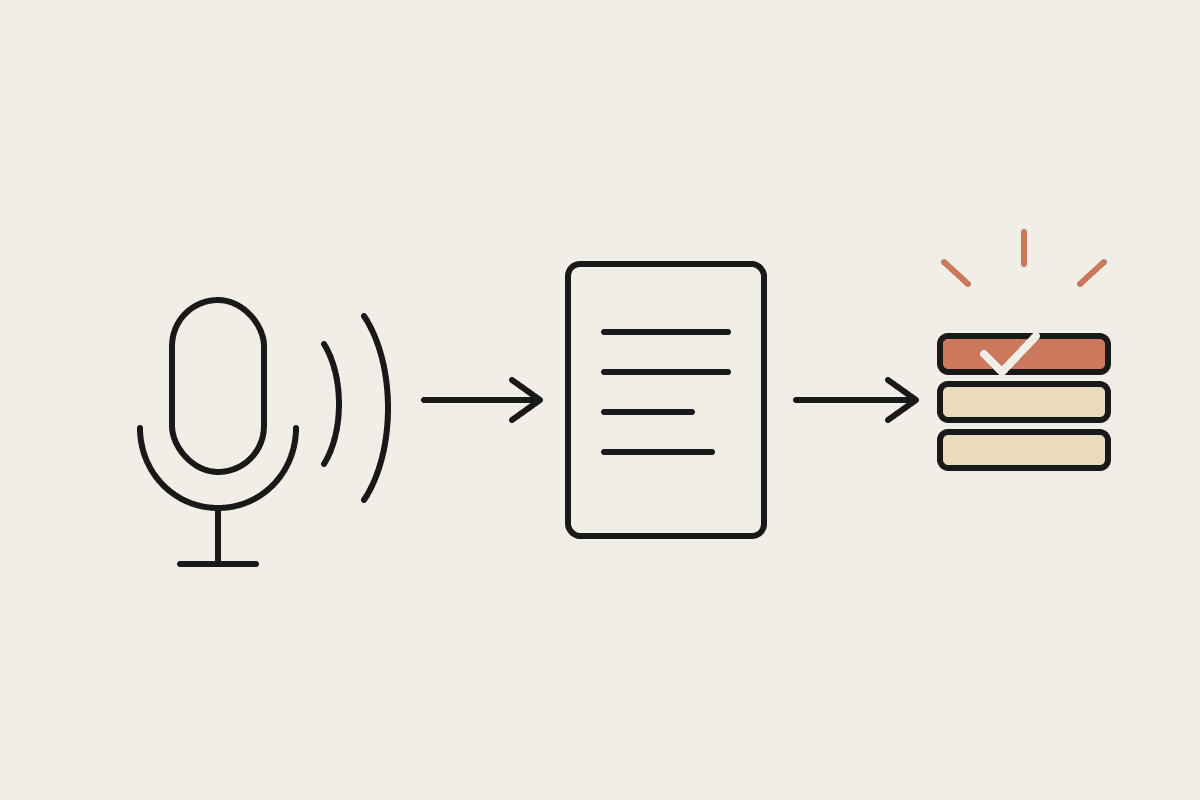
A per-client checklist tracked automatically against actual bank-feed and invoice status, not a static spreadsheet
Draft BAS workpapers prepared from reconciled data, ready for the agent's review rather than built from scratch
Overdue-item chasing (missing invoices, uncategorised transactions) drafted as client emails, not remembered ad hoc
A single dashboard view of where every client sits in the quarter-end pipeline, updated as work happens
Building the Cowork workflow around the agent's actual week
The setup that works is a scheduled task that runs through the client list each morning during quarter-end, checking bank-feed reconciliation status and flagged exceptions per client, then surfacing a prioritised worklist rather than an undifferentiated pile. Clients close to being fully reconciled get bumped up (finish those, get them off the board), clients with a growing backlog of uncategorised transactions get flagged for a chase email before the backlog compounds further. That prioritisation is the part a static spreadsheet checklist can't do on its own, because it needs live data from the bank feed to know which client actually needs attention today.
A two-partner BAS agency in Adelaide managing around 65 clients found their quarter-end crunch consistently ran two full weeks of unpaid overtime across the practice, driven mostly by the context-switching cost of jumping between clients without a clear sense of what was actually urgent. After building this workflow into Cowork, the practice reported the same client load taking roughly 30% less elapsed time to clear, converting to somewhere around $18,000 a year in recovered billable capacity once you price the freed-up hours against new client work the practice could take on instead.
Keeping the TPB comfortable with what's automated
Everything client-facing, meaning anything that goes out under the practice's name or gets lodged with the ATO, still needs the registered agent's sign-off; nothing here is designed to submit a BAS without a human confirming it first. The automation's job is compressing the mechanical sequencing and chasing work down to what a human can actually review in the time available, not replacing the agent's judgement on anything that counts as giving BAS advice.
Rolling it out across a full client book without a big-bang cutover
Practices that try to switch every client onto the new workflow in the same quarter tend to have a rocky first cycle, because the prioritisation logic needs real data from a few clients to tune properly before it's trusted for the whole book. The better path is a staged rollout: five or six clients in the first quarter, watching how the worklist prioritisation performs against what the agent would have judged manually, then expanding once the pattern's proven. That staging cost a few weeks of running two systems in parallel for the Adelaide practice, which they judged well worth it against getting the prioritisation wrong across all 65 clients at once.
What this isn't
This is a workflow layer for agents already running a disciplined reconciliation process; it won't fix a practice where the underlying bookkeeping is consistently poor quality coming in from clients. If your clients' books arrive in bad shape every quarter, that's a client-management conversation, not something a scheduling tool solves.
Automata AI builds Cowork quarter-end workflows for Australian BAS agencies managing multi-client books, tuned to how the practice actually works rather than a generic template. If your quarter-end still runs on unpaid overtime and a spreadsheet checklist, get in touch through /contact.
Related reading
The end-to-end walkthrough lives in our Claude Cowork setup guide. Closest neighbours to this piece: