Anthropic has published a first-party account of how its own Continuous Integration team uses Claude as a first responder for CI/CD failures. The scenario the author describes will be familiar to anyone who has carried a pager: it's 10pm, roughly 44 tests on a new service have stopped firing, and the usual response is to stop whatever you were doing and spend an hour working out why. The new first step is pulling in Claude and asking what it sees.
What actually changed
Instead of an engineer manually digging through logs and recent commits to work out why a test suite broke, Claude is looped into the incident directly. It reviews the failure, checks recent changes, and surfaces a likely cause before a human has opened their laptop. Anthropic has published a setup kit so other engineering teams can copy the pattern rather than building it from scratch.
The underlying idea is simple. Most CI/CD failures are not novel. They follow patterns an engineer would recognise instantly once they saw the right diff, dependency bump, or flaky test. The slow part was never the diagnosis. It was getting a human's attention onto the right piece of evidence fast enough, at an hour when nobody wants to be looking.
What this looks like for a smaller Australian engineering team
Most Australian businesses running a CI/CD pipeline do not have a dedicated SRE function or a 24-hour on-call roster. Failures either wait until morning or interrupt whoever happens to be reachable. Neither is great: the first costs you a day of delivery, the second costs you an engineer's evening and a bit of goodwill.
A Claude on-call pattern doesn't require either. In practice it looks like this:
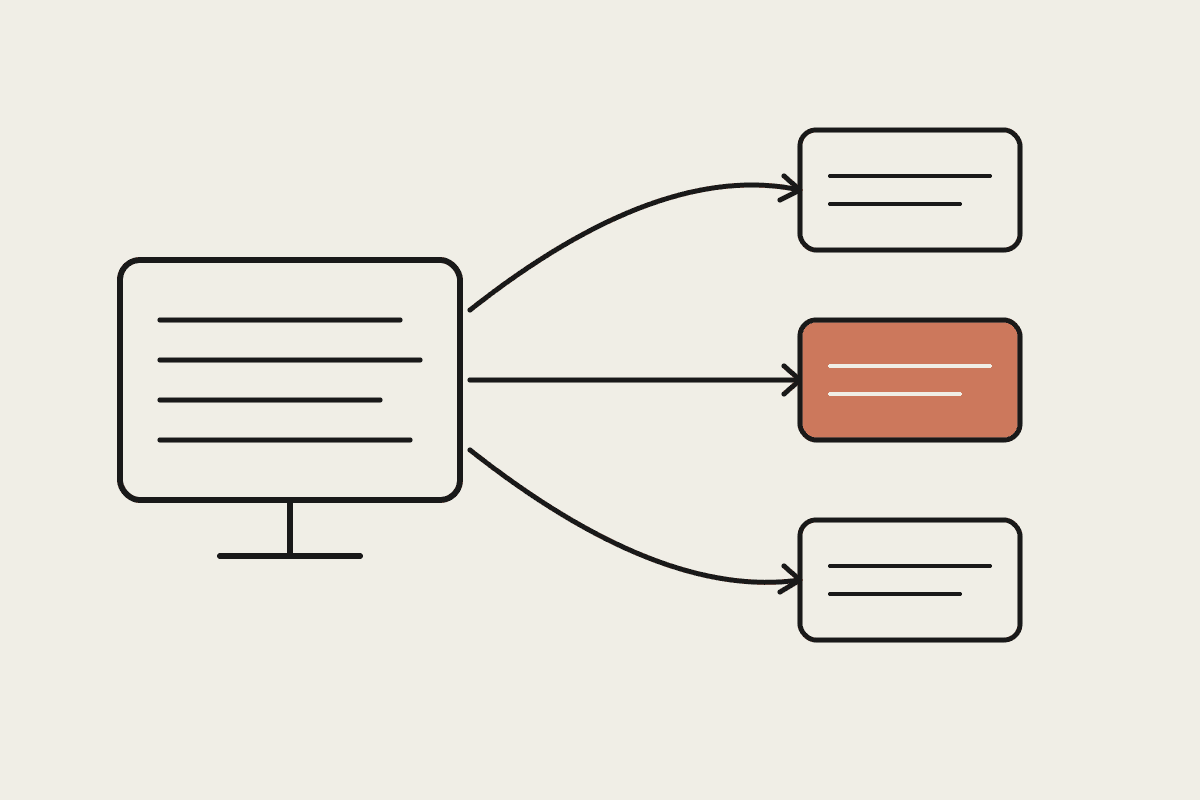
Claude watches your CI/CD pipeline and responds to failures in Slack or your team chat with a likely root cause and a suggested next step.
Genuinely ambiguous failures still page a human, but with context already gathered instead of a raw stack trace and a timestamp.
Routine failures such as a known flaky test or a familiar dependency issue get flagged and, with the right guardrails, can be auto-retried without waking anyone.
The value isn't replacing an engineer's judgement. It's compressing the time between something breaking and someone having enough context to fix it. That gap is usually the most expensive part of an incident, measured both in engineer hours and in after-hours interruptions that quietly wear a small team down.
The guardrails matter more than the setup
The failure mode worth designing against isn't Claude getting a diagnosis wrong. It's Claude being trusted with actions it shouldn't take autonomously. A first responder that reads logs, checks diffs, and posts an assessment is low risk. One that can re-run deploys, revert commits, or touch production configuration without a human in the loop is a different proposition entirely, and should be treated that way.
The sensible split is read-broadly, write-narrowly. Give Claude generous read access to logs, build history, and the repository, and keep write actions to a short, explicit list that a human approves. That single boundary is what separates a useful triage assistant from an incident of its own.
Escalation rules are where the tuning happens
The other thing worth getting right early is what counts as needing a human now versus what can wait until standup. Set that too loose and Claude pages someone for a flaky test that would have passed on retry. Set it too tight and a real outage sits in a channel until morning.
This is not something you can specify perfectly upfront. It comes out of a short pilot period where you watch what Claude flags, compare it against what actually mattered, and adjust. Two or three weeks of real failures is usually enough to calibrate.
What it takes to set up properly
This is not a plug-and-play toggle. It needs your CI/CD system connected, sensible escalation rules so Claude isn't paging someone for something it could already resolve, and that short tuning period. For a small Australian engineering team, that's typically a scoped build in the A$3,500 to A$6,000 range rather than an ongoing platform cost, plus whatever Claude usage the pipeline itself consumes.
Worth being clear about the second part: usage is a real running cost, not a rounding error, and it scales with how chatty you let the integration be. A pipeline that invokes Claude on every build behaves very differently on the bill to one that invokes it only on failure. Start with failures.
A natural next step if you're already running Claude Code
If your team is already using Claude Code for development, this is the obvious extension: the same model, pointed at the pipeline that ships what your engineers write rather than only at the code itself. The context that makes Claude useful in the editor, meaning familiarity with your codebase, your conventions, and your recent changes, is the same context that makes it useful at 10pm when a build has fallen over.
For a Sydney or Melbourne team of five to fifteen engineers with no dedicated platform person, this tends to be one of the higher-value automations available, precisely because it targets the work nobody wants and nobody has time to systematise.
If your pipeline failures currently land on whoever is closest to their laptop, that's worth fixing before the next bad week. Book a session and we'll scope what a Claude first-responder setup would look like on your stack.