On 23 September 2026 Google announced a new wave of Connected Apps for the Gemini app. Users can now pull third-party tools into a chat with an @mention or switch them on in settings. The list is broad: Airtable, Linear, monday.com, PandaDoc, Wispr AI and Zoho on the productivity side, Adobe, Picsart, Squarespace and Webflow for creative work, and lifestyle names such as apartments.com, Experian, Peloton and SeatGeek.
Google pitches this as one assistant pulling together a fragmented working day. For an individual user that is a sensible move. For an Australian business choosing where to wire AI into its systems, the more useful question is not how long the partner list is, but who gets to add to it. That is where Claude, built on the open Model Context Protocol (MCP), sits on different ground.
What did Google actually announce for Gemini in September 2026?
Google added a new set of third-party Connected Apps to the Gemini app in September 2026, covering productivity tools such as Airtable, Linear, monday.com, PandaDoc and Zoho, creative tools such as Adobe and Webflow, and lifestyle services such as Peloton and SeatGeek. Users call each app with an @mention or enable it in settings, and Google curates which partners appear.
The announcement came from Mai Lowe, a product manager on the Gemini app, and you can read the original Google post. The business-relevant part is the productivity group. Earlier Gemini connector waves leaned towards consumer services, which we covered in our look at Gemini's earlier app connectors. This one reaches into tools that Australian teams run real work on.
Curated list or open protocol: why the difference matters
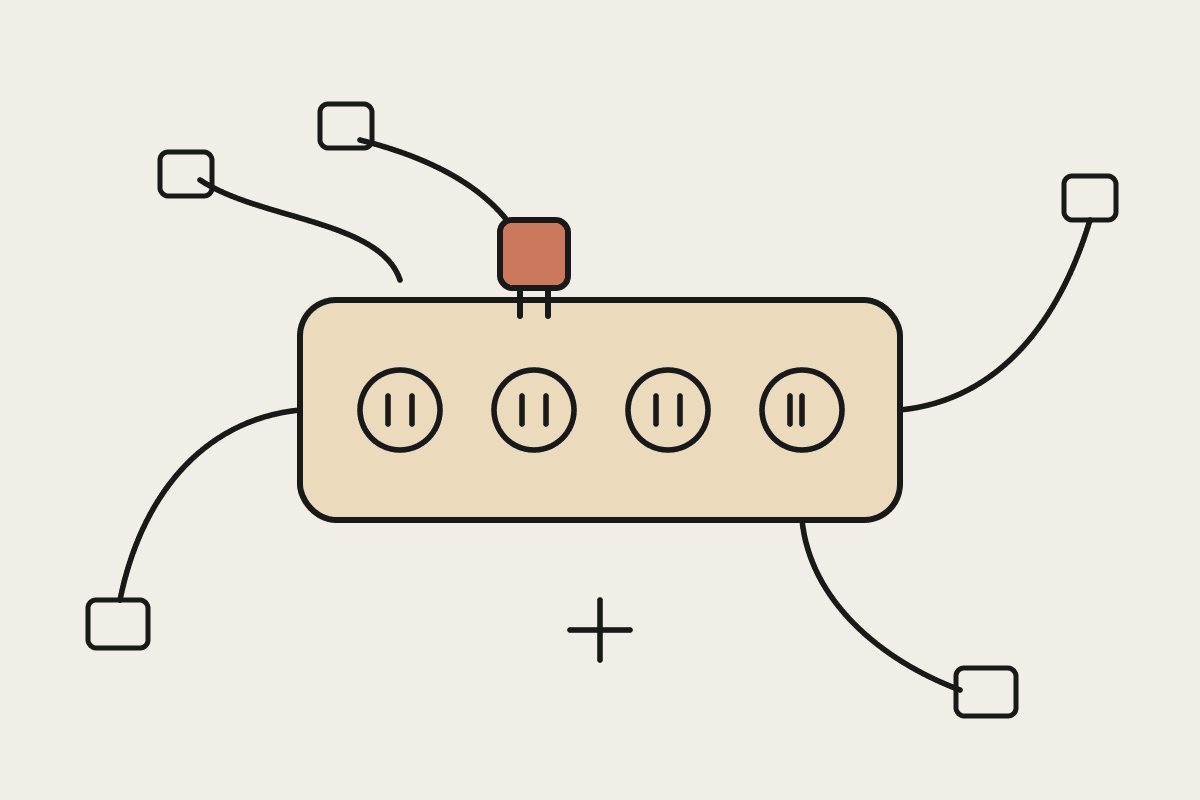
Claude users have had this capability for well over a year. MCP is an open, standardised way for an AI assistant to talk to an outside system. Anthropic publishes the protocol, and anyone can write an MCP server: a software vendor, an internal IT team, or a consultancy like ours. Claude and Cowork then connect to that server, with a connector registry for the common ones.
Gemini's Connected Apps work the other way round. Google chooses the partners, builds or approves the integration, and ships it inside its consumer app. If your tool is on the list, you are covered. If it is not, you wait.
For a business, three differences follow from that design choice:
Who can extend it.
Where it runs.
Who approves actions.
| Question | Gemini Connected Apps | Claude with MCP |
|---|---|---|
| Who decides which tools connect? | Google, via a curated partner list | Anyone who builds an MCP server |
| Can you connect an in-house system? | Not unless Google adds it | Yes, with a custom server |
| Can it run inside your network? | No, it is part of the Gemini app | Yes, servers can be self-hosted |
| How is it invoked? | @mention or settings toggle | Connector registry, admin-approved |
| Main audience | Individual Gemini app users | Teams and organisations |
Neither column is wrong. They are answers to different questions. Google is solving for a person who wants their apps in one chat window. MCP is solving for an organisation that wants an AI assistant to work with any system it owns, under rules it sets.
Where Gemini's move makes sense
It would be lazy to dismiss this. A curated list has real advantages. Every integration is tested by one company, the setup is a toggle rather than a project, and a non-technical user gets value on day one. If your team lives in Airtable and Linear and nothing else, Gemini's new apps may cover most of what you need.
The catch is that very few mid-market businesses look like that. A typical Sydney or Melbourne firm with $20 million in revenue runs a dozen or more systems, and several of them are local or niche: Australian payroll, an industry-specific CRM, a document store built a decade ago. Those tools are unlikely to appear on any global partner list. That gap is where most of the time and money in manual work actually sits.
A worked example: the tool that is not on the list
Take an illustrative Brisbane engineering consultancy. Its project data lives in an Australian job-management product, its timesheets in a separate system, and its proposals in PandaDoc. Gemini's new apps would cover PandaDoc. They would not cover the other two.
With Claude, the firm commissions one MCP server for the job-management system, which in our experience is a few weeks of work. Illustratively, if that saves two project managers three hours a week each on status reporting at a loaded cost of $95 an hour, that is around $29,000 a year, against a one-off build in the order of $15,000 to $25,000. The numbers will differ for every firm. The point is that the option exists at all, because the protocol is open.
If you want to sanity-check a similar case, our ROI calculator is a reasonable place to start, and the connectors directory guide shows what already exists before you build anything.
What not to conclude from this
This is not an argument that Claude wins on every connector question. Some points worth keeping straight:
A long curated list can beat an open protocol for a solo user who only needs popular apps.
An open protocol is only an advantage if someone builds and maintains the server. Budget for that work.
Governance still has to be designed. MCP gives you the controls; it does not configure them for you.
For the governance side in more depth, see Claude vs Gemini Desktop App: Governance, Not Parity, which makes the case that control, not feature count, should drive the choice.
How Australian businesses should weigh it
If you are comparing AI assistants on the basis of which apps they connect to, change the question. List every system your team touches in a normal week, mark which ones are niche or Australian-specific, and ask which assistant can reach all of them under rules your risk team will sign off. For most mid-market firms subject to APRA, ASIC or Privacy Act expectations, that test favours an open protocol with self-hosting and approval gates.
Automata AI builds custom MCP servers for Australian tools that do not have one yet, and sets up the approval and audit controls around them. If there is a system in your business that no assistant can reach today, talk to us or see our services.