If your teams live in Jira and Confluence, the October 2026 news from OpenAI and Atlassian probably landed in your inbox with a vendor's note attached. On 6 October 2026 the two companies announced an expanded partnership that puts GPT-6 Astra and the GPT-5.6 series across Atlassian's platform and its Rovo product, with access to what Atlassian calls the Teamwork Graph. For an Australian business already weighing Claude, the question is not whether the deal is good. It is whether it changes your plan.
Our short answer: it changes the default, not the options. Claude already reaches Jira, Confluence and the rest of your stack through connectors built on the Model Context Protocol (MCP). This post sets out what was announced, how the two approaches differ, and what a sensible migration or side-by-side path looks like for a mid-market team.
What did OpenAI and Atlassian actually announce?
OpenAI and Atlassian announced on 6 October 2026 that OpenAI's GPT-6 Astra and GPT-5.6 models will run across Atlassian's platform and its Rovo assistant, with access to the Teamwork Graph, Atlassian's context layer that links people, projects, documents and decisions. The companies also said they are exploring deeper Jira integration so teams can assign and track work done by AI agents. No pricing or independently verified benchmarks were disclosed.
A few more details from OpenAI's announcement are worth noting:
The relationship is not new. OpenAI says it traces back to 2023, so this is an expansion of an existing commercial tie rather than a fresh bet.
OpenAI states that more than 3,000 Atlassian developers already use Codex across terminals, IDEs and code review.
The Jira agent-tracking piece is described as exploration, not a shipped feature with a date.
There is no published price for the Rovo plus OpenAI combination, so any cost comparison today is guesswork.
Read plainly, this is an enterprise tooling partnership. It makes OpenAI models the convenient choice inside Atlassian's own AI surface. It does not add a capability that other models cannot reach from outside that surface.
Two ways to give a model your company's context
The real difference between the two paths is where your enterprise context lives and who controls the plumbing.
The Teamwork Graph route. Atlassian builds and owns the context layer. The model sits inside Rovo and reads the graph Atlassian maintains. That is tidy if Atlassian is where nearly all your work happens. The trade-off is that the context layer is single vendor, and the model choice inside it is shaped by one partnership.
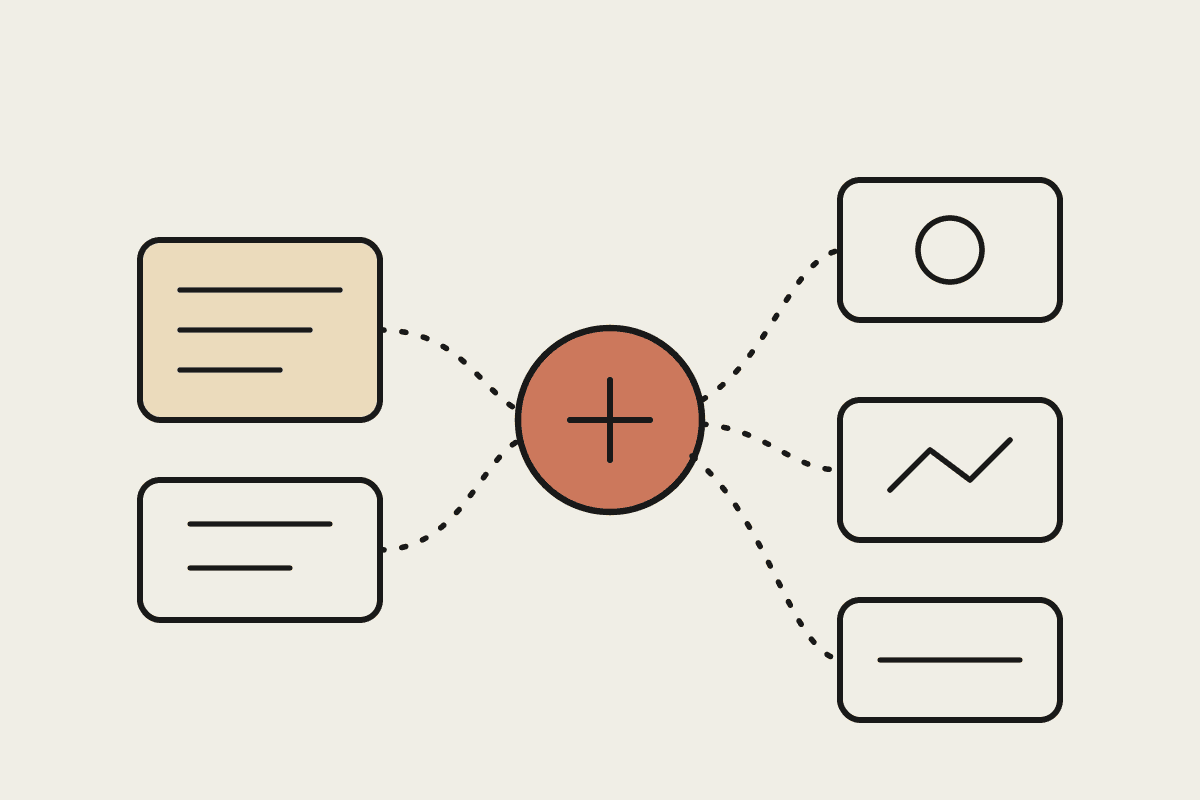
The MCP route. Claude connects to each system through a connector that speaks an open protocol. Jira and Confluence are one connector among several, next to your CRM, your file store, your finance system and anything you build yourself. The context is assembled per task from the systems that hold it, and you can add or remove sources without waiting on a partner roadmap. We cover what is already available in our guide to the Claude connectors directory for Australian tools.
| Question | Rovo with OpenAI models | Claude via MCP connectors |
|---|---|---|
| Where context lives | Atlassian's Teamwork Graph | In each source system, pulled per task |
| Non-Atlassian systems | Depends on what Atlassian ingests | Any system with a connector, including custom ones |
| Model choice | Set by the partnership | Claude, with the protocol open to others |
| Pricing as at October 2026 | Not disclosed | Known Claude plan and API pricing |
| Jira agent tracking | Announced as exploration | Agents can read and update tickets today through the connector |
| Exit cost | Tied to Rovo configuration | Connectors are portable across MCP clients |
Neither column is wrong. If 90 per cent of your knowledge work is inside Jira and Confluence and you are happy with OpenAI models, Rovo is a reasonable default. If your work spans Atlassian plus Microsoft 365, Google Drive, Salesforce, Xero or an internal database, a protocol that treats all of them the same way usually ages better. Our piece on keeping your options open with AI vendors goes into the contract side of that decision.
A migration path that does not rip anything out
Most of the Australian teams we talk to are not choosing between Atlassian and Claude. They are keeping Atlassian and deciding which model does the thinking. That makes the path much less dramatic than the word migration suggests.
Step 1: Run Claude alongside, not instead
Connect Claude to Jira and Confluence with read access first. Pick one workflow that already hurts, such as triaging a support queue into Jira tickets or summarising a Confluence space before a quarterly review. Nobody has to stop using Rovo while you test.
Step 2: Measure on your own work
Because no independent benchmarks came with the announcement, your own tasks are the only fair test. Run the same twenty tickets or documents through both setups and score the output with the people who will use it. Track time saved and rework, not impressions.
Step 3: Widen the context
This is where the MCP approach earns its keep. Add the second and third systems the workflow actually needs, often a CRM and a shared drive. For engineering teams, Claude Code can take a Jira ticket through to a pull request, which we walk through in Claude Code and Jira: ticket-to-PR workflows.
Step 4: Set governance once
Decide which connectors are approved, who can write back to Jira, and how agent actions are logged. Australian organisations covered by the Privacy Act, or regulated by APRA or ASIC, should document where personal information flows when a model reads tickets or pages. That record is the same whichever model you pick, so do it early.
What it might cost, illustratively
With no Rovo plus OpenAI pricing published, a precise comparison is not possible. What we can show is the shape of a pilot budget. The figures below are illustrative for a 60-person Sydney or Melbourne business and will vary with seat counts and usage.
Claude team seats for a pilot group of 15 people: roughly $9,000 to $12,000 a year.
Connector setup and governance for Jira, Confluence and one other system: about $15,000 to $25,000 as a one-off project.
Time recovered if the pilot workflow saves each user two hours a week at a loaded $90 an hour: around $120K a year across 15 people.
Those numbers are a starting point for your own business case, not a quote. Our ROI calculator lets you plug in your own team size and hourly costs.
What not to conclude from the announcement
It is easy to over-read a partnership press release. Three things the 6 October news does not tell you:
It does not say OpenAI models perform better on Jira and Confluence work. No comparative results were published.
It does not lock Atlassian customers out of other models. Claude's Atlassian connector works independently of Rovo.
It does not set a timeline for agent tracking in Jira. Treat that part as a roadmap signal, not a reason to wait.
If you already have a working Claude setup, there is nothing here that forces a change. If you were about to start, the announcement is a good prompt to write down what context your AI actually needs, then choose the plumbing that reaches all of it.
Where to start
We help Australian teams on Atlassian stand up Claude-based workflows without replacing the tools people already know. If you want a second opinion on whether Rovo, Claude or both fit your stack, book a short call with us and bring one workflow you would like to fix first.