Plenty of Sydney and Melbourne teams already run their whole business inside Notion, so when Claude comes up in conversation the first question is usually the same one: isn't Notion AI already doing this? The honest answer is that Notion AI and Claude solve different layers of the same problem, and mixing them up leads to underbuying one tool or overpaying for the wrong one.
What Notion AI is actually built for
Notion AI lives inside your workspace. It drafts and edits the page you're looking at, answers questions about content already stored in your wiki, and turns messy meeting notes into a tidy summary without you leaving the doc. For a small team that runs its whole operating rhythm through Notion, that's genuinely useful and it's included at a modest add-on price per seat.
Drafting and rewriting text inside an existing Notion page
Q&A search across pages already stored in the workspace
Summarising long meeting notes or project docs into a short brief
Auto-filling database properties like tags or status from page content
Where Claude does something Notion AI was never built to do
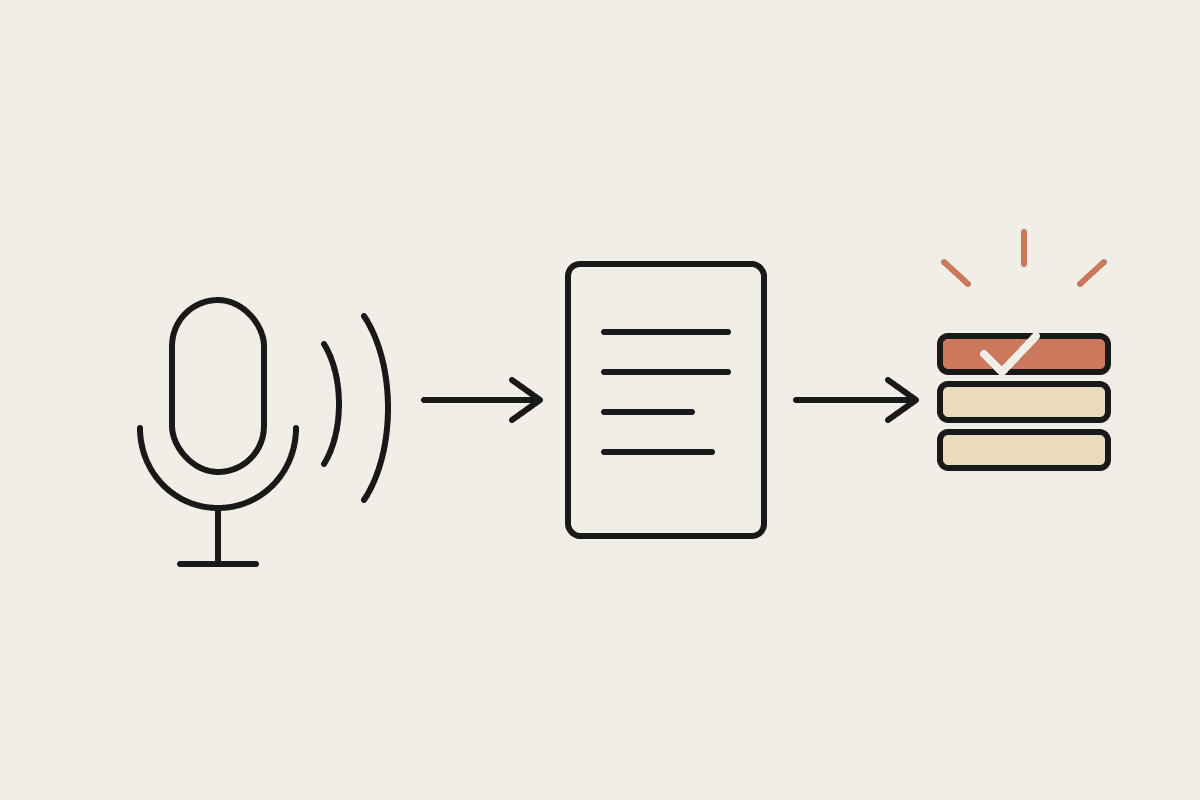
Claude isn't confined to a single document canvas. Through Claude Code and Cowork, it can read a spreadsheet, pull live figures from Xero, draft a client email in Gmail, update a CRM record, and hand you a finished file, all in one run. That's the difference between a smarter editor and an assistant that can actually touch the other systems your business runs on.
A Parramatta bookkeeping practice we worked with used this to automate month-end reconciliation across Xero and their bank feed. The setup took a week and cost roughly $3,500. It now saves the practice about 14 hours a month, worth close to $18,000 a year in billable time freed up for client work. Notion AI, however configured, has no path to that outcome because it can't reach outside the workspace.
Where the two genuinely overlap
Both tools write reasonable first-draft copy, both can summarise a long document, and both will happily help you brainstorm a project plan. If your business need stops at better internal notes, Notion AI's per-seat add-on is the cheaper and simpler answer. Where Claude earns its keep is the moment your task needs to leave the page: booking a follow-up, updating a record, sending a reply, or reasoning across several source files at once.
Cost and where the value actually lands
A Claude Team seat runs a similar order of magnitude to Notion AI's add-on, so price per user isn't usually the deciding factor. The real gap shows up in the size of the win. One accounting client automated their overdue-invoice follow-ups with Claude and recovered roughly $45,000 in outstanding receivables in the first quarter simply because reminders went out on time, every time, instead of when someone remembered.
For businesses handling client financial or health data, this is also where the Privacy Act and, for regulated advisers, APRA expectations around data handling matter. Claude's connectors can be scoped tightly to the systems a workflow actually needs, which makes it easier to keep that data trail auditable than a general assistant with broad, undocumented workspace access.
What switching actually looks like
Nobody needs to migrate anything to try this. Notion AI keeps doing exactly what it does today inside your wiki, and Claude gets connected to one or two specific systems, usually starting with whichever manual task costs the most staff hours each week. A Brisbane logistics operator we spoke with started with a single connector into their dispatch spreadsheet and a shared inbox, nothing more ambitious than that.
Within three weeks that one connector was drafting delivery-delay notices automatically, which used to take a staff member close to an hour every afternoon. Scaling up from there is a matter of adding the next connector once the first one is trusted, not a rebuild of how the team works. That staged approach also keeps the audit trail clean, which matters if a client or auditor ever asks what the assistant was allowed to touch and when.
It also means the decision between the two tools isn't permanent or exclusive. A firm can trial Claude on a single workflow, measure the hours it gives back, and only then decide whether it earns a wider rollout across the team.
A simple way to decide
Choose Notion AI if your need is entirely inside Notion: better drafts, faster search, tidier notes.
Choose Claude if the task needs to read or write to another system: your accounting software, inbox, CRM, or a folder of client files.
Run both if you already pay for Notion AI. They don't compete for the same job, so there's rarely a reason to cancel one to fund the other.
Most Australian SMBs we talk to aren't choosing between the two so much as discovering that Claude covers a job Notion AI was never designed for. If you want a second opinion on where the line sits for your setup, book a short call and we'll map it against what you're already running.