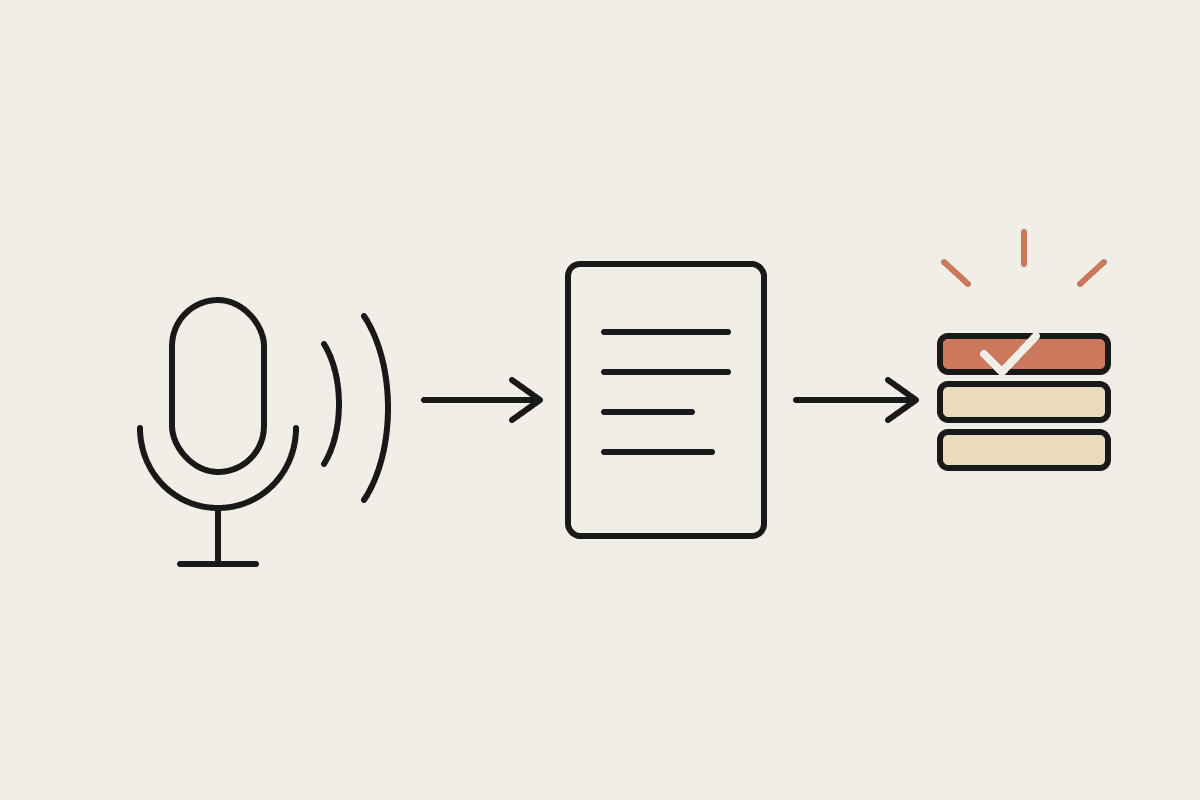
A sales call ends, the prospect is warm, and the proposal needs to go out within a day or two while the conversation is still fresh in their mind. In practice it often takes a week, because someone has to relisten to notes, remember what was actually discussed, and draft from a blank template. Working from the call transcript directly closes that gap.
Why the transcript beats your memory
Notes taken during a live call are always incomplete; you're listening and writing at the same time, so detail gets lost. A full transcript, from a call recording tool or Cowork's own meeting connector, captures everything: the specific pain point they mentioned twice, the budget range they hinted at, the timeline pressure, the objection they raised and how it got resolved. A proposal drafted from that detail reads like it was written by someone who was actually paying attention, because it was.
The drafting workflow
Feed Claude the full call transcript, not a summary; the specific phrases prospects use are worth keeping
Point it at your last two or three winning proposals as a structure and tone reference
Ask for a first draft that mirrors the prospect's own language back to them in the problem statement, not generic pain-point copy
Flag pricing and scope for manual entry rather than letting Claude guess at numbers from a casual mention on the call
What to keep manual
Pricing should never be drafted from a passing comment on a call. If a prospect mentioned a budget range, that's context for the salesperson's judgment, not a number Claude should commit to paper. The same goes for scope commitments; a proposal that promises something outside what was actually agreed on the call creates a problem at contract time that's harder to fix than the ten minutes it takes a person to check the draft.
A worked example
A Sydney IT managed-services provider drafts proposals from Cowork meeting transcripts within an hour of a discovery call ending, instead of the two-to-four days it previously took once the salesperson got back to their desk and other priorities intervened. The business tracked close rates on proposals sent within 24 hours versus those sent after a week and found a meaningfully higher conversion on the fast ones, worth an estimated $95,000 in additional annual revenue from deals that would otherwise have gone cold waiting for a proposal.
Handling multi-stakeholder calls
Calls with more than one prospect-side attendee need extra care in the transcript-to-proposal step, because different stakeholders often want different things and a transcript can blur who said what if the recording tool doesn't do speaker labelling well. Check speaker attribution before drafting, and where it's genuinely ambiguous, flag it for the salesperson rather than guessing which stakeholder raised which concern.
Keeping the record straight
Store the transcript alongside the sent proposal in the client's file. If a scope dispute ever comes up months later, having the original conversation on record, not just the final document, makes it far easier to show what was actually discussed versus what got promised.
A quick audit you can run today
Pull your last five discovery calls and check how many days passed between the call and the proposal going out. If any of them slipped past 48 hours, that's the gap worth fixing first, because prospect interest decays fastest in exactly that window.
What this isn't
This isn't a way to skip the follow-up call when a proposal needs real negotiation, and it isn't a substitute for a salesperson reading the final draft before it goes out. Every dollar figure and every scope line still needs a human check against what was actually agreed.
Getting started
Set up call recording and transcription for discovery calls if you don't already have it
Collect your two or three best past proposals as reference material
Build a template with pricing and scope fields deliberately left blank for manual entry
Track how proposal turnaround time changes over a month
The businesses that get the most from this pattern treat the transcript as raw material, not a finished draft. The value is in how fast a genuinely well-targeted first draft appears after the call, giving the salesperson time to refine and personalise rather than starting from nothing while the prospect's attention moves on to the next vendor on their shortlist that same week.
If your sales team is losing warm prospects to a slow proposal turnaround, that's usually a process problem, not a sales-skill problem. Get in touch: https://www.automataai.com.au/contact
Even businesses that already send proposals quickly find this useful, because it frees the salesperson's own drafting time for the two or three deals in the pipeline that genuinely need a hand-crafted approach rather than a strong first draft.