Every business has processes that live entirely in one person's head. The way you handle a refund exception, the order you check things in before a job goes out, the three questions you always ask a new supplier. None of it is written down, because writing it down felt like a project for a slow week that never arrived. Claude Cowork turns that gap into an afternoon's work instead of a someday project.
Why this keeps getting put off
Writing an SOP from a blank page is slow because you're doing two jobs at once: remembering every step in the right order, and formatting it into something someone else could follow without you standing over their shoulder. Most people are fine at one of those and bad at the other, which is why the good process knowledge stays trapped in a person instead of a document.
The interview-first approach
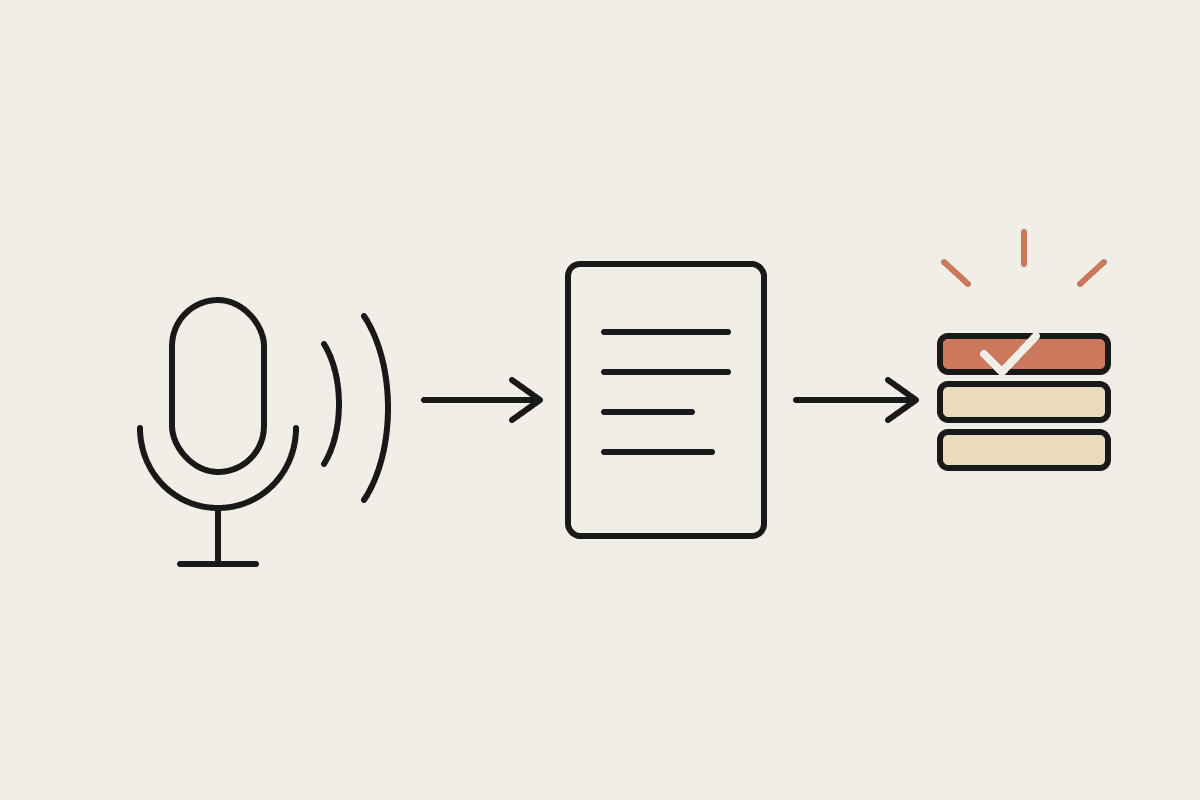
The fastest way to get a process out of your head and onto paper is to talk it through, not type it. Describe the process to Claude the way you'd explain it to a new hire, including the exceptions and the judgment calls, and let it structure the transcript into a numbered SOP with headings, decision points and a checklist at the end. You correct it, not create it from scratch, which is a much smaller task.
Walk through the happy path first, step by step, in the order you actually do it
Then list the exceptions: what happens when a step fails, what you check before skipping ahead
Note who needs to approve what, and at which step
Flag anything that's a judgment call rather than a fixed rule, so it doesn't get treated as rigid instruction
Structuring for someone who wasn't in the room
A good SOP reads differently to the person who already knows the process than to the person who doesn't. Claude's value here is formatting for the second reader: consistent numbering, a clear trigger for when the process starts, explicit outputs for when it ends, and a short troubleshooting section for the two or three things that most often go wrong. That last part is usually missing from SOPs written in a hurry, and it's the part new staff need most.
A worked example
A Sydney allied-health clinic used this approach to document their new-patient intake process, previously known only by the practice manager of eleven years. The interview took forty minutes. The resulting SOP, once reviewed and corrected, cut new receptionist training time from roughly two weeks of shadowing to four days, because the trainee had something concrete to check against instead of relying entirely on memory and repeated questions.
Keeping SOPs alive, not just written
A written SOP that never gets updated becomes actively misleading within a year, as the process quietly drifts and the document doesn't. Set a simple rule: whenever someone deviates from the documented steps because the document was wrong, that's a trigger to update it that week, not a note for later. Claude can help here too, drafting the revision from a quick description of what changed rather than a full rewrite.
What good looks like in practice
The best SOPs we've seen are short. Two pages beats ten, because staff actually read two pages under pressure and skip ten. If your SOP is running long, that's usually a sign it's trying to cover every edge case instead of the 90% path plus a short escalation note for the rest.
Sizing the payback
If a written SOP cuts new-staff training time by even three days at a fully loaded rate of $50 a day, that's $150 saved per hire before counting the cost of mistakes avoided in the first fortnight, when untrained staff without a reference document are most likely to get something wrong in front of a client.
What this isn't
This isn't a substitute for training, and it isn't a document you write once and hand over cold. New staff still need someone to walk the first few instances with them. The SOP shortens that runway, it doesn't remove it.
Getting started
Pick the one process that causes the most repeated questions from new or junior staff
Block 30-45 minutes to talk it through out loud with Claude, exceptions included
Review the draft with the person who actually does the work today
Set a review trigger, not just a review date, for whenever the real process drifts from the document
If you've got five processes stuck in someone's head and no time to write them up, that's exactly what we help AU businesses fix. Get in touch: https://www.automataai.com.au/contact