Meta's Muse Glimmer, a 30-billion-parameter model built for coding and on-device agent work, has already had its moment in the open-weight news cycle this month. The more consequential signal sits behind it. Meta has said it plans to release the weights of Muse Spark 1.2, built by the expensive superintelligence-focused team it assembled last year and described as its most advanced model to date.
That is a different category of announcement. Every major open-weight release so far, from Kimi to GLM to Qwen, has been a strong model but not the lab's single best effort. A frontier-grade model going open-weight, rather than a distilled or smaller sibling, has not really happened yet at this scale.
Why the distinction matters for planning
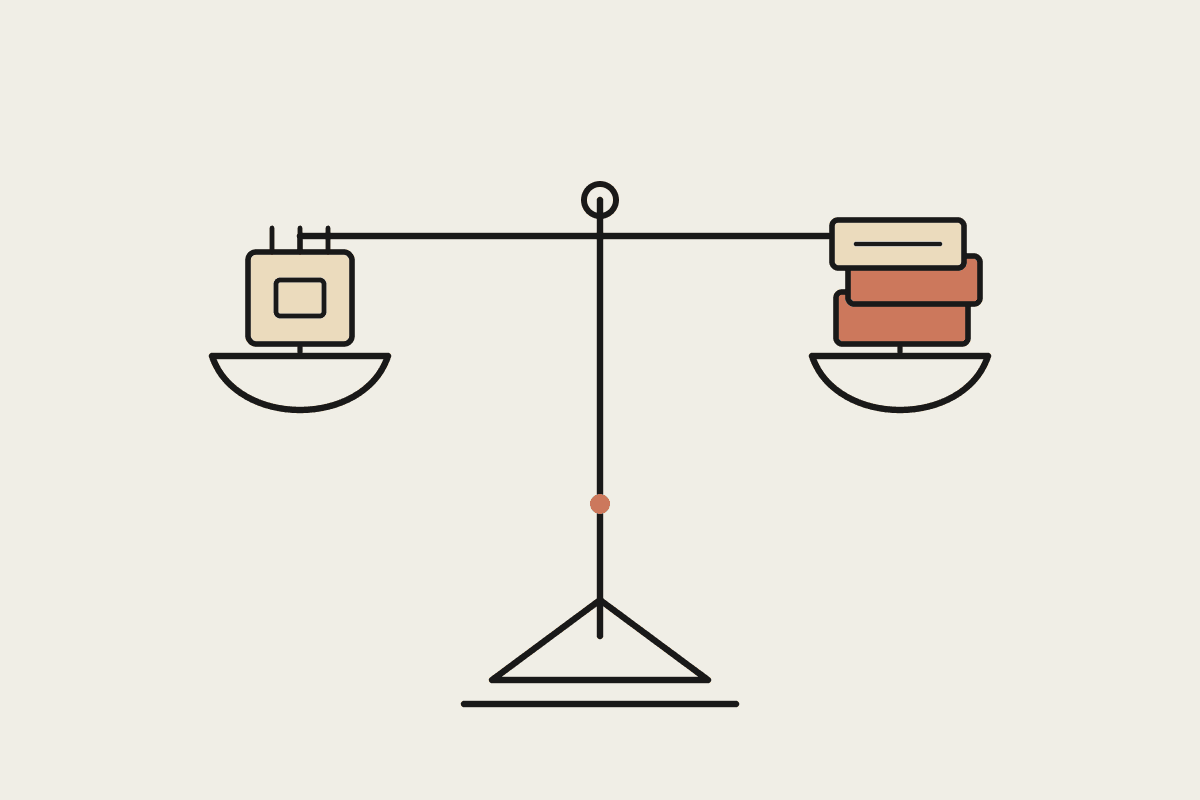
If Muse Spark 1.2 ships as described, it unsettles an assumption that has held through most of 2026: that open-weight options trail the genuine frontier by three to six months, and that businesses choosing a managed platform are trading a capability gap for governance, support and safety testing.
A frontier-grade open release narrows that specific trade-off. It does not remove the other reasons a managed platform earns its cost, and those are worth listing plainly because they get lost when a capability headline lands: safety testing, ongoing monitoring, incident response, and a vendor who can be held accountable when something goes wrong. None of those come with a weights download.
Australian businesses planning AI investment over the next twelve months should treat this as a signal to revisit two assumptions rather than act on one:
The assumption that open-weight will always be a step behind may not hold for frontier capability specifically, even though it likely still holds for safety and support maturity.
The assumption that choosing a managed platform is purely a capability trade rather than a governance and accountability one becomes more clearly true as the capability gap narrows. That is a better argument for a managed platform than the capability one was, not a worse one.
What we would do with this today
Nothing changes for a business mid-deployment. If you are three months into a build, the correct response to a roadmap announcement from any lab is to note it and keep going. Roadmaps slip, descriptions change, and a model that does not exist cannot be evaluated.
For a business planning a 2027 roadmap, it is worth building in a checkpoint to reassess once Muse Spark 1.2, or a comparable frontier open release, actually ships with independent benchmark verification rather than a lab's own claims. A calendar reminder costs nothing and stops the announcement from either being forgotten or over-weighted.
Two things worth tracking as this develops
Whether independent safety testing accompanies the release, given the safety gap already visible in other frontier-adjacent open-weight models this year. A frontier model with no third-party red-teaming is a different proposition to one with it.
What licence actually governs commercial use. Meta's Llama licence has historically restricted free use above a monthly active user threshold, and there is no reason to assume Muse Spark 1.2 arrives unrestricted just because Muse Glimmer did.
A third thing worth watching, though it is harder to see from outside: whether the release includes the infrastructure to actually serve a frontier-scale model, or just the weights. Open weights for something too large for anyone but a hyperscaler to run is a contribution to research rather than an option for your business, and the distinction gets flattened in coverage.
Do not delay a decision on a roadmap promise
We would not recommend an Australian business defer a current AI decision on the strength of an announcement. A $50,000 platform decision should be made on what exists and is verified today, not on a roadmap from any lab, including the ones we recommend.
The reason is not scepticism about Meta specifically. It is that the cost of waiting is real and immediate, while the benefit is speculative and deferred. Six months of not automating a process that costs you time every week is a certain loss against an uncertain gain. If the model ships and changes the calculus, you will still be able to act on it then, and you will act on it with a team that has already learned how to run these systems.
If you want a review of your current AI roadmap with these signals factored in properly rather than reacted to, book a session and we will look at what you have committed to and where a checkpoint genuinely belongs.