monday.com, the project management platform used by more than 250,000 companies, has published how it rebuilt its entire product around Claude. The useful part isn't the rebuild. It's the mistake they made first, and the phrase they used to describe it: AI dust.
The ceiling most companies hit
In 2025, monday ran an internal AI month and shipped a wave of AI features. Summarise this. Categorise that. Adoption looked fine on paper.
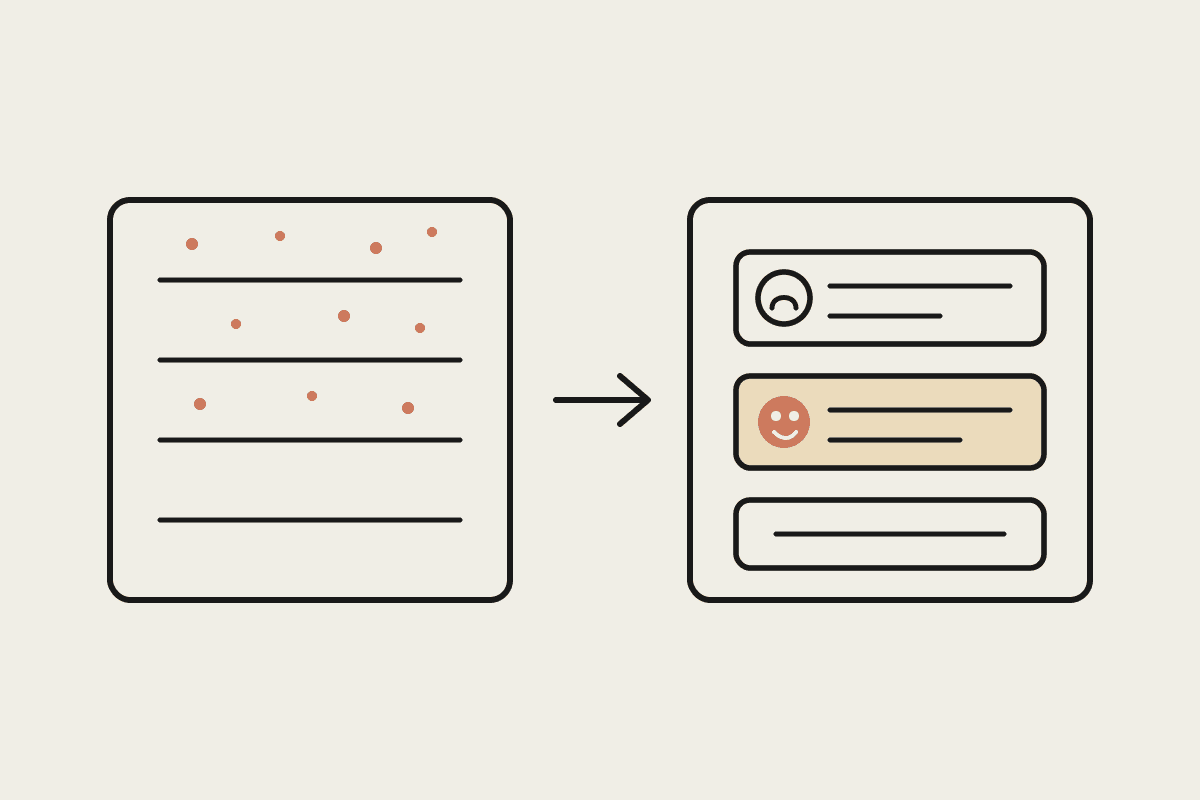
But Orly Stern Izhaki, the VP of Product running the effort, described what they were actually building as "AI dust: sprinkling automations onto existing workflows without embedding them within or changing the product's fundamental value proposition." Usage didn't stick, because nothing about how people worked had actually changed.
That's a pattern worth recognising, because it shows up constantly in Australian businesses evaluating AI. A chatbot bolted onto the website. A summarise button in the CRM. A document-search feature nobody opens twice. Adopting AI features is not the same as becoming an AI-native business, and the gap between the two is exactly where most of the wasted budget sits.
What they did instead
monday rebuilt the platform around humans and agents working side by side inside the same boards, permissions, and workflows people already used, rather than a separate AI chat running parallel to the real work.
Every agent gets a name, an avatar, and can be assigned work directly, the same way you'd assign a task to a colleague. That sounds cosmetic and isn't. It puts the agent inside the existing model of how work moves, which is what makes people use it without being reminded to.
Since launching in May 2026, that's produced more than 5 million agent interactions in about two months.
What it looks like for a customer
Cooke, a family-owned seafood company operating in 16 countries, now runs roughly 200 active projects and 130 contracts through Claude-powered agents inside monday. Approved project charters turn into plans and status reports automatically, and risk gets flagged before it becomes a problem.
Their director of strategy summed up the shift plainly: "Monday used to be a platform we had to update. Now we operate from it." That's the difference between a system of record and a system that does work, and it's a distinction worth holding onto when you're assessing your own tools.
Five lessons, condensed for Australian teams
The mental model is harder to shift than the technology. Moving a team from how do we improve what we have to how do we rebuild for what's coming takes longer than any engineering work.
Small teams with clear ownership move faster than layers of stakeholders when everything is changing at once.
Trust determines adoption more than capability does. Governance, permissions, and transparency decide whether agents make it out of a pilot.
Capability needs infrastructure behind it. Agents are only as good as the data and workflow structure they're grounded in.
Build on what already works. monday didn't throw out ten years of product, it extended the same promise to a new kind of team member.
The honest caveat about scale
monday is a large company with resources most Australian SaaS teams don't have, and 5 million agent interactions is not a number a Sydney product team of fifteen should expect to reproduce. The transferable part isn't the scale, it's the diagnosis.
The AI dust problem shows up at every size, and it's cheaper to catch early. A ten-person product team that ships three AI features nobody uses has burned a quarter. The same team that picks one workflow and genuinely rebuilds it has something to show a customer.
A gut check before you spend the budget
If your AI roadmap is a list of features to bolt onto an existing product, this is a useful moment to stop and check. The businesses getting real return aren't adding an AI button. They're rethinking which parts of the workflow a person still needs to do at all.
The question that separates the two is simple and slightly uncomfortable: if this feature works exactly as designed, does anyone's day actually change? If the honest answer is that they'd do the same steps slightly faster, it's dust.
For an Australian SaaS or operations team, a scoped assessment that maps your current workflow, identifies which steps a person genuinely needs to own, and prices the rebuild candidates typically runs A$6,000 to A$12,000. That's considerably cheaper than shipping a feature set that gets quietly deprecated a year later.
Wondering whether your product or operations workflow is AI dust or a genuine rebuild candidate? Book a time to talk it through.