Australian manufacturers have a use case that fits open-weight models better than most industries. Data that has to stay on site, connectivity that is unreliable across a large shed or a regional plant, and workloads repetitive enough that a smaller local model is genuinely sufficient. That is a real fit. It is also narrower than most vendor pitches suggest, and the narrowness is where the money is won or lost.
Where open models genuinely fit a manufacturing floor
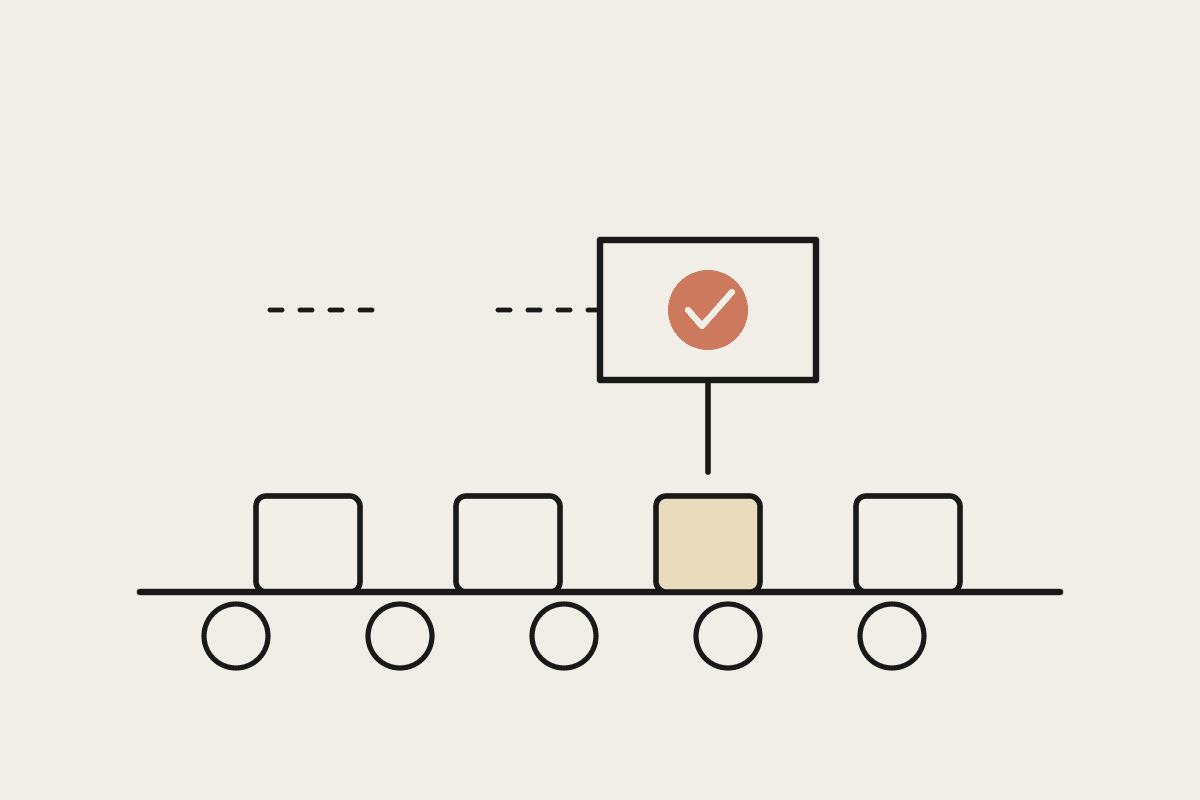
Visual quality inspection using a vision-capable open model running on local hardware next to the line, where round-tripping images to a cloud API adds latency you cannot afford on a moving belt.
Maintenance log analysis and predictive fault flagging against machine sensor data a plant manager does not want leaving the site, for reasons that are as much commercial as regulatory.
Work-order and job-sheet drafting from technician voice notes, run locally where mobile signal in a large shed or on a regional site is patchy at best.
Shift handover summaries built from the day's logs, where the output is read by the next crew and corrected in seconds if it is off.
The connecting thread is the same one that applies in every industry: the output is checked by someone who knows the job before it has consequences, and the cost of an error is a rework cycle rather than a customer.
Where manufacturers still need a supported model
Supplier and customer-facing communication, where getting tone or a compliance detail wrong costs a relationship rather than a rework cycle.
Anything touching work health and safety incident reporting, or documentation that could end up in front of a regulator, where you want a vendor with a support relationship behind it rather than a community-maintained model with no accountable party.
Quoting and estimating that draws on pricing and margin data you do not want processed by infrastructure whose operator you cannot name.
Anything that feeds a contractual obligation, including delivery commitments and specification sign-off.
What a realistic build looks like
A mid-sized Australian manufacturer, say 40 to 150 staff across Melbourne or regional Victoria, typically starts with one workflow rather than a plant-wide rollout. A local vision model for quality inspection on a single line, paired with a supported model handling supplier communication and reporting, is a build we would scope at $18,000 to $35,000 depending on how many inspection points and integrations are involved.
The local component runs on hardware the client owns outright rather than a recurring cloud bill, which suits a business used to capital equipment decisions more than subscription ones. That familiarity matters more than it sounds: a plant manager who can point at a box in the corner and say what it does will support the project in a way they will not support a line item in an IT budget.
The mistake we see most often
Manufacturers hear that open source is free and skip the evaluation step. Six months in they discover the model does not handle their specific defect types reliably enough, and the free model has cost more in rework and missed defects than a licensed alternative ever would have.
Defect detection is the clearest example because the failure is asymmetric. A model that flags good product as defective costs you scrap and irritation. A model that passes defective product costs you a customer, and possibly a recall. Those two error types need to be measured separately during evaluation, and a single accuracy number hides the difference entirely.
Evaluate on your own defect images, not a public dataset. Lighting, camera angle and product finish matter more than model architecture for this task.
Measure false negatives separately from false positives, and set the threshold according to which one your business can absorb.
Include the worst month of the year in the sample. A model tuned on clean summer product will struggle when the line runs a different material.
Agree who owns the hardware and its maintenance before it arrives on site, because a camera rig with no owner becomes a camera rig nobody trusts.
Where to start
Pick the one workflow on your floor where a wrong answer costs the least and the repetition is highest, usually visual inspection or log triage, and prove the model there before extending it anywhere near a customer-facing process. One line, one defect class, a measured baseline, and a decision at the end of it.
Worth saying plainly: for some manufacturers the answer after that exercise is that the workflow is not worth automating yet, because the volume is too low or the data too messy. That is a good outcome from a cheap experiment, and considerably better than finding out after the plant-wide rollout.
Automata AI scopes manufacturing AI builds for Australian shop floors, hybrid stacks included, starting with the single-line proof rather than the plant-wide plan. book a session and we will help you pick the workflow worth proving first.