A free AI tier isn't free, it's a different pricing structure, usually paid in data, feature caps, or the time cost of workarounds rather than dollars, and understanding which of those costs you're actually paying matters before building a business workflow on top of one and discovering the real cost once you're already dependent on it.
The three hidden costs worth naming
Data cost: many free tiers train on your inputs or retain conversation data differently to paid tiers, worth checking explicitly, not assuming
Feature cost: rate limits, message caps, and missing features (file uploads, longer context, priority access) that force inefficient workarounds
Time cost: the cumulative minutes lost to hitting a cap mid-task, switching tools, or re-explaining context a paid tier would have retained
Where the time cost actually adds up
The most underestimated cost is time. A free tier that caps message volume mid-workday forces a switch to a different tool or a wait for the limit to reset, both of which interrupt a task that a paid tier would have completed without friction. That interruption cost is invisible on any invoice, because there isn't one, but it's a genuine productivity cost that accumulates weekly across a whole team using the free tier for real work.
A worked comparison
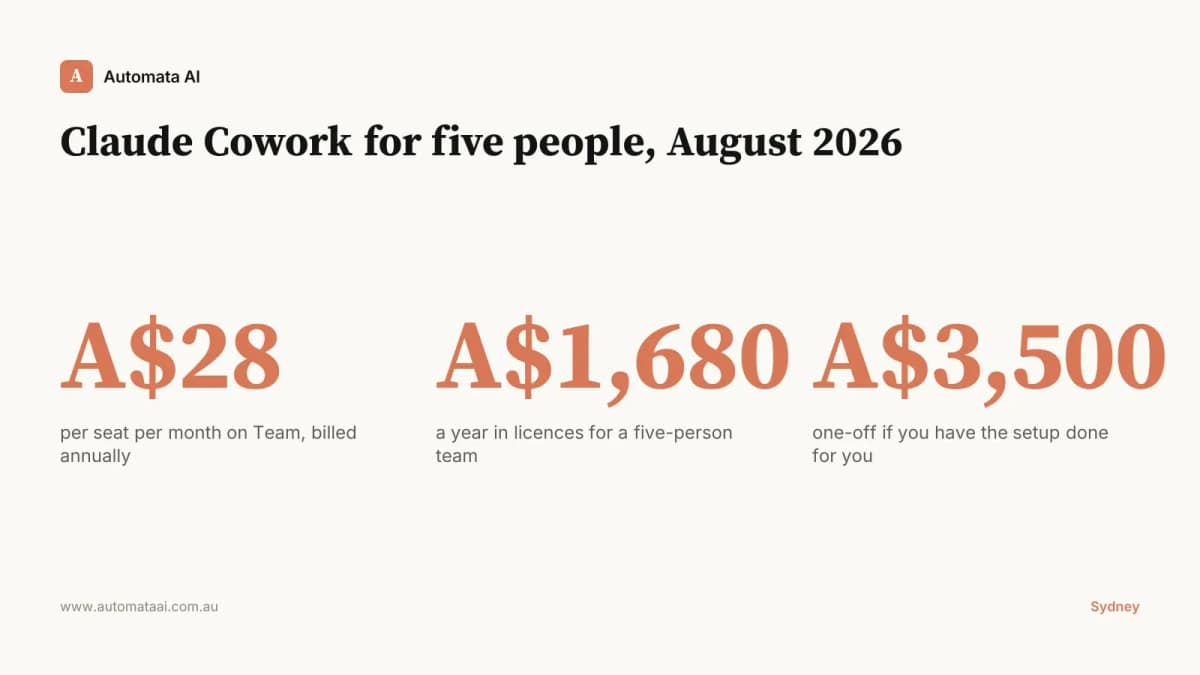
A five-person Brisbane startup used free-tier AI access for six months to avoid a subscription cost, hitting daily usage caps roughly three times a week per person, each interruption costing an estimated eight minutes in lost context and task-switching. Across five people, three times a week, that's a genuine two hours a week of pure friction, worth roughly $110 a week at a blended $55 hourly rate, comfortably more than the $150 a month a paid team plan would have cost for the same five people. The free tier wasn't free, it was quietly more expensive once the time cost was counted honestly.
When a free tier genuinely makes sense
Light, occasional personal use with no time pressure or business-critical dependency
Genuinely evaluating a tool before committing to a paid plan, for a short, bounded trial period
Tasks where hitting a cap and waiting costs nothing meaningful, no deadline, no team dependency
The honest question to ask before staying on a free tier
The data question specifically, worth checking not assuming
Free tiers from most major providers do differ meaningfully from paid tiers on data handling, some train on free-tier conversations by default in ways paid business tiers explicitly exclude, and the terms genuinely vary by provider and change over time. Rather than assuming either way, the two-minute check worth doing before putting any real business or client information into a free tier is reading the current data-handling terms for that specific product, not relying on general reputation or what a competitor's tier does.
For any Australian business with obligations under the Privacy Act around client or customer data, this check isn't optional diligence, it's a genuine compliance question, and the honest answer for most free tiers is that they weren't designed with business client-data handling as the primary use case, paid business tiers generally were.
The broader habit worth building: treat 'free' as a pricing structure to evaluate, not a default assumption that it's automatically the cheaper option. For light personal use it often genuinely is. For anything approaching daily business-critical use, running the honest time-cost comparison above, even roughly, tends to make the case for a modest paid subscription clearer than intuition alone would suggest.
A simple test worth running this week: track every time a free-tier cap or missing feature interrupts a task, for just five working days, and note roughly how long each interruption cost. Most business owners are surprised by the total once it's written down rather than felt vaguely in the background, and that number, more than any general advice, is what should actually drive the free-versus-paid decision for your specific team.
None of this is a blanket argument against free tiers, they remain a genuinely sensible starting point for evaluation and light use. It's an argument for treating the free-versus-paid decision as a real cost comparison rather than an assumption, since free only looks cheap until the friction it creates is actually measured against what removing that friction would cost.
Add up the actual weekly time cost of hitting caps and working around missing features, multiply by your team's hourly rate, and compare that honestly against the cost of the cheapest paid tier that removes the friction. For most Australian small businesses using AI for genuine daily work, the free tier's hidden costs cross the paid subscription's price within the first month or two, at which point staying free isn't frugal, it's just a slower way to pay.