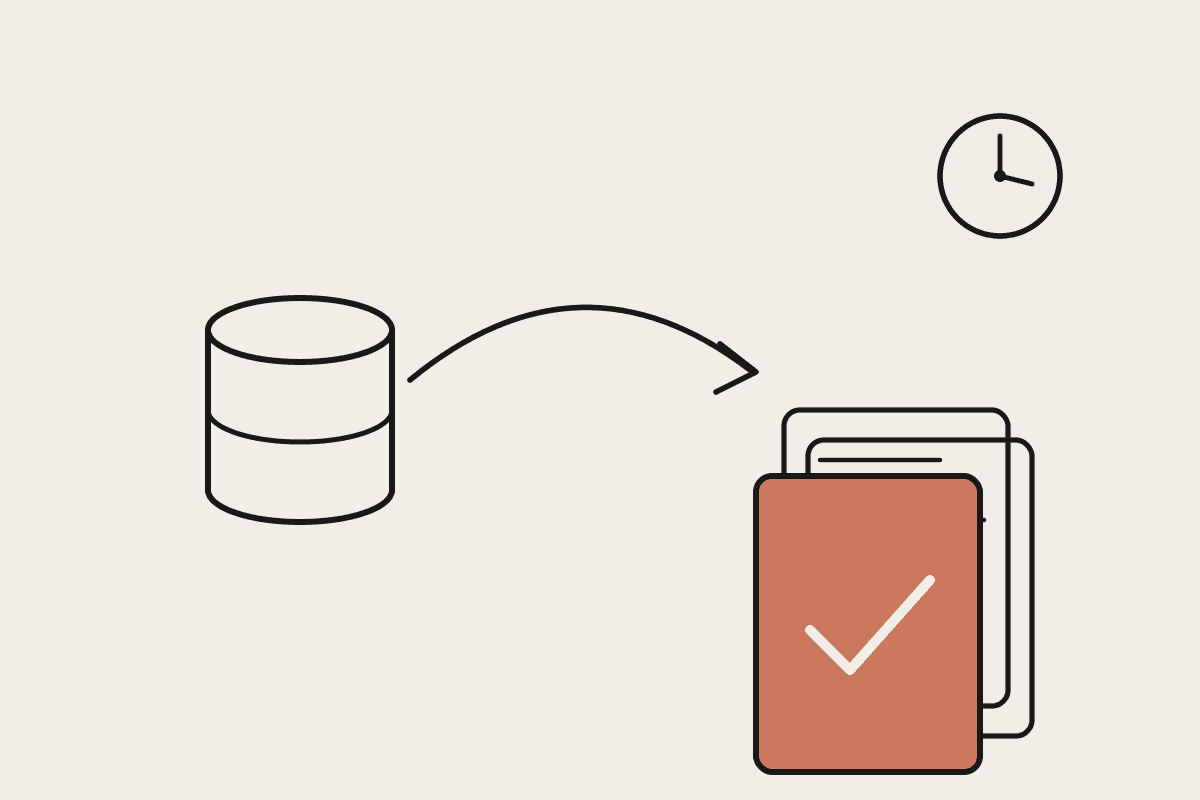
Every listing agent knows the Friday afternoon problem: fifteen active campaigns, fifteen vendors expecting an update, and an hour of the week gone into copying inspection numbers out of the CRM and turning them into a paragraph a vendor will actually read. Multiply that by a whole team and it is one of the biggest quiet time-sinks in a mid-size agency, right behind cold-calling. Claude can do the drafting work straight from CRM data, and it can do it every week without anyone having to remember to start.
Why vendor reports eat an agent's week
A proper vendor report is not just a number. It pulls together enquiry counts, open home attendance, buyer feedback themes, portal view stats, comparable sales that have settled since the campaign started, and a read on where the market sits relative to the price guide. Building that from scratch, for every active listing, every week, is where a lot of an agent's non-selling time disappears. It is also the kind of task that gets skipped when the week gets busy, which is exactly when a vendor most wants reassurance that their campaign is being actively managed.
Enquiry and inspection numbers pulled straight from the CRM (VaultRE, AgentBox, Rex, or similar)
Buyer feedback themes summarised from call notes and SMS threads rather than pasted in verbatim
Comparable sales added as they settle, with a plain-English read on what they mean for the campaign
A price-guide check against current buyer feedback, flagged for the agent rather than decided automatically
What Claude actually automates
The mechanics are simple once a CRM export or API feed is connected: Claude reads the week's activity for a listing, drafts the report in the agency's usual tone and template, and holds it for the agent to review before it goes anywhere near a vendor's inbox. It keeps the voice consistent across every agent on the team, which matters more than it sounds. A vendor who gets a rushed one-line update in week three notices the drop-off from a polished week-one report just as much as a vendor who gets no update at all.
Picture a Tuesday morning at a mid-size Sydney agency running twenty active listings across three agents. Instead of each agent blocking out an evening later in the week to write reports from memory and half-remembered feedback, Claude has already drafted all twenty from the week's CRM activity, sitting in a review queue with the agent's name attached. Editing a good draft down to the agent's own words takes ten minutes. Writing one from a blank page after a day of inspections takes closer to an hour.
For an agency running 15 to 20 active listings, that is roughly six to eight hours a week of drafting time back with the agents. At a rough $45,000-a-year cost of that time across a small team, a setup that automates the first draft tends to pay for itself inside a single quarter.
What stays with the agent
Claude drafts the narrative. It does not decide what to tell a vendor about price, and nothing should reach a vendor's inbox without a human reading it first. Under NSW's underquoting rules and the equivalent conduct requirements in other states, price guidance communicated to a vendor or the market has to be something an agent stands behind personally, not language a system generated and nobody checked. The judgement calls, a vendor who needs a harder conversation this week, a price adjustment recommendation, how to frame three weeks without an offer, stay exactly where they are now.
Setting it up without creating a data problem
CRM exports carry personal information about vendors, buyers, and the agency's own team, so this is a Privacy Act matter before it is a productivity one. Keep the data flow scoped: Claude should only see what it needs for the report, the listing's own activity, not the whole database, and reports should be reviewed before sending rather than auto-dispatched. Agencies in Sydney, Melbourne, and Brisbane running this as a Cowork setup have generally scoped it to read-only CRM access plus a locked report template, which keeps the automation contained to the one job it is doing.
A typical setup runs as a fixed-fee project rather than an open-ended build: connect the CRM export, agree the report template and tone with the principal, run two weeks of drafts alongside the agents' existing process, then switch over once the team trusts the output. Most agencies land the whole rollout for around $3,500, with no ongoing licence fee beyond the CRM the agency already pays for.
Connect read-only CRM access (export or API) for the listings in scope, not the full database
Build one report template per campaign type so tone stays consistent across agents
Route every draft to the listing agent for review before it reaches a vendor
Revisit the setup each quarter as listing volume and CRM fields change
A weekly vendor report that used to take an hour per listing can drop to ten minutes of review once the drafting is automated. That is time back for the calls that actually move a campaign, not the ones that just report on it. Book a brainstorm on setting this up for your agency.