For a developer building on the Claude API rather than using it as a chat product, prompt caching is one of the cheapest wins available, and one of the most underused. The pitch is simple: if your application sends the same large block of context, a system prompt, a reference document, a set of tool definitions, on every request, caching lets Claude reuse that processed context instead of re-reading it from scratch each time, at roughly a tenth of the normal input cost on a cache hit.
What actually gets cached, and why it saves money
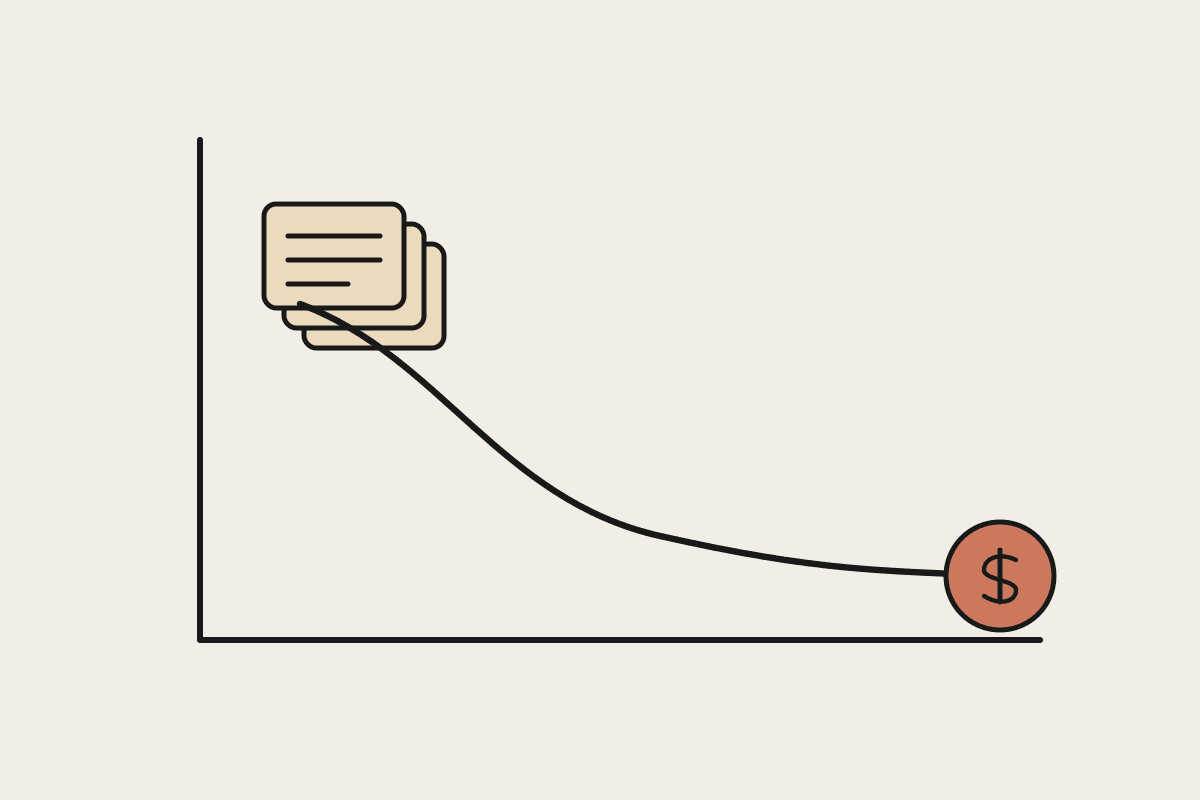
A cache hit does not mean Claude remembers your business between separate conversations, that would be a different feature entirely. Prompt caching works within a defined cache lifetime, typically a few minutes of inactivity, and it caches the exact prefix of a prompt you mark for caching: a long system prompt, a reference document pasted in full, a large set of tool schemas. The next request that reuses that same prefix skips the expensive part of processing it, and you pay the cached rate instead of the full input rate for that portion.
The saving compounds fast for the applications where it matters most: a customer support tool that keeps the same product documentation loaded across every conversation, a coding assistant that keeps the same large codebase context loaded across a session, or an internal tool that references the same lengthy policy document on every single query. Each of those patterns sends the identical large context repeatedly, exactly the shape caching is built for.
Where caching actually pays off, and where it doesn't
Standing system prompts and instructions that don't change between requests, the highest-value caching target for almost any application.
Large reference documents or tool schemas reused across many calls in a session, rather than short prompts that change every time.
High-frequency applications where the same context gets hit repeatedly within the cache lifetime, low-traffic tools see far less benefit.
Multi-turn conversations where earlier turns can be cached as the conversation grows, rather than re-processed on every new message.
It is worth being clear about where caching does not help. A one-off request with a short, unique prompt gains nothing, there is no repeated context to cache. And a cache write itself costs slightly more than a normal input token on the first call, so an application that never actually reuses the cached context ends up paying a small premium for a benefit it never collects. The pattern only pays off when the same context genuinely gets reused.
There is a subtlety worth flagging for anyone implementing this for the first time: the cache prefix has to match exactly, byte for byte, for a hit to register. A system prompt with a timestamp or a dynamically inserted value at the top of the cached block breaks the cache on every call, because the prefix is never identical twice. The fix is straightforward once you know to look for it: put anything dynamic after the cached portion, not inside it, so the reusable prefix stays genuinely static across calls.
How this stacks with other cost controls
Caching is one lever in a broader cost-management toolkit, and it stacks with the others rather than replacing them. Batch processing, running jobs that don't need an instant answer at a lower price, works alongside caching for something like an overnight document-classification job that reuses the same instructions across thousands of documents. The effort parameter, dialling reasoning up or down per call, is a separate lever again, useful for routing simple extraction work cheaply while reserving full effort for the calls that actually need judgement.
A worked example
A Sydney-based legal-tech startup we advised was sending a 4,000-token set of tool schemas and reference clauses on every single API call, a document-review assistant handling several hundred calls a day. None of that context changed between calls within a session. Turning on caching for that fixed prefix cut their effective input cost for those calls by roughly 80%, without changing a single line of the actual prompt logic, purely by marking the reusable portion for caching. The Australian business in question had been live in production for three months before anyone checked whether caching was configured at all.
That gap, a working, correct application quietly paying full price for context it sends unchanged hundreds of times a day, is the most common finding in a Claude API cost review. It rarely requires a redesign, just identifying the fixed prefix and marking it, which is a low-risk, high-value first pass before looking at anything more involved like model routing or effort tuning.
The Automata AI take
For AU businesses building on the Claude API rather than using it purely as a chat tool, checking whether prompt caching is actually configured is one of the first things we look at in a cost audit, because it is routinely left off applications that would benefit meaningfully from it. Reviewing and implementing caching for an existing API integration is typically a half-day to one-day engagement, around A$1,200 to A$2,500.
Book a brainstorm if your Claude API costs feel higher than they should be for the volume you're actually sending.