Australian financial services leaders ask us one question more than any other about Claude: has anyone actually done this at scale, in a regulated bank, without it going wrong? Barclays now gives a concrete answer. Anthropic's announcement of an expanded partnership with the UK bank includes real usage numbers, and they are useful for a mid-market Australian firm sizing its own rollout, as long as you read them with the right scale in mind.
How is Barclays using Claude?
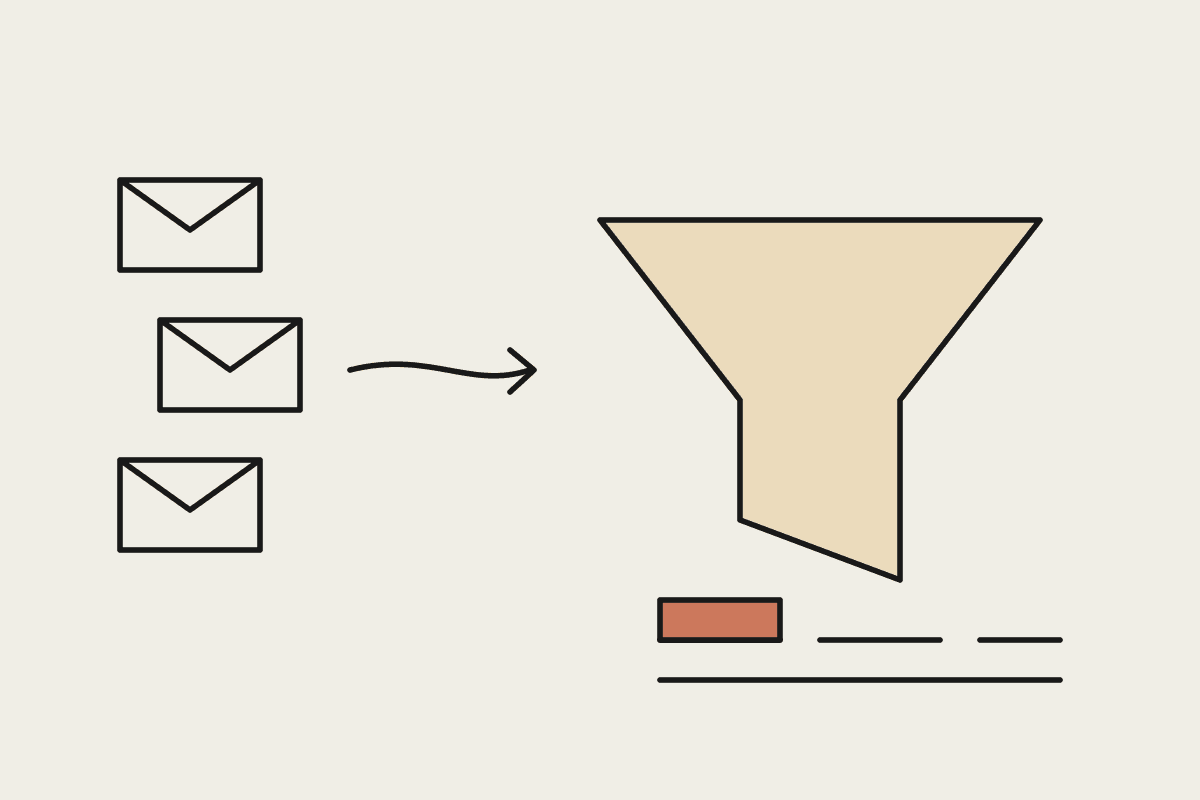
Barclays uses Claude in three main areas: software development, legacy system modernisation and day-to-day operations. Its Colleague Knowledge Assistant, a retrieval-augmented tool built on Claude, has been used by more than 16,000 employees since 2025 and has handled over 1 million searches, supporting staff who serve more than 20 million UK retail customers. In the Global Markets division, Claude classifies and prioritises roughly 120,000 emails a day. Claude Code is expected to reach 50% developer adoption by the end of 2026.
The bank expects most of its engineers to be using Claude Code by 2027. Group Co-COOs Anne Marie Darling and Craig Bright, along with Anthropic's Chief Commercial Officer Paul Smith, are quoted on impact and on governance, specifically human oversight and security controls. The full announcement is on Anthropic's site.
What the numbers actually tell you
It is easy to be impressed by large numbers and miss what they say about design. Read carefully, the Barclays figures point to three choices that apply at any size:
Start with internal knowledge, not customer-facing automation. The Colleague Knowledge Assistant helps staff find answers; staff still serve the customer. That keeps a human between the model and the customer.
Pick high-volume, low-judgement triage. Classifying and prioritising 120,000 emails a day is sorting work. A wrong label costs a few minutes, not a bad lending decision.
Treat developer adoption as a multi-year programme. A 50% adoption target by end of 2026, with most engineers by 2027, is a paced rollout, not a switch-on.
None of these is exotic. They are the same sequencing choices we recommend to Australian clients a fraction of Barclays' size, and they line up with our 90-day banking pilot roadmap.
Scaling the lessons down to an Australian mid-market firm
An Australian lender, wealth manager or insurer with 300 staff is not going to process 120,000 emails a day. The useful move is to translate each Barclays use case into its mid-market equivalent and size it honestly.
| Barclays use case | Mid-market equivalent | Illustrative first-year cost (AUD) |
|---|---|---|
| Colleague Knowledge Assistant, 16,000+ users | Policy and product Q&A for client-facing staff | $40,000 to $70,000 |
| Global Markets email triage, ~120,000 a day | Shared inbox triage for operations or claims | $25,000 to $45,000 |
| Claude Code, 50% developer adoption by end 2026 | Claude Code for a small internal dev team | $15,000 to $30,000 |
| Legacy system modernisation | Documenting and migrating one ageing system | $60,000 to $120,000 |
The ranges are illustrative estimates covering build, integration and change management, not quotes, and they exclude Claude usage costs. Run your own volumes through our ROI calculator before committing to any of them.
Governance questions to ask before you start
Barclays' leaders talk about human oversight and security controls, and an APRA-regulated Australian firm will need to show the same. Before you sign with any consultancy, including us, ask:
Where does a human review the output, and what happens when they disagree with it?
How is retrieval limited, so the knowledge assistant only surfaces documents a staff member is entitled to see?
How will the rollout be documented for CPS 230 operational risk and CPS 234 information security obligations?
What is logged, for how long, and how does that sit with the Privacy Act and your record-keeping duties?
What does the exit plan look like if you change vendors?
Our post on APRA CPS 230 and Claude agents covers the operational resilience side in more depth, and the T. Rowe Price case study shows a different pattern in investment research.
A sensible first 90 days
For most mid-market firms we would not start with all four use cases. Pick the one with the clearest volume and the lowest customer risk, usually the internal knowledge assistant or shared inbox triage. Run it with one team for six to eight weeks, measure time saved and error rates against a baseline you recorded before launch, and only then widen access. That mirrors the Barclays path: internal tools first, broader adoption paced over years, and governance designed in from the start rather than retrofitted after an audit finding.
What not to conclude
Barclays is a global bank with a large technology budget and its own engineering teams. Its numbers prove that Claude can run safely at scale in a regulated environment; they do not prove that a smaller firm will see the same return, or that the same timeline fits. The figures are also the bank's and Anthropic's own reporting, not an independent audit. Use them as evidence that the approach is viable, then build your own business case on your own volumes.
If you are an Australian financial services firm weighing a similar rollout, book a conversation and we can help you sequence it.