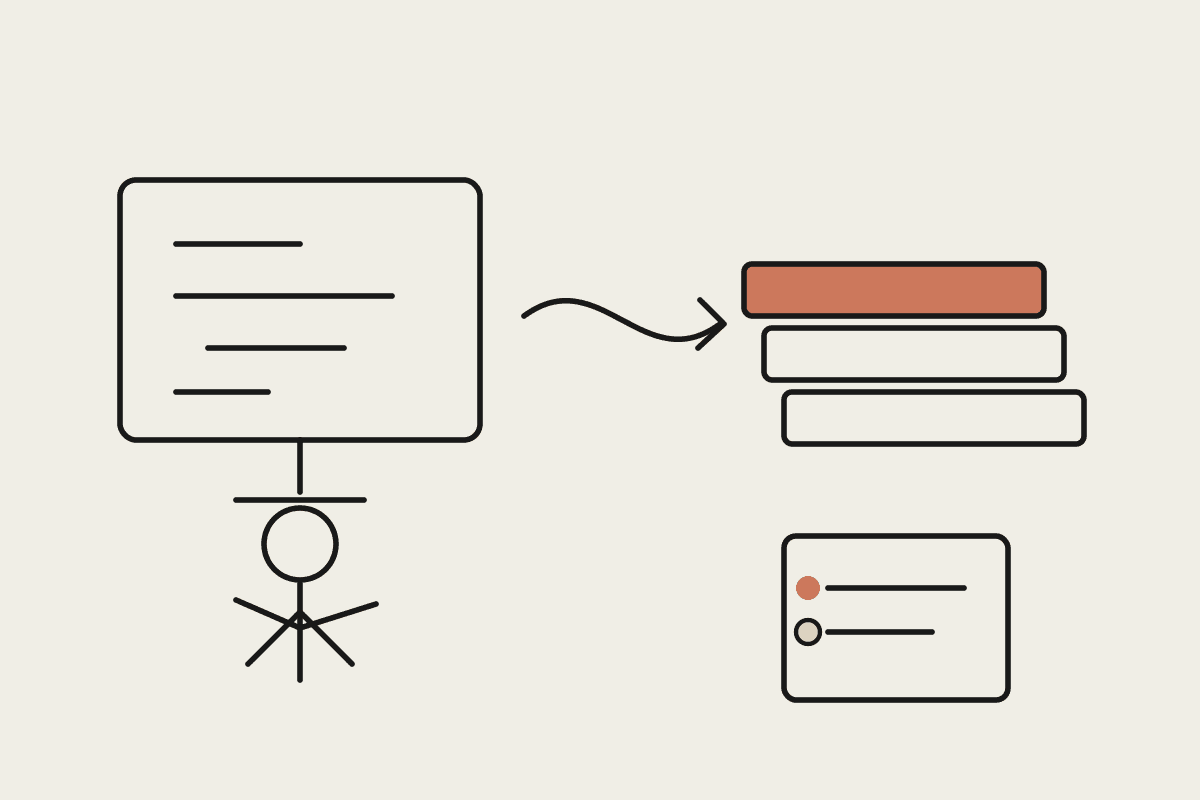
Every data team has the same graduation problem: analysis starts in a Jupyter notebook, the notebook works, someone decides it needs to run on a schedule, and now there's a genuinely awkward gap between exploratory code that was never meant to be maintained and a production pipeline that needs to be reliable, tested, and readable by someone other than the person who wrote it at 11pm chasing a deadline.
Why the notebook-to-pipeline gap is specifically hard
Notebooks encourage exactly the habits that make bad production code: cells run out of order, variables persist in ways that hide bugs, and there's no natural place for tests or error handling because the whole point of a notebook is fast iteration, not durability. Converting that into something that runs unattended on a schedule means restructuring the logic, not just copy-pasting cells into a script, and that restructuring work is tedious enough that it gets deprioritised, leaving genuinely important analysis running as a manually-triggered notebook indefinitely, sometimes for years past the point where everyone agrees it really should have been productionised.
Notebook cells restructured into properly ordered, testable functions with explicit inputs and outputs
Implicit dependencies on cell execution order made explicit, removing the most common source of notebook bugs
Error handling and logging added for the failure modes that don't matter in exploratory work but do in production
A test suite covering the transformation logic, not just a smoke test that the script runs without crashing
A workable conversion pattern
The pattern that works well is treating conversion as a structured task rather than a rewrite from scratch: point Claude Code at the notebook, have it identify the actual data flow (what depends on what, which cells are genuinely sequential versus reorderable), and build the pipeline structure from that dependency graph rather than the notebook's cell order, which often doesn't reflect the real logical dependencies at all. It's also worth having it flag anything genuinely ambiguous, like a variable that gets redefined in a later cell in a way that changes an earlier calculation's meaning, rather than silently picking one interpretation, since that kind of silent reinterpretation is exactly the class of bug that's hardest to catch in code review after the fact.
A Sydney logistics analytics team had four separate notebooks driving weekly reporting, each maintained by a different analyst, none of them under version control in any meaningful sense, and each one broke roughly once a month when a data source's schema shifted slightly. Converting all four into a proper scheduled pipeline with tests took about a week and a half with Claude Code doing the bulk of the restructuring work under an analyst's review, versus an internal estimate of four to five weeks to do the same conversion by hand, a gap the team's lead attributed mostly to the tedious, error-prone work of manually tracing which cells actually depended on which. The team put the value of the freed-up analyst time, redirected into actual analysis rather than pipeline maintenance, at roughly $22,000 over the following quarter.
Deciding what actually needs to become a pipeline
Not every notebook deserves this treatment. A one-off analysis that answers a single question once doesn't need pipeline discipline; the conversion effort is worth it specifically for recurring, business-critical analysis that's currently running on someone remembering to open a notebook and click run. Being honest about which notebooks actually fall into that category before starting the conversion work saves effort that would otherwise go into productionising something that never needed it.
Keeping the original notebook around
Even after a clean pipeline conversion, it's worth keeping the original notebook accessible rather than deleting it, because exploratory work often still starts there when someone wants to investigate an anomaly the pipeline flagged. The pipeline handles the recurring, scheduled version of the analysis; the notebook stays useful as the ad hoc investigation tool it was always good at, and the two coexisting is a feature of a mature setup, not a sign the conversion was incomplete.
What this isn't
This doesn't replace proper data engineering practice around orchestration, monitoring, and alerting once the pipeline is built; converting a notebook into clean, testable code is the first step, not the whole job of running reliable production data infrastructure. Pair this with whatever scheduling and monitoring tooling your team already uses rather than treating a converted script as automatically production-ready.
Automata AI helps Australian data teams get notebooks into properly tested, scheduled pipelines using Claude Code. If your weekly reporting still depends on someone remembering to run a notebook, get in touch through /contact.