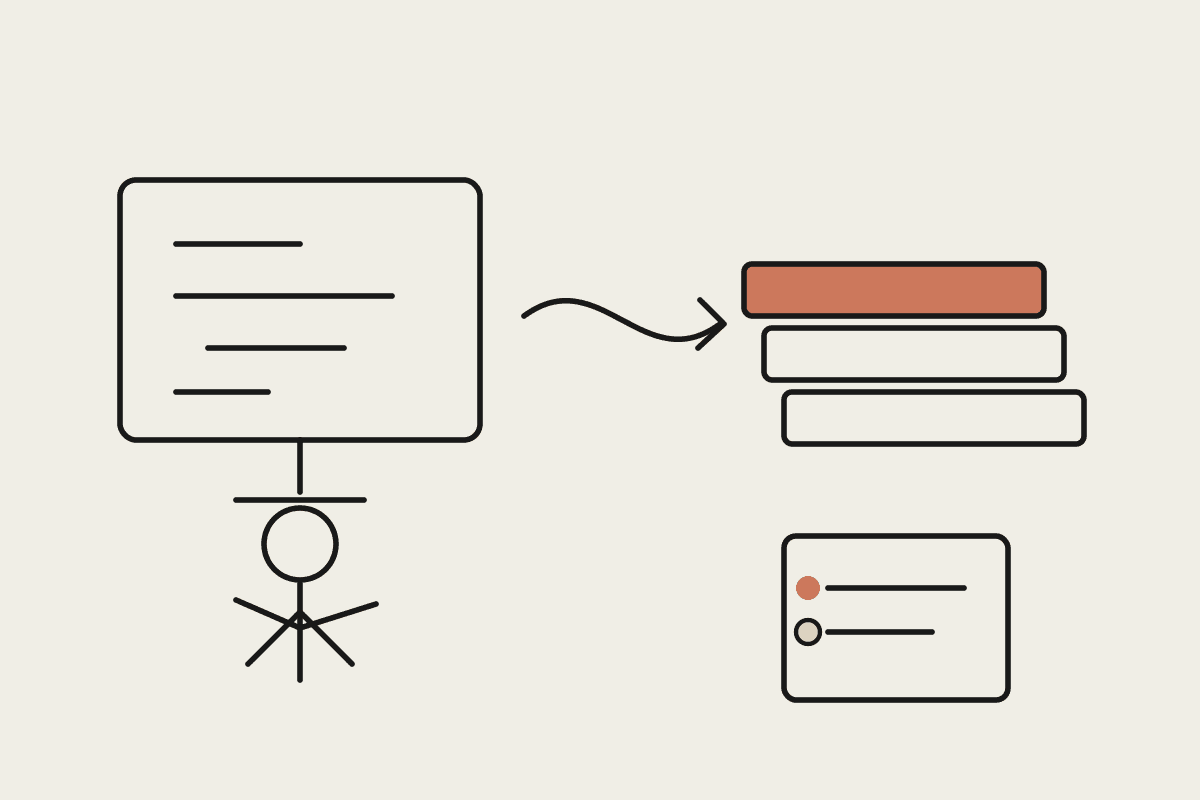
Git worktrees let you check out multiple branches of the same repository into separate directories simultaneously, sharing one .git history without the constant stashing and branch-switching that running several Claude Code sessions against one working directory otherwise forces, and they've quietly become the standard pattern for teams running more than one Claude Code agent against the same codebase at once.
The conflict problem worktrees actually solve
Running two Claude Code sessions against the same checked-out working directory, one fixing a bug while another builds a feature, means both agents are editing the same files on disk, and the second agent to save inevitably either overwrites the first's in-progress work or gets confused by files that changed underneath it mid-task. Worktrees sidestep this entirely: each agent gets its own directory with its own checked-out branch, so two, four, or six Claude Code sessions can run genuinely in parallel against the same repo without ever touching each other's files.
git worktree add ../repo-feature-x feature-x: creates an isolated checkout on its own branch
Each worktree shares the same .git object database, so disk usage stays reasonable across many parallel checkouts
Claude Code sessions in different worktrees can run truly concurrently, not just interleaved
Merging back is standard git, no special worktree-specific merge process required
The setup that actually holds up under real parallel load
A worktree pool is only as useful as the team's discipline in assigning each agent a clear, non-overlapping task before it starts; two agents both editing the same file from different worktrees will still produce a genuine merge conflict at the pull-request stage, worktrees just move that conflict to review time instead of leaving it to corrupt work in progress on disk.
The pattern that works in practice keeps a small, fixed pool of worktrees, typically three to five for a mid-sized team, rather than creating a fresh one for every single task, because worktree sprawl creates its own cleanup problem once you've accumulated fifteen stale directories from tasks finished weeks ago. Naming each worktree directory after its purpose rather than its branch name, agent-bugfix, agent-feature, agent-review, keeps track of which Claude Code session is running where without needing to check git status in each one first.
Teams new to the pattern often ask whether worktrees require a specific IDE or terminal setup; they don't. Any editor that can open a folder works fine pointed at a worktree directory, since from the editor's perspective it's just another checked-out copy of the repo. The only genuine prerequisite is a git version recent enough to support the worktree command cleanly, which by now covers effectively every actively maintained install.
A Melbourne fintech engineering team running four Claude Code agents concurrently against a shared monorepo had been losing roughly ninety minutes a day, spread across four engineers, to file-conflict cleanup from agents stepping on each other's in-progress changes in a shared working directory. Moving to a fixed worktree pool eliminated the conflict class entirely, and the team's lead estimated the recovered time at close to $23,000 a year once fully loaded engineering cost was applied, on top of the harder-to-quantify frustration of losing an agent's half-finished work to an overwrite.
Handling shared state that worktrees don't isolate
Worktrees isolate the working directory, but they don't isolate anything outside git, database migrations, shared dev environment state, or a local server bound to one port will still collide across worktrees unless you deliberately parameterise them per worktree, usually via an environment variable read at startup. This is the detail teams miss on their first attempt, expecting worktree isolation to cover more than the working directory it actually covers.
Cleaning up a worktree pool that's grown stale
Worktrees left unused for a few weeks after their branch merged are the most common source of confusion in a shared pool, since a new team member checking `git worktree list` has no way of knowing which entries are live work and which are forgotten leftovers. A short weekly habit, `git worktree remove` on anything tied to an already-merged branch, keeps the pool legible; teams that skip this find the pool itself becomes a source of the exact confusion worktrees were meant to eliminate.
What this isn't
This is not a replacement for proper CI or code review gates; parallel Claude Code agents in separate worktrees still produce pull requests that need the same review discipline as any other change, worktrees just remove the friction of running them concurrently in the first place.
Automata AI sets up multi-agent Claude Code worktree configurations for Australian engineering teams scaling past single-agent workflows. Get in touch via /contact if file conflicts are already eating into your team's day, and tell us roughly how many agents you're trying to run concurrently so we can size the worktree pool correctly from the start.