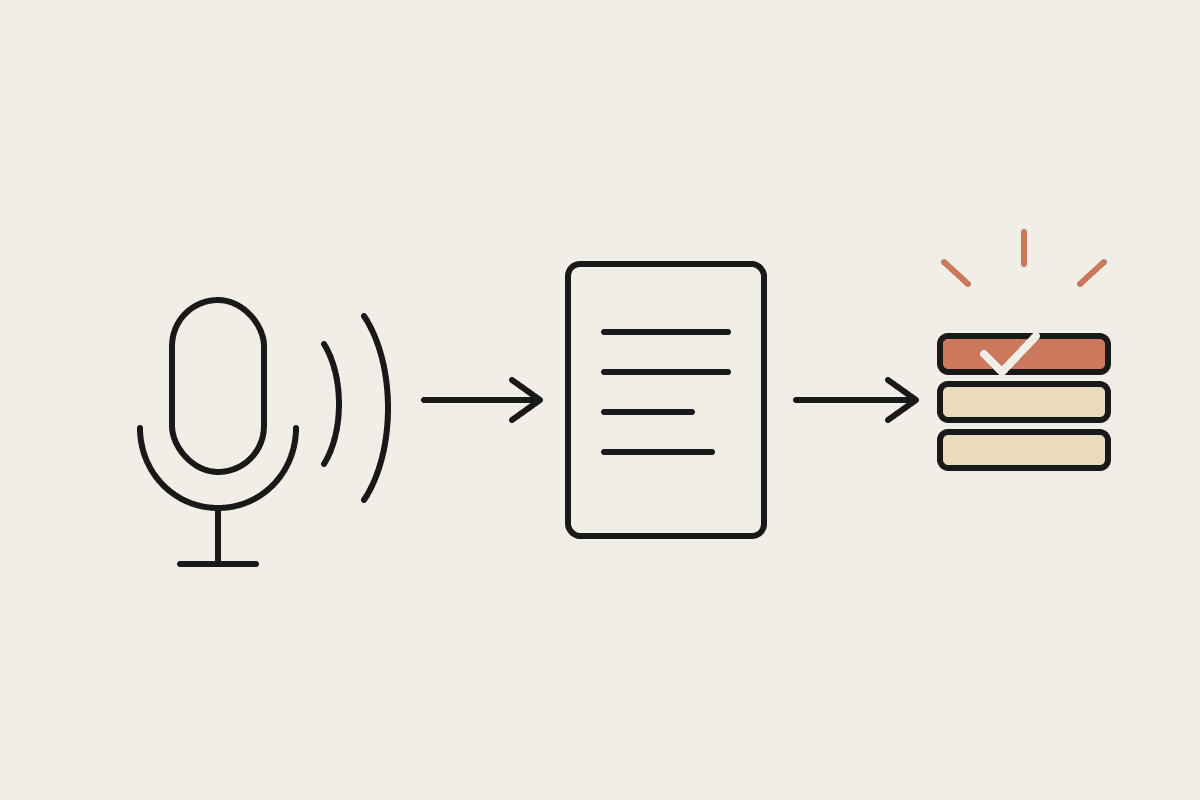
The office side of a trades business runs a longer pipeline than most people outside it realise: a quote goes out, gets accepted, a job gets scheduled, materials get ordered, the job runs, an invoice goes out, and then someone has to actually chase it until it's paid. Each handoff between those stages is a place work quietly stalls, usually because the office manager juggling six trades and forty active jobs simply cannot track every one manually.
Where the pipeline actually leaks
Three points account for most of the delay in a typical trade business: quotes that go out and never get followed up because the office manager forgot which ones were still pending, completed jobs that don't get invoiced for a week or more because nobody flagged the job as finished, and invoices that sit unpaid because the reminder cadence depends on someone remembering to check an aged receivables report.
What Claude Cowork tracks across the pipeline
Quotes sent but not actioned after a set number of days, with a drafted follow-up ready to send
Jobs marked complete on the field-service side that haven't generated an invoice yet
Invoices past due, with a reminder drafted matched to how overdue and how reliable that customer's payment history is
A daily or weekly snapshot: quotes outstanding, jobs awaiting invoice, total overdue receivables
Connecting it to what you already run
Most trade businesses already run a job-management platform, ServiceM8, Fergus, Tradify, or similar, alongside Xero or MYOB for invoicing. Cowork's role here isn't replacing either system, it's the layer that reads both and flags the gaps between them: a job status update in one system that hasn't triggered the corresponding action in the other, because that handoff was always manual.
A worked example
A Newcastle electrical contracting business with six field electricians and one office manager was losing an estimated two to three weeks of cash-flow timing every month to invoices that went out late because completed jobs weren't flagged promptly. After connecting Cowork to their job-management platform and Xero, invoices now go out within a day of job completion instead of averaging five to seven days later, worth an estimated $22,000 a year in improved cash-flow timing for a business running on tight trade margins.
Keeping the office manager in charge
Nothing in this workflow sends a quote, an invoice or a payment reminder without a review step, at least until the office manager has watched it run reliably for a month or two. The value isn't removing the office manager from the loop, it's giving them a clear list of what needs attention today instead of having to remember to check three separate systems.
Handling difficult payers separately
Standard reminder sequences work for the majority of customers who simply need a nudge. A small number of chronically late payers need a different, more direct approach, sometimes a phone call, sometimes a firmer written tone, and that judgment call should stay with a person who knows the account's history, not an automated sequence treating every overdue invoice the same way.
Materials ordering as a fourth stream
Some trade offices extend this further to a materials-ordering check: has the job been scheduled without materials confirmed as ordered. That's a natural fourth stream once the core three are running well, catching the specific failure mode where a job gets booked in but nobody actually ordered what the job needs, leading to a wasted trip.
A quick audit you can run today
Pull your last twenty completed jobs and check the gap between job completion and invoice date for each one. If the average is more than two or three days, that gap is quietly costing cash-flow timing every single month, and it is usually the fastest of the three streams to fix.
What this isn't
This isn't a replacement for your job-management software or accounting system, it sits alongside both. It's also not a way to remove the need for an experienced office manager, the value is freeing that person's attention for the calls and judgment calls that actually need a human, not chasing the same three gaps every single day.
Getting started
Map your actual quote-to-paid pipeline and mark where handoffs between systems currently depend on someone remembering
Connect Cowork to your job-management platform and accounting system
Start with the reporting layer, a daily snapshot, before automating any drafted communications
Add drafted follow-ups for one stage at a time, quotes first, then invoicing, then payment reminders
Trade businesses that run this well tend to describe the change less as faster invoicing and more as fewer surprises, no job that quietly never got billed, no quote that vanished into a folder and was never followed up, no overdue invoice that sat unnoticed for six weeks.
If your office is spending more time chasing the pipeline than running it, that's a fixable admin problem. Get in touch: https://www.automataai.com.au/contact
Keep going
For the full setup path, see the Claude Cowork setup guide. Related on this topic: