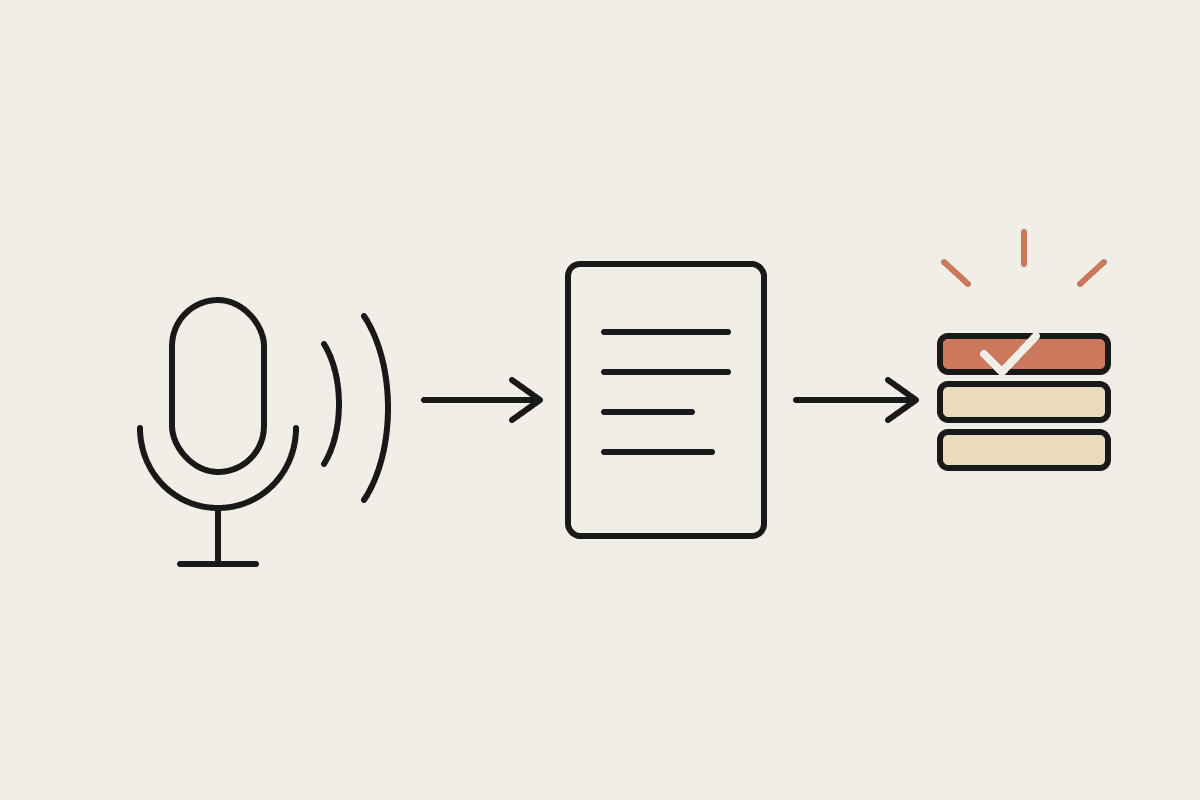
Most small businesses run their task list across four places at once: a notebook, a handful of Slack DMs nobody re-reads, a shared spreadsheet that's three weeks out of date, and whatever's in someone's head. That's not a criticism, it's just what happens when nobody owns the system. Claude Cowork's task tooling is useful here for a specific, unglamorous reason: it turns loose commitments made in passing into a queue somebody can actually see, without asking anyone to change how they already communicate day to day.
Where task chaos actually costs money
The expensive failure isn't a missed deadline on something big and visible; those get chased. It's the accumulation of small commitments that quietly drop: 'I'll send that quote Thursday', 'remind me to follow up with the supplier', 'add that to the list for next week'. None of those individually matters much. Across a 10-person business over a quarter, they add up to real missed revenue and real client frustration, and almost none of it shows up in any report.
Commitments made in email, Slack, or meeting notes get captured as tasks automatically, not left to memory
A single queue, not four scattered lists, with owner and rough priority attached
A scheduled digest that surfaces what's overdue instead of relying on someone checking
Tasks linked back to the source (the email, the meeting) so context isn't lost
Setting it up without building a project-management system nobody uses
The trap here is over-building: standing up a full task-management platform with custom fields and workflows that takes longer to maintain than the chaos it replaced. The version that actually sticks is smaller: a scheduled Cowork task that scans your email and calendar for commitment language, drafts a task list entry, and asks for a quick confirm before it's added. That keeps a human in the loop on what counts as a real commitment, while removing the burden of remembering to write it down in the first place.
A Melbourne events business with six staff was running task tracking across group chat and memory before setting this up. They estimated missed or late follow-ups, things like supplier confirmations, client check-ins, and invoice chasing, cost them roughly $22,000 in a single year in lost repeat bookings and rushed, above-market supplier bookings made because something was left too late. Six weeks after moving commitments into a single tracked queue with a daily digest, the owner reported the backlog of 'things we meant to do' had gone from a running joke to something that genuinely got worked through weekly.
Deciding what counts as a task worth tracking
Not every sentence with a verb in it is a commitment, and a system that captures everything ends up as noisy as the group chat it replaced. The useful filter is intent plus a rough timeframe: 'I'll get that to you Thursday' is a task, 'we should think about doing this sometime' is not. Tuning that filter takes a week or two of the owner correcting a handful of false captures, and it's worth doing properly rather than accepting a noisy queue and quietly ignoring it, which just recreates the original problem in a new tool. Most teams find the filter settles down after a fortnight of light correction and then needs almost no further attention, which is a reasonable one-off cost for a tool that runs quietly in the background afterwards. Most owners who've tried it say the calibration fortnight is the only period where the tool needs real attention at all.
Why a daily digest beats a live notification
Real-time task notifications sound useful and mostly aren't; they train people to check a channel constantly, which is its own productivity cost. A single scheduled digest, sent once a day with what's overdue and what's due today, does the job with a fraction of the interruption. Most small teams that switch from live pings to a daily digest report the queue feels calmer within a fortnight, not because less is happening but because they're not being pulled out of focused work to look at it.
What this isn't
This is not a replacement for a dedicated project-management tool if you're running complex, multi-stage projects with dependencies; for that, a proper PM tool still earns its keep. It's aimed squarely at the smaller, easy-to-drop commitments that don't justify that overhead but still cost money when they slip.
Automata AI sets up this exact task-capture pattern inside Cowork for Australian small businesses. If your team's commitments live in four different places and nowhere reliable, get in touch through /contact.
Where to go next
If you are setting Cowork up from scratch, start with Claude Cowork setup guide. Two pieces that sit closest to this one: