At the end of August 2026, OpenAI said ChatGPT Ads had reached a $1 billion annualised revenue run rate in under 200 days, and that self-serve advertising is expanding into India, Europe, the Middle East and North Africa. Advertising now sits beside subscriptions and enterprise contracts as a pillar of the ChatGPT business.
For an Australian business with an AI assistant embedded in research, comparison, vendor evaluation or customer service, that is a procurement question more than a product one. Who is the assistant built to serve: the person asking, or the advertiser paying for the answer to be seen?
Does an AI vendor's business model change the answers you get?
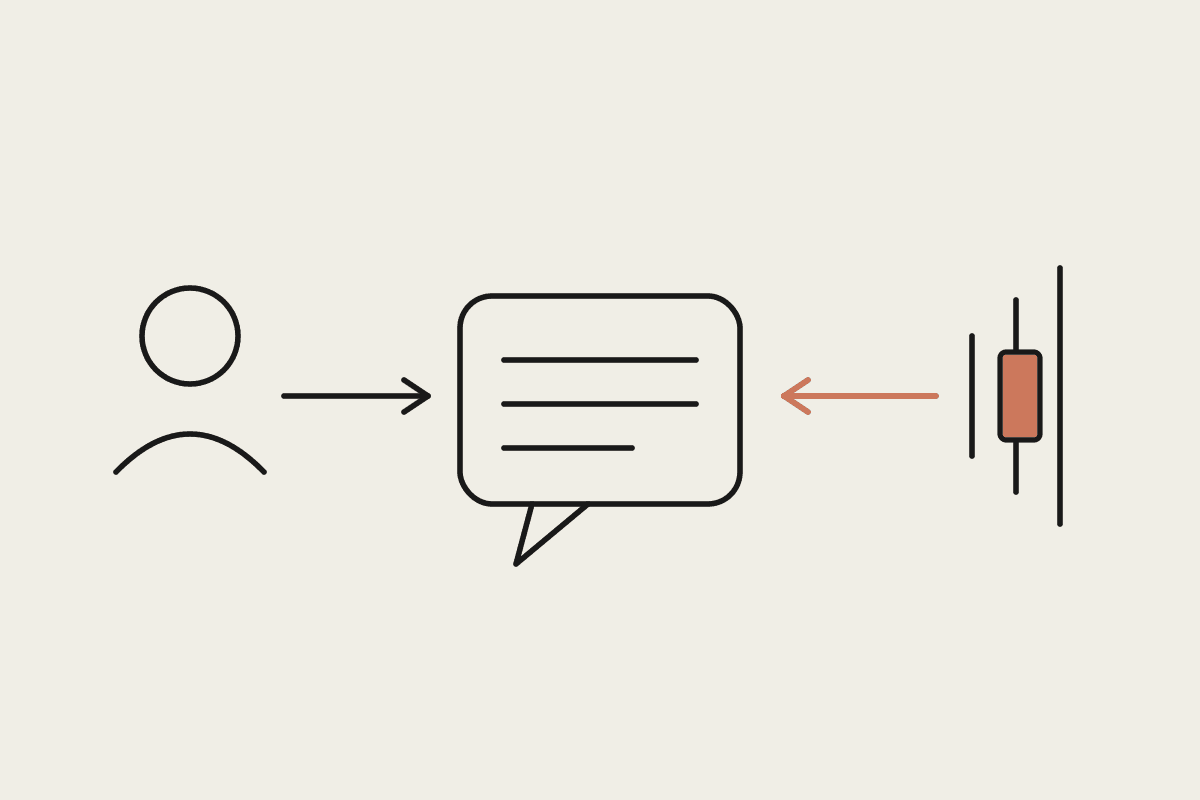
A vendor's revenue model sets what its product is optimised to do over time. An assistant funded by subscriptions and usage earns money only by being useful to the person paying for it. An assistant funded by advertising has a second customer whose spend depends on attention and placement, and that second customer's interests will not always line up with the interests of the business asking the question.
Claude does not carry advertising. Anthropic's revenue comes from subscriptions, enterprise contracts and API usage. OpenAI, for its part, says ChatGPT's ads are clearly labelled and do not influence the model's answers. Both of those statements can be true right now. The buyer's question is which structure you would rather depend on in three years, when the ad business is much larger and the internal pressure to grow it is proportionally higher.
What to ask before your next AI renewal
Most AI procurement conversations stop at feature lists and per-seat price. The revenue model behind the product rarely comes up, which is odd, because it is the thing most likely to change the product without anyone telling you. Put these in writing with the vendor, not verbally with a sales rep.
Does the vendor state, in the contract, whether ads or sponsored content can appear in outputs your staff or customers see?
Is there a tier with advertising removed entirely, and what is the real price gap against your current plan?
Are staff prompts used, directly or indirectly, to target advertising, and what do the terms actually say?
If a sponsored result reaches a customer through your workflow, who carries that, you or the vendor?
What notice period do you get if the commercial model changes mid-contract?
We keep a longer version of this in our 20-question AI vendor due diligence checklist, which is worth running before any renewal, not after one.
Where this actually bites
The risk is not that your staff see a banner ad. The risk is a workflow where an AI answer is passed through to someone else with your name on it. Product recommendations in a service chat. Supplier shortlists in a procurement brief. Options presented to a client. In each of those, the business is lending its own credibility to output it did not write and cannot fully trace.
A Sydney retail client we advise budgets around $8,000 a year per seat-tier for its AI toolchain specifically to stay on ad-free, contract-based plans across research and customer service tools. That is a deliberate trade-off. They pay more to keep vendor incentives pointed at the business rather than at a media network. Whether that maths works for you depends on how much of your AI output is customer-facing, which is what our ROI calculator is built to test.
Revenue model and what it changes for an Australian buyer
| Revenue model | Who the paying customer is | What to get in writing |
|---|---|---|
| Subscription and usage | The business using the product | Data use terms, price change notice, retention settings |
| Enterprise contract and API | The business, under negotiated terms | Audit rights, incident disclosure, sub-processor list |
| Advertising | The business, plus advertisers | Ad labelling in outputs, ad-free tier price, prompt targeting terms |
| Free consumer tier | Advertisers, or nobody yet | Whether it is approved for business use at all |
What not to conclude from this
Advertising revenue is not evidence of a bad product, and a subscription model is not a guarantee of a good one. Plenty of ad-funded software has served businesses well for decades. The point is narrower: a revenue model is a durable fact about a vendor that will outlast any given feature comparison, and it belongs in your risk register alongside data residency and exit terms.
It is also not an argument for standardising on one vendor and never looking again. The opposite, really. Knowing what funds each tool in your stack is what lets you keep options open, which we covered in our note on avoiding AI vendor lock-in. The same logic applies to how each vendor handles your data, a question we worked through in what OpenAI enterprise data terms mean for Australian businesses.
The takeaway for your AI strategy
Put one line in your next vendor review: how does this company make money, and what does that reward it for doing? For Claude, the answer today is subscriptions, enterprise contracts and API usage. For ChatGPT, as of September 2026, the answer includes a billion-dollar advertising business that is still expanding into new markets. Neither answer settles the decision on its own. Both should be on the page when you make it.
If you want a second pair of eyes on what is in your stack and what funds it, that is the sort of work we do. Have a look at our consulting services or get in touch and we will walk through it with you.
The original announcement is worth reading in full: OpenAI's post on expanding access to AI with ChatGPT ads sets out the milestone and the new markets in its own words.