OpenAI launched ChatGPT for Financial Services on 10 September 2026, shaped by design partnerships with Morgan Stanley and Evercore and aimed first at investment banking and equity research. The same week, T. Rowe Price announced it was expanding Claude across its investment process. Two frontier labs, the same vertical, seven days apart.
If your firm already runs Claude, the question is not whether to panic. It is which parts of the announcement describe something genuinely different from what you have, and which parts describe the same capability wearing different packaging. There is one real architectural difference in there, and it is worth understanding properly before anyone takes it to a committee.
What OpenAI actually announced
Premium financial data from Daloopa, PitchBook, LSEG News and Crunchbase, indexed and hosted directly on OpenAI infrastructure, with no separate contracts or connector setup required, and citations tracing figures back to source documents.
Integration with a firm's existing subscriptions, including S&P Capital IQ, LSEG, MSCI, Dow Jones Factiva and Moody's, through shared sign-in and entitlement, plus more than 50 other connectors such as Datasite, Box, Preqin, FactSet and Intapp.
GPT-6 Astra underneath, handling financial reasoning, document navigation, and generating client-ready Excel, Word and PowerPoint output against firm-approved templates and style guides.
Security features carried over from ChatGPT Enterprise: SAML single sign-on, SCIM provisioning and role-based access control, with business data not used for training by default.
Compliance log export through the OpenAI Compliance Platform, and multiple workspaces to support information barriers.
Sold to eligible financial institutions through direct sales contact rather than self-serve signup.
Most of that list is competent enterprise product work. Single sign-on, provisioning, role-based access, log export and workspace separation are what any serious vendor selling into a regulated firm has to bring. The item that is genuinely a different design choice is the first one.
What does ChatGPT for Financial Services mean for firms already on Claude?
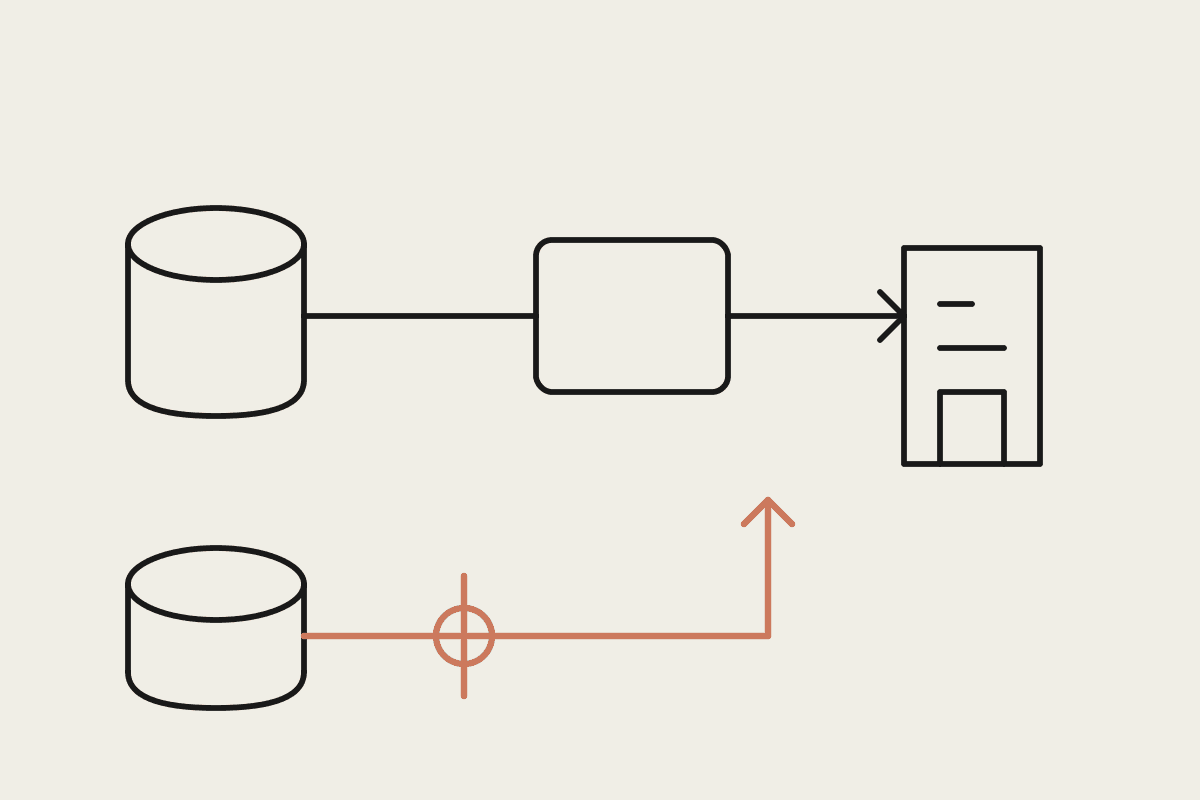
The practical difference sits in where licensed market data lives. OpenAI's approach indexes and hosts a set of premium data providers on its own infrastructure, so the firm gets access without holding those contracts itself. Claude's approach relies on connectors and the Model Context Protocol, where the firm keeps its own data subscriptions and decides which sources the assistant may reach. Both can get an analyst to an answer. They place the data relationship, and the control over it, in different hands, and that is the distinction to take to a risk conversation rather than a feature comparison.
The two models, side by side
Neither column below is right or wrong. They suit different firms, and the honest version of this comparison names the tradeoff in both directions.
| Consideration | Vendor-hosted data (OpenAI's approach) | Firm-held subscriptions via connectors (Claude's approach) |
|---|---|---|
| Who holds the data contract | The AI vendor, for the bundled providers | The firm, with existing provider relationships kept intact |
| Time to first answer | Faster, because the data is already indexed | Slower, because connectors and entitlements need configuring |
| Switching cost later | Higher, because data access is tied to the platform | Lower, because the subscriptions survive a change of assistant |
| Where the firm's questions travel | Through the vendor's own indexed corpus | Through sources the firm has explicitly connected |
| What the risk function reviews | The vendor's handling of both the model and the data layer | The model separately from each connected source |
For a large firm with no existing data vendor relationships, bundled and indexed data is a real saving. For an Australian firm that has spent years negotiating its own provider terms, routing those relationships through an AI vendor is a change to the dependency map, not just a procurement convenience.
Questions for your own risk function
We are not lawyers and this is not legal or investment advice. What follows is the set of questions we would want answered before recommending any AI assistant for research or client-facing work in an Australian financial services firm, whichever vendor is on the table.
If our AI vendor and our data provider are the same relationship, what happens to research continuity if either arrangement ends?
Which jurisdictions does a query traverse, and does the answer satisfy our position under the Privacy Act and our own cross-border policy?
What record exists of who asked what, against which source, and can it be exported in a form our supervisors and our internal audit team accept?
How do information barriers hold up when the assistant has access to sources across multiple teams?
Who signs off that a generated Excel model or client document has been checked before it leaves the firm?
What does our APRA and ASIC obligation set require us to evidence about a third-party technology dependency, and can this vendor produce it?
Note what is missing from that list: any claim that a product delivers a compliance outcome. No assistant does. Vendor security features are inputs to your control environment, not substitutes for it, and the evidence an Australian supervisor expects is evidence about how your firm operates the control, not about what the vendor shipped.
What this costs to work through properly
A serious evaluation is not a trial licence and a fortnight. In our experience with Australian firms in advice, wealth and corporate finance, doing this properly means mapping the workflows in scope, deciding what an assistant may and may not see, agreeing the review step before anything reaches a client, and building the evidence pack for the risk committee. That is typically $35,000 to $80,000 of work depending on the size of the firm and how much of its policy set already exists.
It is also the work that decides whether the tool is still in use in a year. Firms that skip it tend to end up with an assistant that three people use privately and nobody will put a client deliverable through, which is the worst of both outcomes.
We have written more about the data-control side in Claude versus ChatGPT on enterprise AI data for Australian businesses, and about the protocol layer in enterprise AI agents, Claude MCP and ChatGPT compliance. If you want this run as a structured piece of work rather than a debate, start with an assessment.
The short version
A competitor launching into your vertical is a prompt to check your own reasoning, not to redo your decision. Write down why you chose the assistant you did, test whether the bundled-data model changes that reasoning for your specific firm, and if it does not, say so in writing and move on. That takes an afternoon and saves a quarter of drift.
The full announcement is worth reading directly rather than through summaries: OpenAI on ChatGPT for Financial Services.